
The story of Jack Kirby’s fight to regain his original artwork from Marvel Comics during the first part of the Eighties is one that is well known to most fans and one that has routinely been covered, albeit in passing or in context as part of a larger piece devoted to Kirby, Lee, or Marvel.
I was surprised recently to see just how little Mark Evanier devoted to it in his 2008 pseudo-biography of Kirby, while other writers like Danny Fingeroth (ugh) barely devote two pages to it. This travesty remains a major and significant part of comics history, creator rights and Kirby’s life and career and its intricacies, as well as the uprising of support that it provoked in the industry, need to be remembered and discussed in the present day. I am amazed it exists as little more than a footnote at times, or one part of one chapter. It is, unfortunately, one of the most crucial and significant parts of modern comics history.
As this has been covered by writers far more talented than I, I don’t have to do much but compile a sort of “oral history” of sorts- my goal here is to reignite the memories of people who lived through it and provoke the people who didn’t to go and do more research for themselves. We must not forget what was done to Jack Kirby in the Eighties any more than we accept what is done to him in the present. This is the story of Jack Kirby fighting for what was unquestionably his.
- “Before the mid-seventies, no one got artwork returned. Actually, few cared about it. As the collector market grew stronger, and the artwork became valuable, artists started caring.”- Jim Shooter
- “You don’t need to have grown up reading Jack Kirby’s work to recognize that Marvel’s treatment of him is criminal.” – Gary Groth
- “I’m not a guy who likes to sue people. I’ve never sued Marvel. I’ve never sued anybody, and they claim I’m a guy who’s giving them trouble. I’m a guy who never gave anybody trouble.” – Jack Kirby
To attempt to simplify the backstory here, Marvel Comics has begun to return artwork “officially” in 1976, albeit as part of a flawed system created by Roy Thomas in which the writers also got some of the pages. At this time, all artists were required to sign an extremely short release statement and was listed internally as a “gift” towards freelancers and contracted talents. This, essentially, certified that the signee understood the artwork was work-for-hire.
- “Nobody appreciates what he did more than I do. He’s a fucking founding father.” – Jim Shooter, Marvel Then and Now panel, August 1985
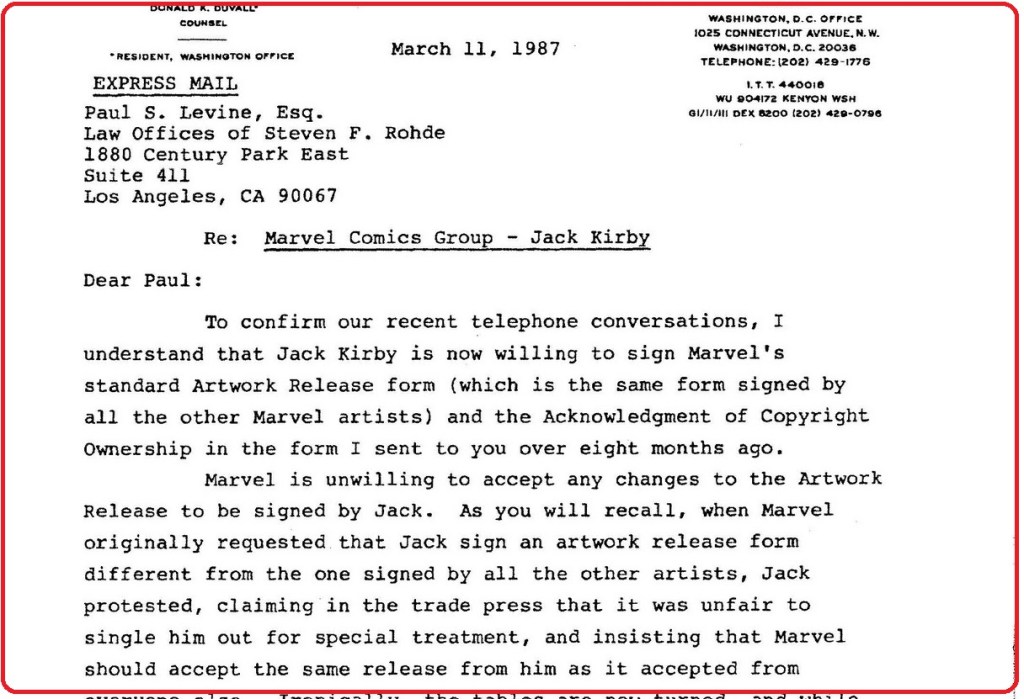
- “When the company began offering to return original artwork it had long held in storage, it did so by referring to the art as a “gift.” In exchange, the creators had to sign a one-page release agreeing that the art had been produced as work for hire. Most did, though with reservations. Kirby himself, sick of fighting over ownership, indicated his own willingness to sign. But instead of the standard release, Marvel sent him—and him alone—a four-page document in 1984.” – Asher Elbein, 2016
By 1984, Marvel finally evolved their practices and made a concentrated effort to return back stocked artwork to creators- and sent Kirby a tally for a shocking one percent of the work he had done between 1960 and 1970- 88 pages out of more than 8,200.

- “The short form is not short. We didn’t want to sign until we know what artwork we’re going to get back.” – Roz Kirby
- “He had the best contract he ever saw, so he got a little spoiled and started demanding his artwork back from the sixties. And the problem was, a lot of it had been misplaced.” – John Romita Sr.
- “The crux of the dispute was the insistence of Marvel Comics, Kirby’s longtime creative home, that he sign away all rights to the Marvel-published characters he had created. As a coercive gesture, the company informed him that it would hold hostage all Kirby original art in its possession until he agreed to sign a special release form that was required of no other Marvel freelancer. Kirby refused to sign the document, and Marvel, in turn, refused to return his original art, and the resulting stand-off that played out before the rest of us was both disillusioning and inspiring.” – Michael Dean, 2002
Initially, Kirby was amenable to signing the form that was sent to every other artist in order to receive his art. However, Kirby alone was sent a four-page form document which specified that Kirby would only receive “physical custody of the specific portion of the original artwork.”
Essentially, Kirby would be granted the right to store his artwork on Marvel’s behalf. It was insulting and affronting and, naturally, Kirby refused. This would lead to a significant public shaming of Marvel, Shooter, and Stan Lee and raise support and solidarity for Kirby’s cause. It would be a rare case of Marvel being unable to navigate away from a public black eye; it would also too quickly be forgotten.
- “Jack’s work is the basic stuff that Marvel Comics has, across twenty years or so, turned into the most powerful comic book publisher in the country. The ideas that sprang from him into pictures – into a visual style they use full-time, all the time now – have not been credited to him by Marvel. Everyone in the industry, everyone anywhere near it, knows what his contribution was. Marvel is refusing to acknowledge this, and now they’re withholding from him his own physical artwork which they are withholding from no one else. I read these documents they want him to sign; it’s the most offensive legal creation I’ve ever read. It’s very insulting.” – Frank Miller
- “You know, it’s like when somebody says, “When did you stop beating your wife?” (laughs) I don’t want to get into any hassle with Jack, because I gotta tell you I’m probably Jack’s biggest fan. I mean, I’ve worked with Jack for a million years. I don’t know any finer talent in this business.” – Stan Lee, 1985
Once Kirby received the form, he attempted to initiative some communication with Marvel’s Editor in Chief Jim Shooter. Shooter shrugged off any talk of compromise, telling Kirby he couldn’t be “unfair” to the other artists and urging Kirby to submit.
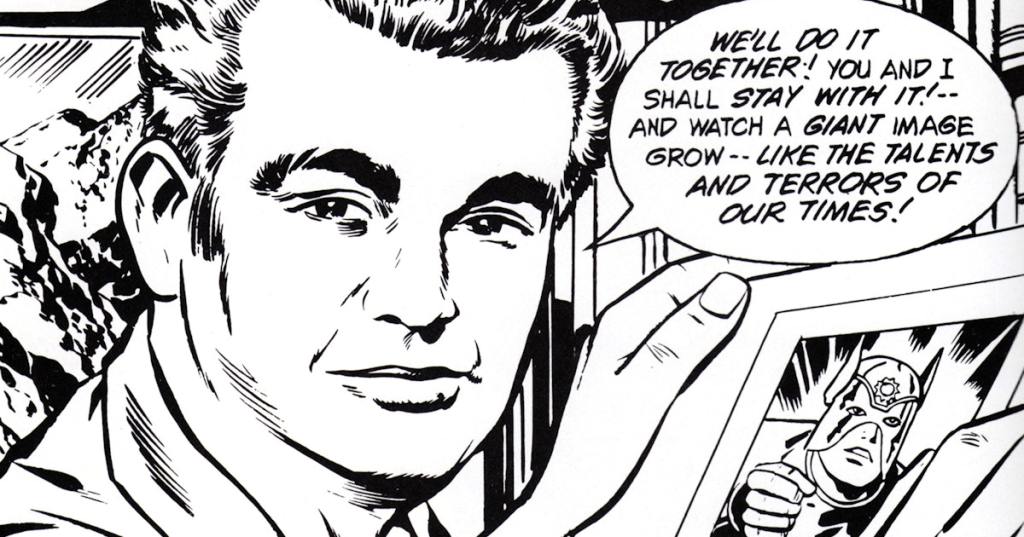
- “He had a glow around him. He was somebody very, very special.” – Alan Moore
In February 1986, Gary Groth covered Kirby’s plight as well as Marvel’s stance in The Comics Journal #105. The resulting outrage and sympathy on Kirby’s behalf would launch a rare public shaming on the apparent House of Ideas and lead many creators to speak out against corporate practice within the comics industry more than ever before.
- “…in the forty years between the creation of Superman in 1938, and my being escorted off Howard the Duck in 1978, essentially nothing had changed in the comic industry. Jerry Siegel and Joe Shuster were in precisely the same position that I was in – and Jack Kirby finds himself in that same position today; worse, in fact. Jack can not even get the physical artwork back, which Marvel never even claimed to own.” – Steve Gerber

- “Mr. Kirby has not yet signed the artwork release form. He has insisted upon a special “condition” before he will sign the artwork release form and accompanying acknowledgement of Marvel’s copyright ownership, specifically that in any statement as to character creatorship by Marvel and Marvel licensees Mr. Kirby be given credit as sole creator of certain of Marvel’s characters…. Marvel realizes the creatorship question is a sensitive one…” Mike Hobson Marvel Comics V.P., July 1986
- “Because then The Village Voice did a major article on the Kirby crusade. Everyone interviewed defended Jack. No one stuck up for Marvel, or Stan Lee, or Jim Shooter. Stan was crushed: the hip press that had always been so good to him was virtually calling him a fraud and a robber baron.” – Will Jacobs & G. Jones, ‘The Comic Book Heroes’ 1997
- “So then because he was suing Marvel, the lawyers felt that the artwork couldn’t be returned — it’s complicated, but doing so could tend to support his claims. In fact, they wouldn’t let me return artwork to anyone while the case was pending. Imagine the frustration of guys like Joe Sinnott and the Buscemas.” – Jim Shooter
- “Kirby hadn’t sued Marvel. There was no lawsuit, no discovery, no documents produced, no legal maneuvering within a lawsuit, no demand by Kirby, enshrined in a lawyer’s letter or otherwise, that he receive sole credit for characters he co-created, and no demand that Lee receive none. It’s all a fiction. None of this happened.” – Gary Groth
Shooter would be called out for this false statement as recently as 2012 and would walk it back while righteously reminding critics that he was the Editor in Chief and not the legal counsel. You’ve got to love Shooter instigating tension on behalf of Joe Sinnott and John Buscema- mean ol’ Kirby holding up their artwork return with his stubborn diva behavior.

- “Again, with feeling, in the sixties, no one cared about the originals. I doubt that Jack cared about the originals. If he had, back in those days, Stan and Sol probably would have given Jack the pages because they were giving them away anyway. I saw artwork given to visitors in 1969. Stan wasn’t the only one who might have given art away. I wouldn’t doubt that the receptionist gave some away. Nobody placed any value whatsoever on that original artwork.” – Jim Shooter, speaking for other people (and besmirching receptionists everywhere) in 2012
- “When Marvel decided in 1984 to offer the return of its backstock of original art to creators, its offer to Kirby was able to account for only 88 pages of Kirby art out of a total of more than 8,000 pages that the artist had done for Marvel between 1960 and 1970 — approximately one percent.” – Michael Dean
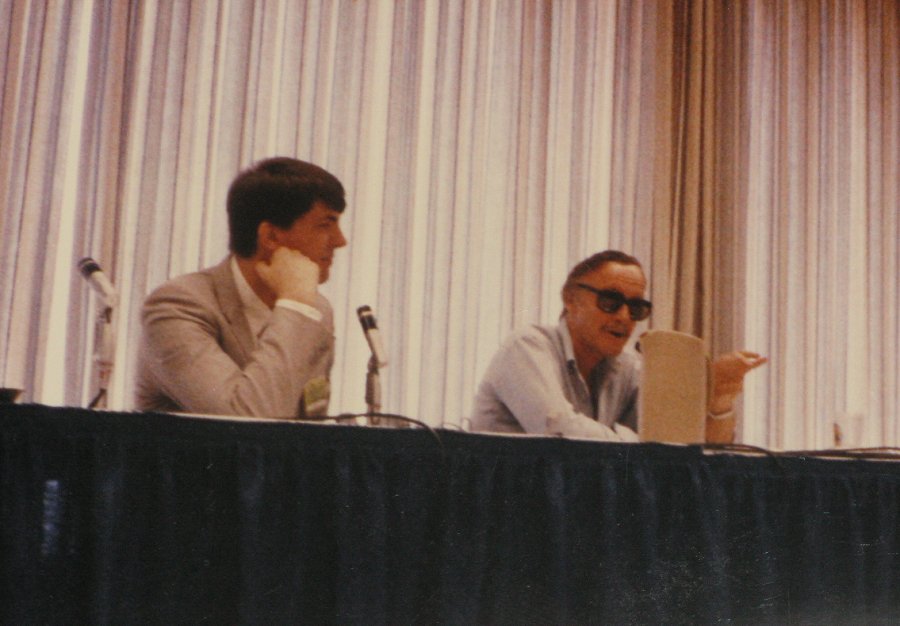
- “When he and Kirby met at the San Diego Con that August, they exploded into a shouting match so angry that Mark Evanier had to push himself physically between them. And that was just the first day of the convention.” – Gerard Jones, 1997
I highly doubt this anecdote, which was either exaggerated by the creep Gerard Jones or else he heard this from fellow creep Mark Evanier, no doubt inventing this scenario so that it included him. There exists no other version of Kirby exploding into a shouting match; Jim Starlin was there, Gary Groth was there. Surely their recounting of the meeting between Kirby and Shooter would have mentioned this.
- “We saw Shooter in Chicago in ’84, and he was very friendly, and he said, “Jack, when are you going to come back and work for Marvel?” Then he said they were working on arranging a policy so they could start returning Jack’s artwork. He said, “Don’t worry, everything’s going to work out fine.” After we came home, we didn’t hear from him for months and I started calling him up constantly, and he’d say, “Well, they have to get someone down here, and it takes time.” – Roz Kirby
- “Jack received all the pages he was entitled to during his last stint at Marvel, 1975 through 1978, in accordance with the artwork return program Roy instituted. In fact, on a few books, Jack actually kept some pages that should have been returned to Frank Giacoia and John Verpoorten. Jack got ahold of them and refused to return them.” – Jim Shooter
Fair Play Shooter can’t wait to remind you how Kirby messed up the lives of guys who got to ink his work. If this even happened? Not that we should doubt the word of the “Honest Abe” of comics.

- “Why should we stay around if that’s how we’re eventually going to be treated? If they can do it to Jack Kirby, of all people, they can certainly do it to us. If we want the field to grow, we have to make sure the people in it are treated fairly. That’s basically my point on the subject — it is shocking. I don’t want to stand by and watch this happen to Jack, and I don’t think any of us can afford to, and still have a medium we are proud of.” – Alan Moore, 1985
- “Of course, Kirby books were given away the most because there were more of them and people wanted the FF, the Hulk, Thor, etc. more than, say, Sgt. Fury. I saw this happen once or twice when I worked briefly at Marvel back in those days. No one complained, not the artists, nobody. No one thought it was wrong. No one cared.” – Jim Shooter
- “Just give him his artwork back. He’s not going to be alive forever.” – Steve Rude
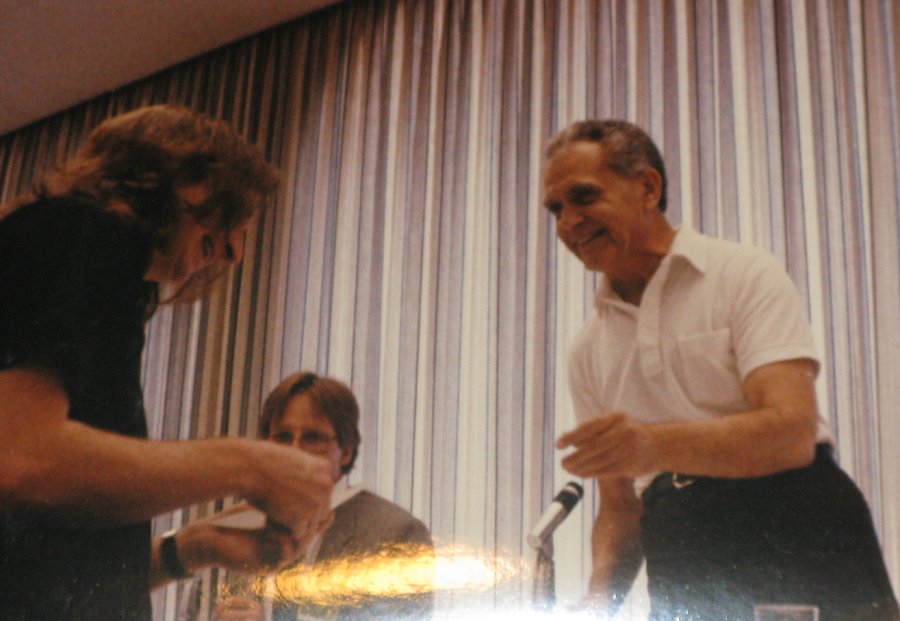
Shooter spoke at a panel where Roz and Jack were seated in the audience at the San Diego Comic Con in August 1985. If Shooter thought he’d have a captive audience to spin his narrative, he was quickly disabused of that notion by the presence of Mrs. Kirby.
- “Listen, I heard this thing start with Jack saying he was going to work it out, and I know from my side that I would like nothing better.” – Jim Shooter
Shooter continued and broached the subject of complicated legality involving copyrights and Kirby’s apparent threats over them.
- “I hate to interrupt you, but during this entire thing we’ve never tried to get the copyrights back from Marvel. It’s you people who keep bringing it up!” – Roz Kirby
- “She’s the one who really kind of gave me hell, and I didn’t really want to debate Jack’s wife.” – Jim Shooter
- “It was unfair for Shooter to be present, because he was trying to scare the panelists. Shooter had the right to be there, because they have their side, too. But still. I felt there were a few instances in Shooter’s answers that carried threats.” – Jack Kirby
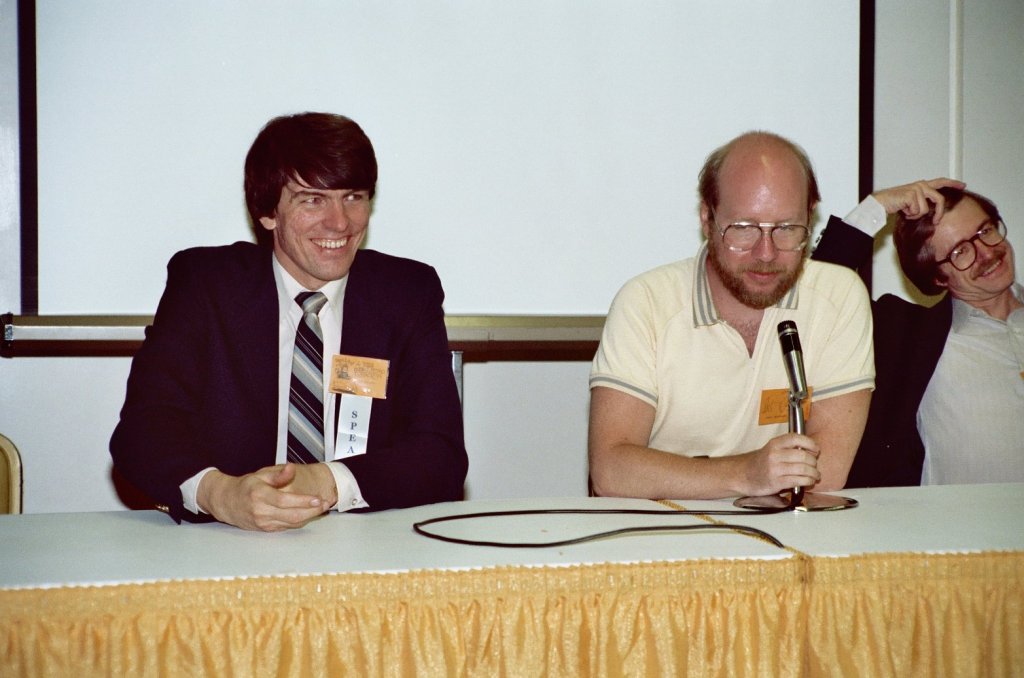
- “He specifically insisted that Stan would get no credit, and that Jack must get credit, or Jack would not accept his artwork back. That just blew my mind. Shortly after that, I met with Jack in San Diego, and I talked with him. I said, “Doesn’t Stan deserve some credit?” Jack said, “Yeah, he does.” And I said, “So you’d be okay if we put ‘Stan and Jack’?” He said yes.” – Jim Shooter
- “He had friends, and a lot of other people with axes to grind against Marvel, sort of pushing him and saying, ‘Oh, you’re not like everybody else.‘ In other words, if John Romita’s artwork is being stolen or lost, that’s one thing. ‘But this is Jack Kirby’s stuff. This is Michaelangelo we’re talking about.’ They fed his ego, and he started to say, ‘You know, you’re right, I should have it back.”- John Romita Sr.
- “In the case of the Hulk and the Fantastic Four and others, Jack Kirby created the characters visually– and it’s important to keep the word ‘visually‘ in there. He drew the characters that I described to him.” – Stan Lee, 1986
The ongoing battle was absolutely brutal for Marvel both in terms of public perception and in the press; Gary Trudeau spoke up for Kirby, a petition to press Marvel into expediting the return of Kirby’s artwork was distributed amongst professionals, and even longtime rival DC Comics wrote an open letter in February of 1986 shaming Marvel for their conduct.
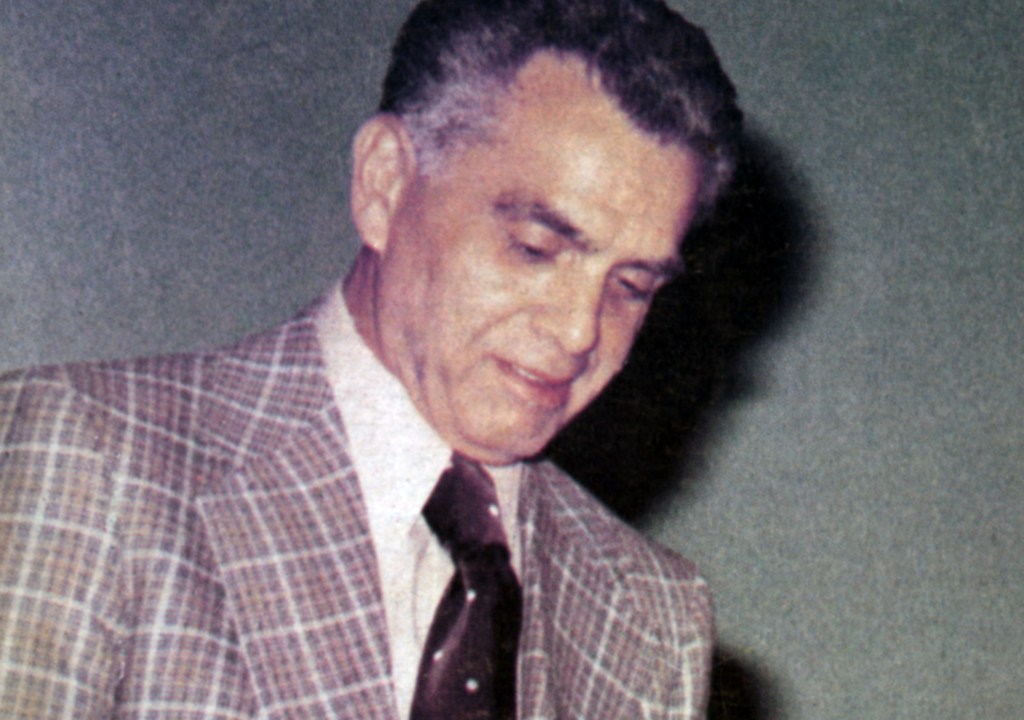
- “I wrote that I thought it would be in their best interest and the best interest of the industry to return the original art, because I felt no artist really intended to give it away. The intention was to give them the rights to publish his work, but that was certainly another subject.”- Will Eisner
- “We believe that the situation as it now stands is wrong, and that Jack Kirby’s artwork- as much of it as Marvel still has in its possession- should be returned to Jack Kirby as soon as possible, and with no preconditions. We believe that this is the least that Marvel should do, and that they should do a great deal more… but returning the original art to the man who created it is a good start.” – Kevin Eastman and Peter Laird, Feb 1986
- “…Kirby art was offered for sale in the Comics Journal. Where’s the outrage against their hypocrisy?” – Jim Shooter
Marvel eventually mailed Kirby a more comprehensive list of the original art in their possession by mid-October of 1986. Far from the original 88 pages listed in their initial four-page agreement, they now had tallied up over 1,800 pieces of Kirby art. Kirby signed the initial one page agreement and reaffirmed his signature on past agreements.
By May 1987, Marvel still operated in petty passive-aggressiveness- they refused to cover the $800 postal insurance for the artwork return, which delivered to Kirby over 2,000 pages of original art.
- “He just said they were pricks.”- Steve Sherman
- “Marvel’s lawyers gave in. Kirby’s art would be returned. Shooter and Stan Lee both claimed to have gotten it done, but some credit probably also goes to the new owners, who were free from the old screw-the-artist ethic of comics and accustomed to creator clout in Hollywood. Kirby gave in on a couple of issues. Marvel refused to concede him any creator credit, so that all Marvels still begin with the words, “Stan Lee Presents.” – Will Jacobs & G. Jones, ‘The Comic Book Heroes’, 1997
- “I speak for Marvel Comics. Although I do not set all the policies, I have a great voice in setting the policies, and they’re not currently doing anything that I do not agree with.” – Jim Shooter, 1985
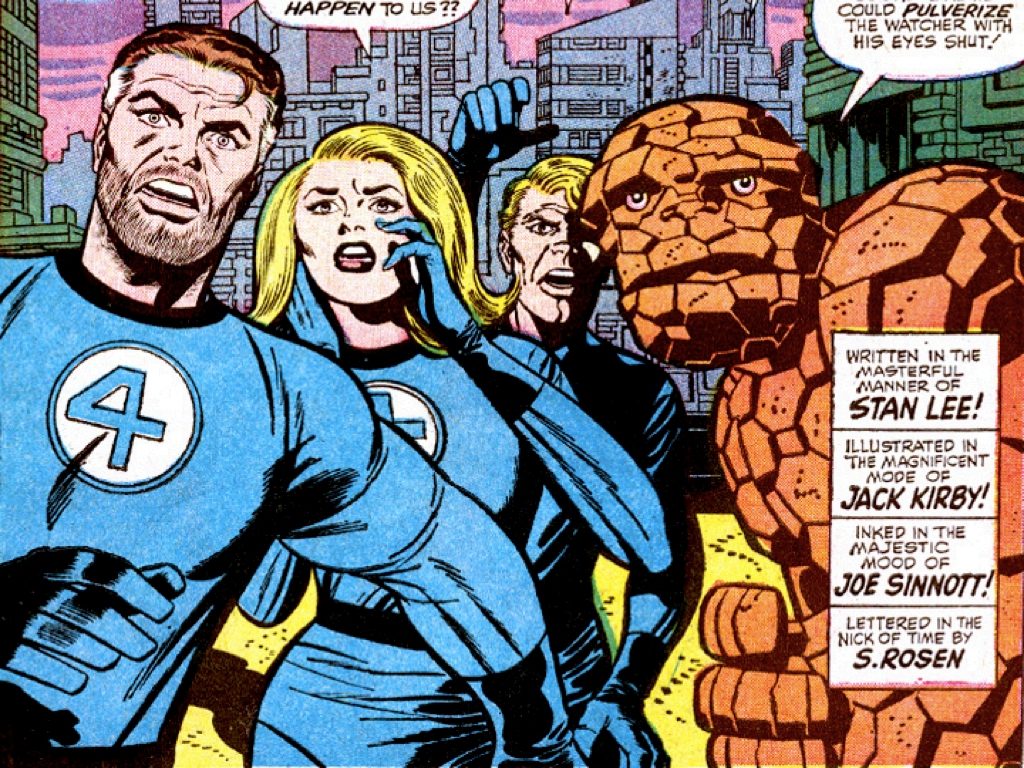
- “I feel Jack was wrong. He felt we didn’t want to give him back his pages. We were very happy to give him back his pages. Most of the pages had been lost. It all got stolen or we threw ’em away. We never saved that stuff in the beginning. Then we did have some pages… but Jack was making weird claims, like he created Spider-Man and that he created this and he created that. So our lawyer said, “We’re not gonna give you back your artwork unless you admit that you didn’t create those things, because you didn’t.” Finally, he signed some sort of statement saying he wouldn’t make claims on things he didn’t create and we gave him back his artwork. That was the end of it.” – Stan Lee, 1991
- “Several voices have been raised on Kirby’s behalf. Many more voices, much quieter, have shown that a great deal of creative ingenuity is being devoted to the invention of excuses for professional cowardice.” – Frank Miller
- “So, by the time I left Marvel in 1987, I was basically responsible for everything, you know. Jack Kirby’s artwork? Must be Jim’s fault. Nobody knows the names Jim Galton and Sheldon Feinberg, but those were the guys giving the lawyers their instructions with regard to Kirby, not me. But to this day, it’s like “Jim Shooter wouldn’t give Jack Kirby his artwork back.” Well, excuse me…” – Jim Shooter, May 1995
- “I’m from the old school; I’m from a generation you fellas know nothing about. I ask nobody to do anything for me. I ask people who’ve been listening tonight to gain whatever knowledge they could of the field, of the personalities, and maybe to gain a little knowledge about myself; but I ask them to do nothing. If they feel like writing a letter, fine. If they don’t, it’s still fine with me. I’ll continue my own fight. It’ll go on because I want it to go on. If it stops, it’ll be because I stopped it. I ask nothing of anybody. It’s because of my own love for the individual that I ask nothing from it. If there are any people on my side, I thank them. It’s a fulfilling sensation for me, and I thank them again.” – Jack Kirby, 1986
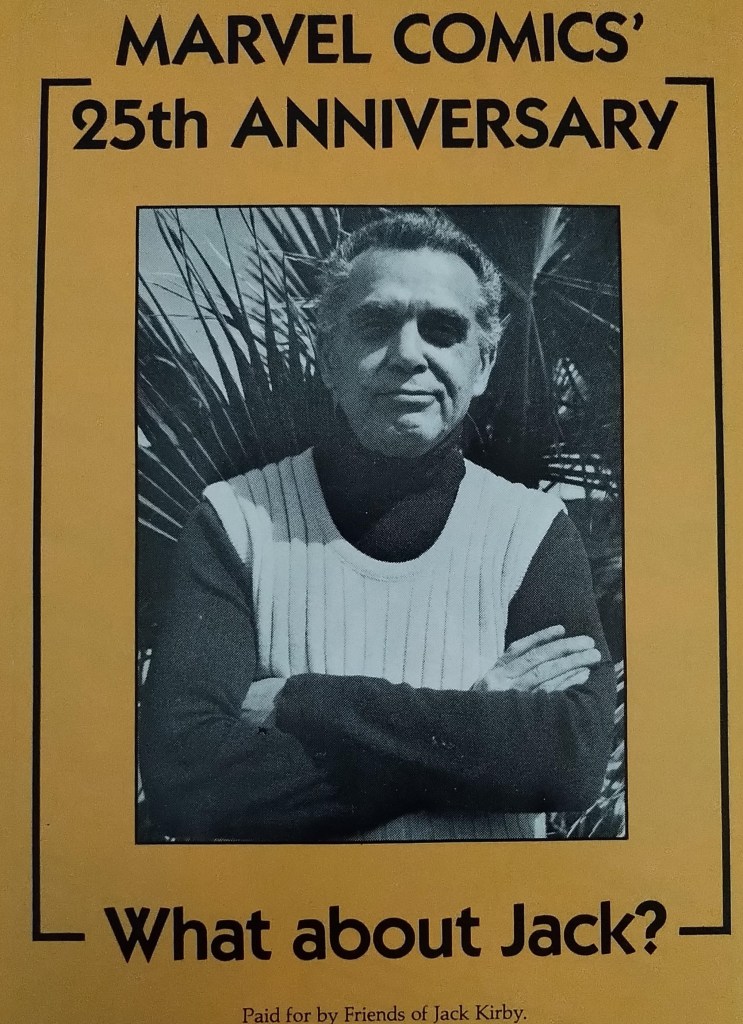
Jack Kirby created companies and saved companies; he reinforced the foundations of existing universes when he wasn’t creating new ones, and both his major characters and his secondary characters would permeate film and media into the next century. He established viable and lucrative properties that, in turn, employed literally hundreds of lesser talents for decades. And yet, Kirby was painted as ungrateful, stubborn, selfish. Why couldn’t he play ball? Why did he have to be difficult?
In a rare moment of collective courage, the industry rallied around a man that had given so much, even at the risk of their own careers where they might be blacklisted from getting assignments in retaliation. Such was the inspirational power of Kirby, such was the character of Kirby, such was the way he carried himself and treated others that he could inspire people in a corrupt industry to speak up. We need him more than ever today.
Don’t forget about Jack Kirby.
with special thanks to Gary Groth, Asher Elbein, Michael Dean and Friends of Jack Kirby everywhere

 Four Color Sinners
It is terrific that you are posting this and shining a light on this important piece of comics history. You may be interested to know that it also featured on an episode of Geekview Tavern.
LikeLiked by 2 people
Thank you Dave, we all do our part. I will check that out.
LikeLike
Thanks for this great installment. As Alan Moore said, if they can do this to Jack Kirby, then no one else is safe. As Jim Shooter, John Byrne, and Roy Thomas all eventually found out.
LikeLiked by 2 people
It’s getting bad at this point my dude, you are blatantly just making shit up like Stan Lee of all ppl saying things like beating up ur wife jokes .. the anti stans got no shame, it’s pathetic… how can anyone believe this garbage is beyond me… I’d laugh my ass off if shooter presses charges on you for lying
LikeLike
You weren’t THERE
LikeLike
but you were
LikeLike
To be fair, you’re right. When Shooter and Lee made some of their comments, I was six years old. On the East Coast.
It’s possible that these quotes AREN’T true. But that means the people that transcribed them and helpfully published them in actual printed publications for the years 1985-1987 are lying. And, oddly, weren’t called out for it back then. By the way, you can buy old stuff from the past. That’s what I did. And by pursuing such research, I can correctly deliver you actual quotes that I trust are correct. But yes, I was not there in person. You got me.
LikeLiked by 2 people
The hatred for Stan Lee for being a winner and for daring to DREAM and be successful is ridiculous! I bet half of these “quotes” are made up, in fact I’m sure of it. You should learn to make stuff up better. The fact, which you won’t cover, is that Kirby and Ditko never had a success without Stan. Deal with it.
LikeLiked by 1 person
Please don’t yell at me then, Retro Guy. Yell at the multiple writers that helpfully documented these statements when they occurred, for me to dig them up nearly three decades later. Lee indeed started his response to Kirby WITH THAT JOKE at the ‘Marvel Then and Now’ panel at San Diego Comic Con in August 1986. Work harder, dipshit!
LikeLike
Yes, Stan was the most successful salesman the Comics industry had ever seen, but in large part only because Jack Kirby and Steve Ditko had designed the unique and vital visual appeal of the iconic Marvel characters , thus giving Lee something valuable to sell.
….and, yes…
I was there.
LikeLiked by 4 people
Captain American, The Newsboy Legion, The Boy Commandos, the “Romance Comics” genre, Boy’s Ranch, Challengers of the Unknown, The Fourth World, The Demon, Kamandi, just of the FEW created without Stan anywhere near.
For Ditko, Hawk & Dove, The Creeper, The Question, Mister A, Shade, Blue Beatle (reboot), Captain Atom.
Let’s hear the the great creations of Stan Lee without Kirby or Ditko? Stripperella?
LikeLiked by 2 people
Tom, I actually did a few posts regarding the creations of Stan Lee without Kirby and Ditko. It’s a bit ongoing but those articles exist if you’re interested. You won’t be shocked I’m sure.
LikeLiked by 1 person
Read that and enjoyed it. This was a reply to and Stan Fan who didn’t think Kirby or Ditko did anything good without Stan.
LikeLiked by 1 person
Romita Senior never tired of talking out his ass about Kirby and Ditko.
LikeLiked by 1 person