No Disney/Marvel production seems to have spurred as much discussion in 2023 as June 16th’s Stan Lee, with the debate and reactions still raging on nearly two months after it’s official release. The topic’s importance in the current conversation was sustained a little longer thanks to the esteemed Jeet Heer’s excellent How Stan Lee Became the Face of an Exploitative Industry in progressive magazine The Nation, while many also cited the recently released Kirby at Marvel book by Michael Hill.
More importantly- a wider discussion had finally happened. Regarding the real origins of the creative forces that begat a Marvel Universe to the world. It was likely not the reaction Disney/Marvel had expected.
While all of this discussion is both warranted and welcomed, it did occur for many to ask, “what took so long?”
The tapestry of Marvel Comics history is intertwined with a vast wasteland of press, mistruths and statements made in passing that collectively have informed the general public’s perceptions and belief. And 28 years before Disney’s Stan Lee documentary, the A&E Network produced their own deeply flawed bio on Lee which aired on December 26th, 1995.
It won’t surprise you to hear that it has some of the same oft-repeated tall tales as well as some familiar myths and there’s a couple of truly head scratching errors that made me wonder if anyone from Marvel took a look at this thing before it aired. But back then, the desperation for “mainstream” attention was tangible so perhaps Marvel- and Lee- were just grateful for any coverage at all. So, let’s take a look at this glorious relic of television’s- and Stan Lee’s- past!

The program begins with Gene Simmons of KISS explaining that there isn’t a country in the world that doesn’t know the Marvel characters. Clocking in at slightly under 45 minutes, I wondered how much they could possibly cover. Harry Smith, longtime broadcaster of CBS This Morning is our narrator. His breathless intonation over Ditko panels sets up the mood of what we can expect:
“His dreams stifled by a boss devoid of vision. Then… one night, he’s seized by all-consuming originality. Forsaking job security he vents his creative spirit and revolutionizes an industry to become… Stan Lee: The ComiX-Man!”
Gosh, that’s some heavy shit. We’re barely one minute in and getting, “one night he’s seized by all-consuming originality…” I guess I didn’t expect this much propaganda in 1995, but that is a somewhat dramatic summary of the usual Stan myth we’ve been given since 1974’s Origins of Marvel Comics. Also, they made a decision to suggest this inspiration overcomes Stan at night like the origin of Batman or something.
It’s indicative of the non-comics media of the time to take an approach like the opening narration and call Lee the “ComiX-Man” as it’s a very obvious pastiche of the general public’s perception. Odd though that they’d use “comix”, so aligned with the Underground Comix movement as it was though it’s likely the producers didn’t know this. (And we won’t excuse it by considering Lee’s brief partnership with Denis Kitchen, either)

“The life of Stan Lee is really two stories…” A brief history of comic books evolving from comic strips is presented. “One reason for their popularity is color,” Smith says, which somewhat confounds me as so many comic strips up to the present are still presented in Black and White in the dailies. Still, it gives audiences a look at The Yellow Kid.
Vintage footage of New York City is shown to lead into Stan’s birth. Some myths continue here, as we hear that Lee “was precocious, skipping grades and winning the New York Herald Tribune’s essay contest three weeks running.” I do not mean this with any sarcastic tone when I say that I am surprised A&E did not have a significant research team for claims that famous people make.
“Unlike his peers who devoured comics, young Stan preferred books...” Surely, they mean comic strips, yes? It’s unclear by the presentation on screen if the producers want to imply that children of the late twenties/early thirties are reading comic books, which did not yet exist.
“Stan grew up a lonely child.” There’s something to this I believe as Lee seemed to not have strong friendships throughout his adult life.
We see Larry Lieber, who comments on his mother’s preference for Stan: “In terms of Stan, she always spoke so highly… I had this feeling Stan was wonderful; you know what she told me once? One of the schoolteachers told her ‘He reminds me of President Roosevelt.’ I didn’t really know him, so I developed a hero worship there.”

“He’s a great guy but I never got to know him as well as I would have wanted to…” –Stan Lee on Larry Lieber
We continue with Lee’s origin story. The narration tells us “A distant relative needed a helper at one of his companies…” and lastly states that Lee arrives “just as Simon & Kirby were creating Captain America” and, also “preparing to leave.”
We’re told that Goodman doesn’t “take comics seriously” and, as such, gives Lee “a free hand.”
The always handsome Mark Evanier appears to state that Lee’s first published story- the two page “Captain America foils the Traitor’s Revenge” is one of the first bylines ever in comics. We are also told (not by Evanier) that, “…from 1941 on, Stan Lee and the history of comic books are one and the same.”

Lee repeats his story about going to parties and social events and having people ask him what he does for a living, pursuing him after each little bit of information he gives them. A tense Lee offers his usual raft of go-to answers; “I’m a writer”, “stories for children”, etc. until finally he has to tell them that he writes comic books.
At which point, the person asking these repeated questions immediately turns and walks away, visibly disgusted. While I’m sure this might have happened once, how drunk does someone have to be to continually walk after someone that keeps walking away from them, especially if they look like Stan Lee did throughout the Fifties? I’ve always found this to be an exaggerated piece of fluff though Lee repeated it throughout the years.
“One person he met at a party didn’t walk away…” is how Lee met his wife per Biography, whereas in other retellings, they met when Lee went to her apartment for a blind date with her roommate. We still get Lee’s story that he had “always drawn” the same face since childhood and Joan Lee turned out to have the same face he’d been drawing all those years… ah. Romance.
Only ten minutes in and we’ve reached the Fifties and the censorship era. The same clip of Fredric Wertham testifying that appears in everything from Comic Book Confidential to the History Channel’s Comic Book Super-Heroes Unmasked to the later With Great Power documentary also appears here, as I suppose no other known footage of Doctor Wertham is quite as effective.
Harlan Ellison shows up to explain that what people didn’t realize then was that the cause of rotten kids was “stupid parents.”
Speeding through the origins of the Comics Code, we’re left with Lee at a desk. “…and nobody was more bored than Stan Lee. It would take a superhero to save him. And he got four… to do the job.”
A montage set to light classical music shows various Atlas covers like The Black Knight and Millie the Model, which we’re told were a “struggle to read.” I resent that!
Joan Lee: “Then I said to him, why don’t you create characters that YOU like?” This is the first footage I’ve seen and heard of Mrs. Lee herself giving a variation on this oft fluctuating anecdote.

Mark Evanier again chimes in, this time to say the reason the Fantastic Four exists is because DC launched the Justice League of America:
“Literally, the way Fantastic Four was started was because DC Comics had experimented with a book called the Justice League of America… finally, the Justice League caught on… Martin Goodman’s sources told him the sales figures… and he went in one day and said, well, maybe we can try superheroes.”
It’s possible they cut some of Evanier’s statement here, but it doesn’t seem like it. Note that he says “literally” and leaves out the Challengers of the Unknown but I will play devil’s advocate and give Evanier the benefit of the doubt- being a veteran of the television industry, he likely knew the format he was submitting to and gave summarized answers though it wouldn’t have taken that many more seconds to bring up the Challengers. At least we didn’t have to hear about the mythical golf game.

“The artist was Jack Kirby…” Some 1992 interview footage of Jack Kirby is shown. Lee adds, “I don’t think there’s any artist in the field today who doesn’t owe Jack something.”
John Romita Sr talks about the impact that Kirby’s Captain America had on him at the age of ten… so the image the director decides to show during this moment to magnify the importance of young Romita’s impression is a movie poster of the terrible 1979 Captain America TV movie in which Cap’s mask is literally a motorcycle helmet. I found this baffling, just completely ridiculous direction.

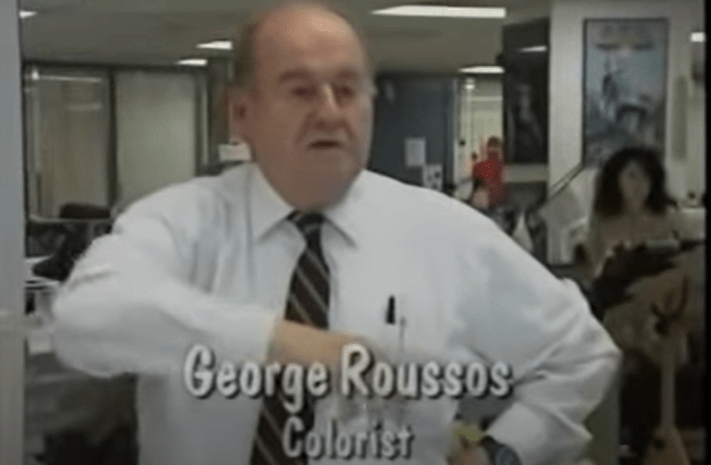
It’s also nice to see Golden Age veteran and comics lifer George Roussos here, interviewed in the Marvel offices, talking about Kirby: “He was a quiet man with a lot of energy within him and it poured out on the paper.”
John Buscema unfortunately shares his opinions circa 1995: “Jack Kirby was great! Jack Kirby was a genius! But Jack Kirby needed Stan Lee. So, working together- Jack Kirby the artist- Stan the writer- and Stan the Editor– couldn’t beat that combination!”

To illustrate just how haphazard and sloppily this documentary is edited, we are shown footage from the Eighties version of the Incredible Hulk animated series while literally being told, “seen here in the 1966 Animated television series.” Did Stan or any of his handlers even see this before it went to air? That’s just a ridiculous mistake to make for a major network.
“And I remember the conversation I had with Jack Kirby when I told him about the Hulk… I’m surprised he didn’t just walk out indignantly and say “forget it Stan!”. I said, “Jack- we’re gonna do a monster but you know, I want you to draw me a sympathetic monster and a good looking monster that a reader can relate to! But Jack never failed… he drew a Hulk so perfect and so sympathetic, the readers loved ’em!” – Stan Lee

“The Fantastic Four and the Incredible Hulk opened a floodgate… such artists as John Buscema, John Romita and the reclusive Steve Ditko drew new characters as fast as Stan could write them. The collaboration was called… The Marvel Method.” (Is credit due for properly calling it a collaboration?)
“I would discuss the plot with the artist… the arist would then draw it without any script. Just with the… rough guidelines that I would have given him or her.” – Stan Lee
“And many times I worked with Stan he wrote right over the phone.” – John Buscema
“When the artwork was drawn in pencil, and then I would put in the dialogue and the captions in.” – Stan Lee
“So, had I had to write a full script from the inception I might not have been able to do that many books. But using this system, which became known as The Marvel Method was later adapted by- adopted, I should say- by about all the other companies, uhm, it- we were able to get a lot of work done in a short period of time.” – Stan Lee

Smith’s dramatic narration continues: “But Stan’s creations were hampered by poor distribution… the web was spun so tight that his most famous superhero was almost never born.”
“Peter Parker came from an effort on my part to do something that was even more different than the Fantastic Four and the Hulk… knowing how I hate teenaged sidekicks, I said ‘why not have a teenager who’s the hero? Forget this sidekick business! Why couldn’t a teenager have a super power? I loved that idea.” – Stan Lee
(It won’t surprise you, but any notion of co-creating is not mentioned in this episode of Biography. It’s Stan’s creations and efforts on his part, etc.)
“I think I enjoyed starting the Spider-Man series more than any other series I’ve ever started.” – Stan Lee
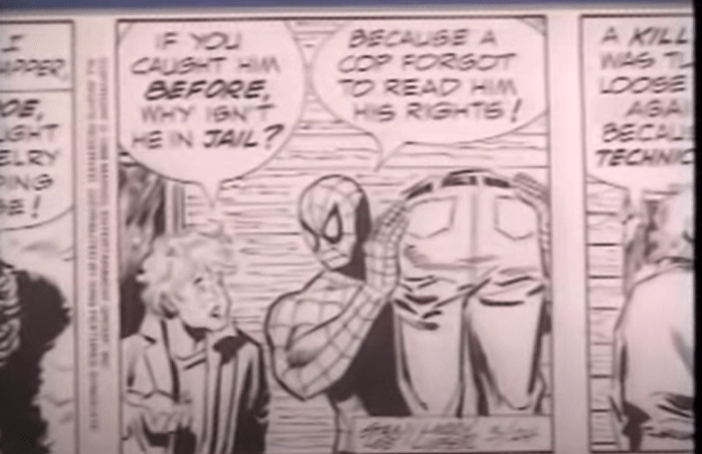
Somewhat randomly in all of this, Lee makes a point to comment on his sincere concern about criminals being arrested but not staying incarcerated due to oversight or legal errors such as the arresting officer forgetting to read the arrested party their rights. Lee says all of this with more than usual emphasis, then proudly points to tackling this very subject in no less than two installments of his ghost-written Spider-Man newspaper strip.
Harlan Ellison comments on Spider-Man and this may just be my take, but I read this as Ellison mocking the perception of Lee’s “heroes with problems” schtick:
“Every time you turn around, Spider-Man is moaning and, ahhh boy, oh is my life terrible, my Aunt May she’s got, y’know, she’s got ulterior sclerosis and I haven’t got a good bowel movement and he does all that, and, once in a while, I would love to see him happy…” – Harlan Ellison
“When an Artist would come in and they would be working on the plot together…” – Flo Steinberg
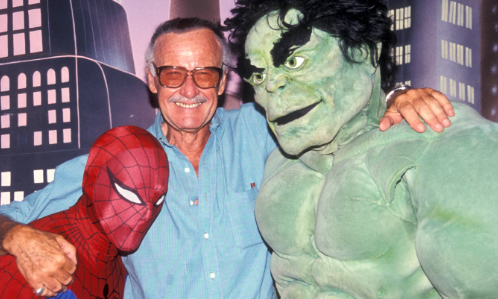
“He would spend the next twenty years of his life pursuing prestige.”
Harry Smith continues to dramatically recite the bold trajectory that Lee and Marvel have provided over the years: “By the early seventies, Stan Lee was king of the Marvel Universe but he felt it was a realm without honor. So he embarked on a quest to win respect for his art… and himself.”
This is complimented with a montage of Lee lecture propaganda and photos from speaking engagements. Ellison again shows up to give a statement with deeper connotations:
“Stan… while he worked long and hard gaining respect for comics and his milieu… once he got that fame, once he hit the pinnacle… he’s never retreated from it.” – Harlan Ellison
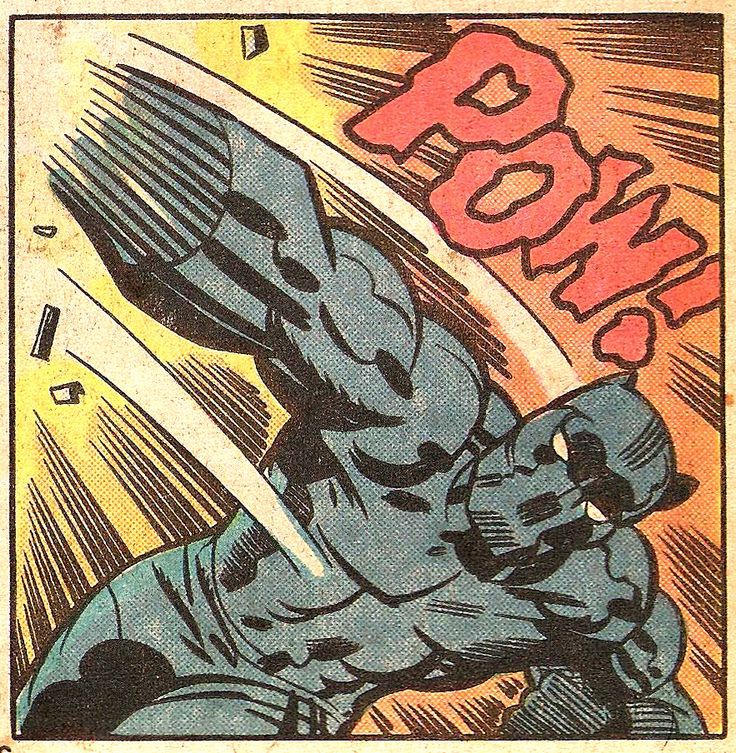
“I felt that Blacks had to be represented… I drew him as a powerful and virtuous character.” – Jack Kirby
Credit due?? Well, immediately following Kirby’s quotes on the Black Panther, Harry Smith’s bombastic voice announces the following:
“Following the Black Panther, Lee & Kirby added Luke Cage, Hero for Hire to the Fantastic Four!” (Wait, what)
“I’m happy to say that even though I was told, ‘oh you’ll never sell these books in the South… the books sold beautifully. Which made me feel good about mankind in general.” – Stan Lee
Lee is talking about introducing Black characters in Marvel books during the Sixties and, while not a contradiction outright, he and others (Peter Sanderson comes to mind) had said in the past that T’Challa wore a full mask because of distribution in the South and Southern concerns were why Black characters weren’t introduced sooner.
“His FAME drove a wedge between the longtime collaborators.”
That is how the Lee and Kirby breakup is addressed; unsurprisingly it’s insulting to Kirby besides also being untrue. We then go back to Evanier, who comes off as very pro-Lee to me here which is fine, but serves as more evidence towards Evanier changing his tone repeatedly over the years:
“There were interviews done that would interview Stan Lee, Stan would talk at length about how Jack had contributed to the storylines and the interview would come out saying, “Stan Lee has all the ideas, Jack Kirby just draws ’em, what Stan says”, this is not true, it’s something Stan has never really maintained.” – Mark Evanier
Note that Evanier once said about the infamous Nat Freedland piece: “That article did enormous damage to Jack, personally and professionally” but, in 1995, he was a bit more sympathetic to Stan’s side of things.
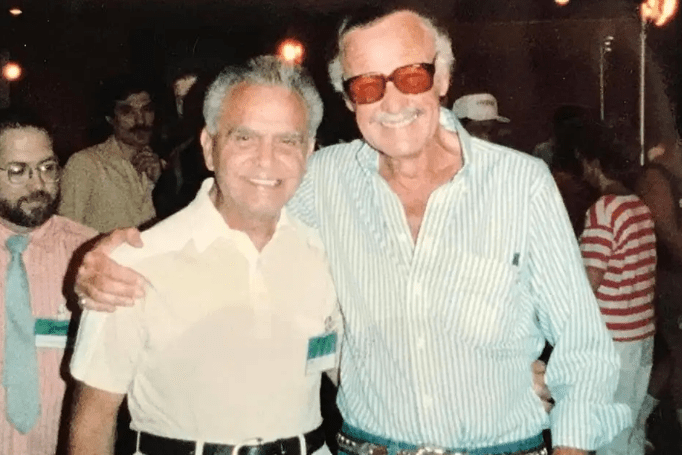
“And I gave the X-Men to different artists who were good, but they weren’t Jack Kirby.” – Stan Lee
I was surprised to see that Lee’s move to Hollywood segues briefly to the spectator boom of the Nineties. “What was missing was Stan’s touch. What was also missing? Was innocence.”
They discuss the various new owners of Marvel and the claim that, while Stan was finally out of comics, “comics were not out of Stan.” We next see the success of the animated Spider-Man and X-Men series of that time which were the most successful mainstream enterprises Marvel had going at the time this was filmed.
James Cameron- at this time still touted as the director of an impending Spider-Man film- says that Spider-Man is about “identity and values” which I suppose is true. Then we get a long “folksy” segment about Mothers throwing out comic book collections.
“In 1994, Stan- and comics- suffered a tragic loss with the death of Jack Kirby. A meddling third party spread rumors that Stan would not be welcome at Jack’s funeral….“

I’m curious who the “meddling third party” was and why they’d feel the need to reference that third party at all in an apparent biography of Stan Lee. Mark Evanier gives a clumsy retelling of an incident at Kirby’s funeral:
“Fine, we want you (Stan) there- I delivered the eulogy– and, as he left, Jack’s widow Roz called after Stan, she wanted to embrace him- wanted to show there was no hard feelings, no animosity and Stan didn’t hear her and he just kept going out to the parking lot. He had to leave for a business appointment… I went out to try to drag him back in, I couldn’t get him…” – Mark Evanier
The thing that stood out for me is the randomness of Evanier suddenly interjecting “I delivered the eulogy”- like, what’s the context or relevance of him to suddenly offer that to the filmmakers? It’s possible he thought it was necessary to establish why he’d be talking to Lee about Lee’s attending, but he had already established that before the part I quoted here. It really does feel glaring, and like Evanier just wanted the world to know that HE got to deliver the eulogy. (see also: Evanier’s glee at the “fans” meaning HIM in my entry on how Evanier got Dick Ayers removed from assignments)

“His future is the unchartered realm of fantasy, explored every time a kid of any age finds adventure in the pages of a comic book. And yes- he finally has respect.“
“…and very happy being Stan Lee.” – Joan Lee
So, the A&E Biography of the Smiley One holds little surprises, baffling errors and the usual lack of selective history and proper credit for Lee’s collaborators. You aren’t missing much. This is, per usual, Lee’s history being put forth into the world.
At a scant 43 minutes and some seconds, it’s not quite the ordeal the next piece I’ll be reviewing surely is: With Great Power- The Stan Lee Story from 2010 is more than twice that length and three times as sadistic! Don’t say I didn’t warn you- it’ll be the next installment in our ongoing look at Lee biographies and documentaries- I’m watching it so you don’t have to!

Also, I want to tell Nat Segaloff that he is an absolute failure as Producer-Director. As he got paid in 1995 for this I’m quite confident he doesn’t care what I think, in case anybody is about to tell me I’m being mean.
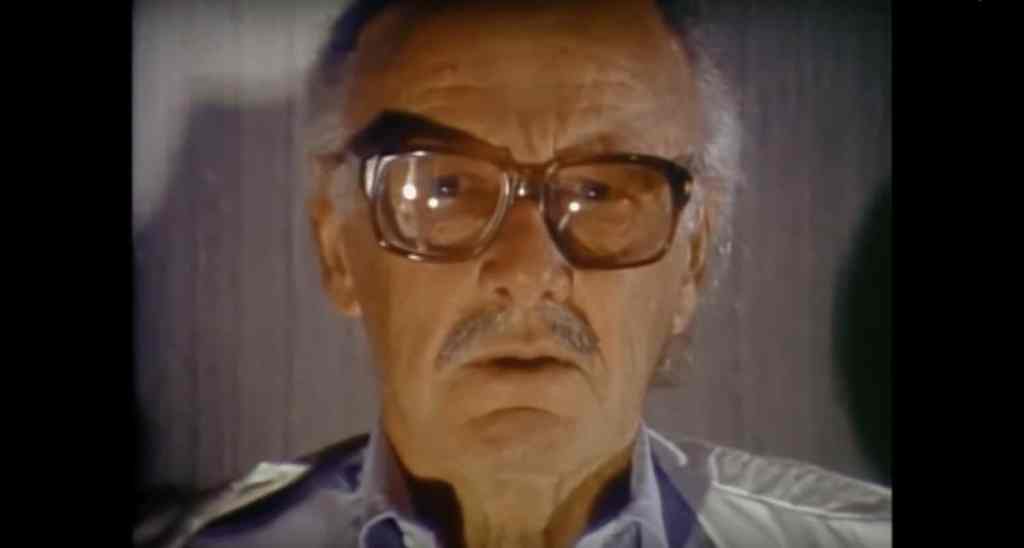
The photo of Stan Lee at the top of this article is a still from Blair Murphy’s 1994 film, “Jugular Wine: A Vampire Odyssey”

 Four Color Sinners
Very good review. I agree with evyerthing you said. Ellison and Evanier were both disappoinments.
LikeLiked by 1 person
Thanks Mark. You don’t think Ellison said some interesting stuff though?
LikeLike
If there’s one truth we can take from this travesty, it’s that Mark Evanier gave Kirby’s eulogy.
LikeLiked by 1 person