You’re sick of it. I’m sick of it! When I publicly declared that I would comprehensively review every documentary and every biography of Stan ‘The Man’ Lee, I never knew how quickly I’d fatigue from the slog of the same ol’ folk tales and talking heads praising and regurgitating the usual tired tropes. To add insult to injury, I’ve got older guys accusing me of writing an “Anti-Stan Blog.” Well, this entry certainly isn’t going to change their minds.
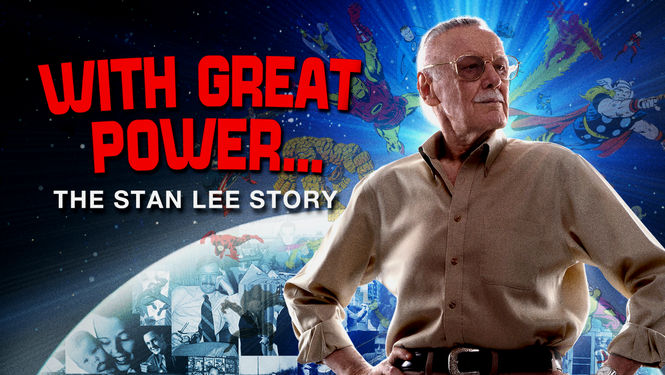
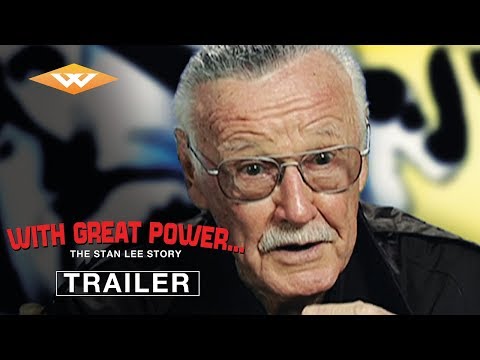
‘With Great Power: The Stan Lee Story’ was released in 2011, not long after the Marvel Cinematic Universe started proper, and I find it worth noting that it took three directors to make this. That will be notable when you consider the blatant errors- I’m not even talking about the blatant lies– that we’ll see throughout the film.’
The film opens with news footage of Lee receiving a National Medal of the Arts from then-President George W. Bush in 2008. (As an avowed Reaganite who often bragged about Reagan reading his ghost-written Spider-Man newspaper strip, I wonder if this interaction with a notable Republican President delighted Lee beyond the prestige such an award granted him.)
We go through an animated montage of Silver Age covers before getting some banal comments from Nic Cage and Kevin Feige. Feige has a deer-in-headlights look and speaks entirely in monotone. You already know how Nic Cage is.
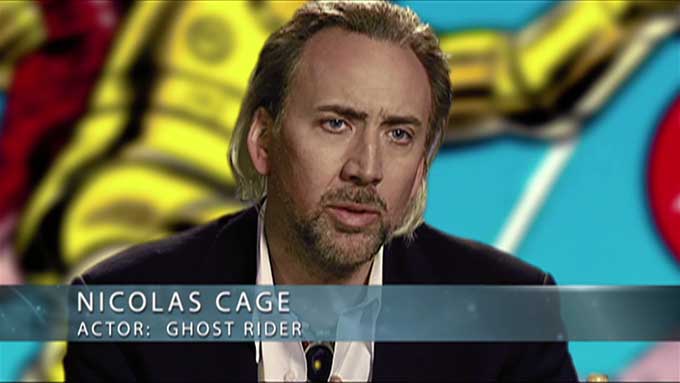
- 0:53: “Lee created Spider-Man, and the Hulk, and Fantastic Four, X-Men and Iron Man.” – Kevin Feige
Not too surprising that, not even one minute in, Stan Lee is given one hundred percent credit with absolutely no reference to his collaborators or Jack Kirby.
We next get another montage of quick soundbites from various actors and celebrities, perhaps to show how “mainstream” and comics have become at that time.
- James Franco: “He really put himself into the comics.”
- Paris Hilton: “Stan is very hot.”
A fan at a convention is quoted as saying at 2:09: “I just relate to so much of what Stan Lee writes in his characters.” Which leads me to wonder how many actual comics credited to Lee as writer these modern fans read. Were they referring to reprints? Or are they subscribing to a general subconscious idea of Lee’s early stories setting up the foundation for all the Deadpool comics they were drooling over in 2011?
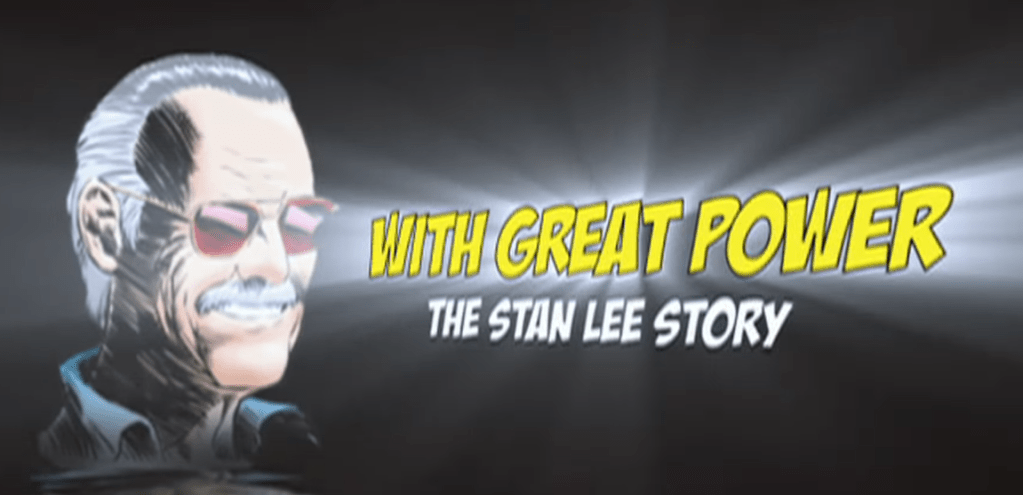
At three minutes we move through another animated tunnel featuring a healthy dose of largely Kirby and Buscema-drawn Marvel characters.
- 3:31: “Creating comics was never part of my childhood dream.”– Stan Lee
A nice touch is that when Stan Lee talks about his childhood dream of becoming an actor, era appropriate footage of Silent Film legend and Swashbuckling pioneer Douglas Fairbanks Sr. is played from his 1926 film “The Black Pirate.”
- 4:59: “I got into comics by accident when I heard there was a job open at Magazine Management, they wanted me to work in the comic department.”– Stan Lee
Notably no mention whatsoever of Martin Goodman and the family connection between the Goodmans and the Lieber family.
- 5:15: “Jack was the artist and he did some of the writing, also.” -Stan Lee
- 5:33: “I remember the first day he came here, he came to the office.. he had a little flute, and he’d sit in the corner and play his flute and drive Jack Kirby crazy.” – Joe Simon
Joe Simon appears to give another bemused anecdote about Kirby always having it out for poor Stan. Contrast this however with Simon’s 1990 recollections in Marvel Age magazine where he had a somewhat different take on both Lee and Kirby.
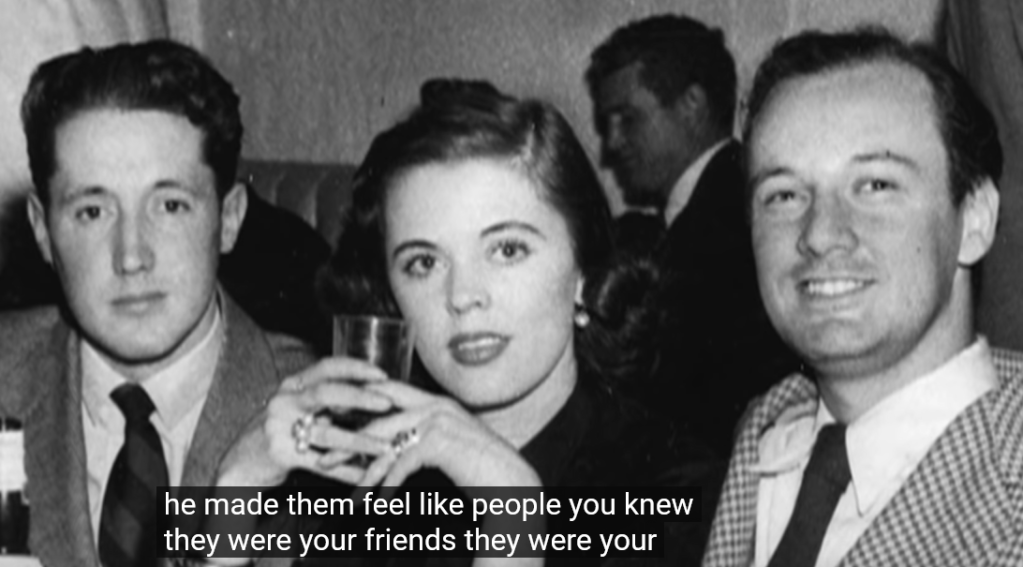
- 6:47: “After about 10 issues of Captain America, less than a year, Joe Simon and Jack Kirby suddenly left the entire company and all of a sudden we didn’t have an Editor. Captain America was left in the lurch without it’s main writer and artist.” – Roy Thomas‘
- 7:06: “So the publisher, Martin Goodman, he said, “Do you think you can hold down the job of Editor and Art Director and Head Writer until I get a real person?” – Stan Lee
- 7:32: “I wrote a lot of the Captain America stories, but then, eventually, a lot of other writers did ’cause there wasn’t time for me to write everything.” – Stan Lee
The Rascally One summarizes Simon & Kirby’s departure with a subtle tone implying that S&K just unprofessionally left Timely “in the lurch” rather than mention it was over a lack of promised royalties. Lee repeats his familiar tale about becoming teenaged Editor and also stresses that any reason for him not writing other stories is simply because he didn’t have time. What was Stan Lee doing with all his time for his entire career?
We next get a dramatic montage of World War II footage complete with General Patton and bombs exploding.
- 8:53: “I myself got caught up in all of that, that the next thing I knew, I had enlisted in the army.”
- 9:05: “I felt our nation was really in danger, and I couldn’t have lived with myself if I were a civilian while other people were over there fighting.” – Stan Lee
I don’t believe that only deserve credit if you fought in combat as so many roles were crucial and essential during the war effort, but Lee’s retellings of his patriotism are misleading- he enlisted to avoid the draft, and had it arranged to work in nearby New Jersey so he could still write scripts for Timely.
All of his documented recollections of his service outside of documentaries are laughing anecdotes of him using someone’s car to take women out every weekend. So, he couldn’t have been too worried about the Axis during his extremely comfortable time in the military.
- 9:47: “He was evidently so good, he could aways finish his work so fast, that then he’d be able to sit around and goldbrick for a while, I guess, you know.” – Roy Thomas
Roy Thomas says the above with a chuckle. I wasn’t familiar with the term “goldbrick” so looked it up and I think it speaks volumes as well as sheds light on how Lee’s apparent protege viewed his personality:
verb: goldbrick
invent excuses to avoid a task; shirk.
“he wasn’t goldbricking; he was really sick“
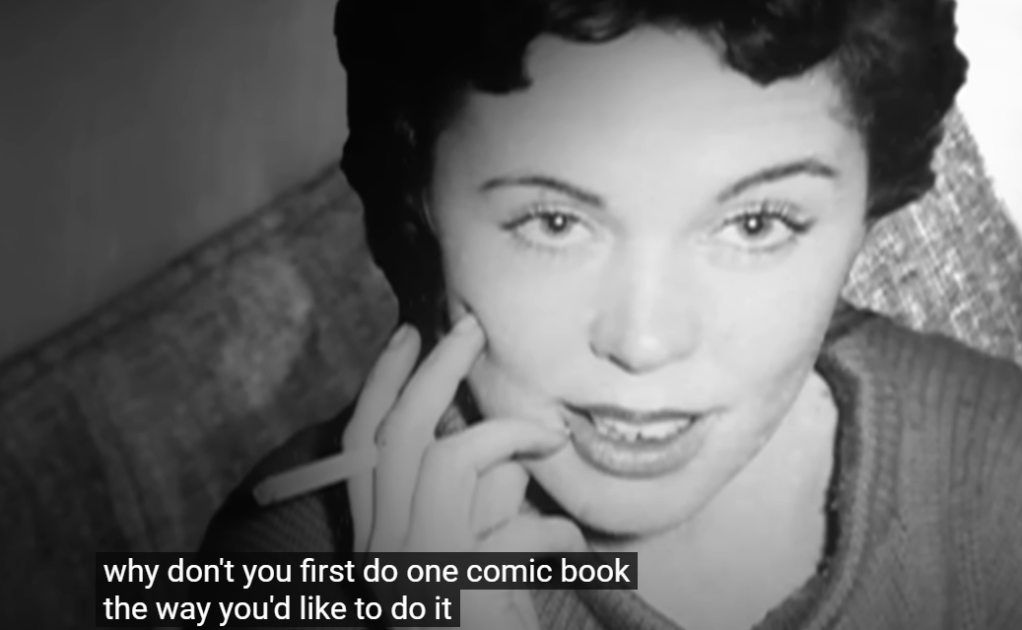
Now say what you want about Joan Lee but she genuinely has a charisma and sense of wit and comes off well, I think, throughout With Great Power just in terms of being an entertaining dame who doesn’t seem to take her husband that seriously (though is still moved to tears by a poem Lee writes her on their Anniversary, notably on official Marvel Inc. stationary).
- 10:53: “Well I may as well tell you the whole truth really, and nothing but the truth. …I came over as a War Bride. And I became a hat model. And Stan said to one of the salesmen there, “That’s the girl I’m going to marry.” And he said, “Not a chance, she’s married already.” And he said, “No that’s the girl I’m going to marry.” – Joan Lee
I’ve seen some insulting things said online about the Lee marriage and I disagree with people doing that; it isn’t for us to comment on moral grounds about Joan Lee already being married when she met Stan. I include this because, yet again, it differs greatly from other telling’s of how Lee met his wife.
In 1995, A&E Biography claimed it was at a party. In yet other telling’s, she opens the door when he’s there to meet her roommate. As those anecdotes came from Lee himself, can we assume that both are untrue and Joan Lee’s account is the actual truth?
A scene follows in which Joan encourages a reluctant Stan to dance with her for the cameras; it’s completely charming if you just saw these two as an old married couple.
- 12:26: “You know how lucky we are to move like this at our age? Sweet Jesus.” – Joan Lee
Joan Lee describes in voiceover visiting Stan in the Timely offices of the Forties which is then paired with footage of the 1971 Marvel Bullpen from the “We Love You, Herb Trimpe!” student documentary. The filmmakers then took footage of Eighties Stan working on the West Coast and altered it to make it resemble the 1971 footage… just ridiculous!
- 15:00: “…Some people somewhere think that I wrote and drew. They think that the strips were just mine, but they would’ve been nothing if not for the artists that I worked with. I just put the words in the people’s mouth. And I may have come up with the original idea, but after that, it was a partnership.”
- 17:00: “In the gay, halcyon early days, Jack Kirby developed most of the Marvel Heroes with me. Jack drew like a movie director.” – Stan Lee
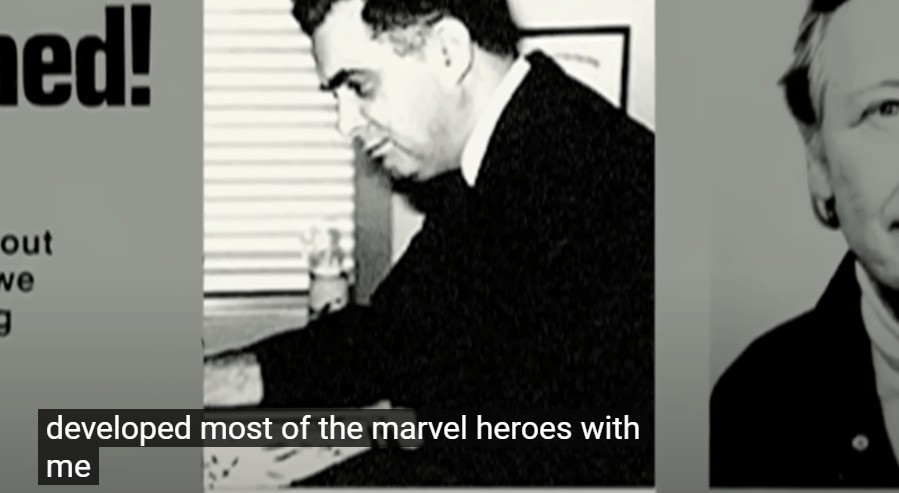
- 17:12: “In a very short span of about five or six years, Stan Lee and Jack Kirby created more successful characters than any person or two people together have ever created in the history of comics.” – Mark Evanier
- 17:39: “He (Kirby) drew with such certainty; he knew just where every line was gonna go. There was no hesitation…” – Stan Lee
- 17:55: “I know those people, first. When I put them down, they’ve already lived, and I put them down as I’d like them to live on those pages.” – Jack Kirby
- 18:20: “I used to hear them plotting stories, but I don’t remember them ever agreeing on anything. Jack had his own idea. He went home and did his version. And Stan, when he got the pages, said, “Gee, Jack didn’t remember anything we talked about.” Jack did one version, Stan made it something else, and that’s why there’s a disagreement between Jack Kirby and Stan Lee as to whose story it was. (laughs)” – John Romita Sr.
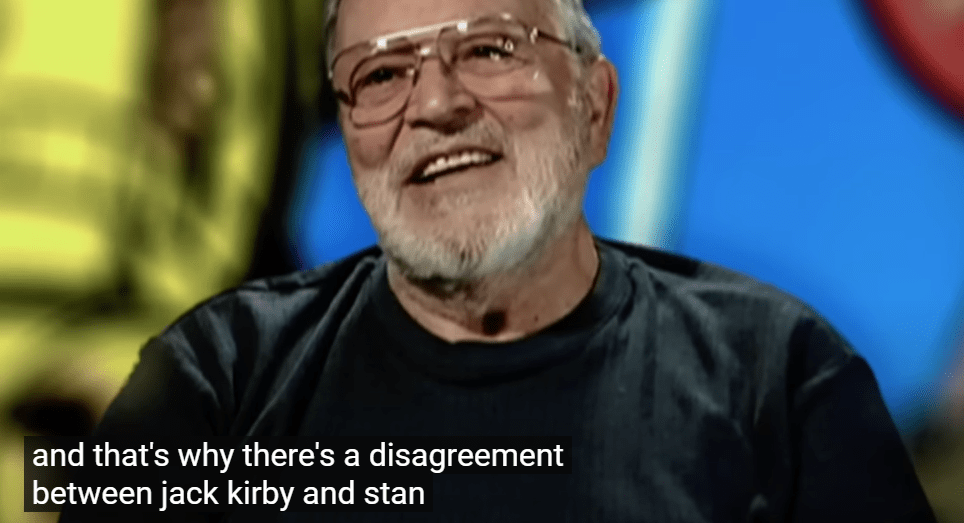
Romita Senior’s obtuse recollection makes light of the staggering creative theft that Lee committed against Jack Kirby, a theft which continues into the present day. I don’t think Romita is being malicious here; he simply lacks the entire picture and empathy needed to confront this.
After decades of claiming that he “never knew” Kirby was ever upset, Lee says something in passing I found interesting:
- 18:41: “We used to have disagreements. I never thought it got him angry! I love fighting with people. Maybe it bothered when I always said, “You’re wrong.” – Stan Lee
They next touch upon the fateful Herald Tribune article that served as the main catalyst for Kirby gradually evolving from the understanding concern about leaving due to needing to provide for his family to finally reaching the “fuck this shit” point (also aided by the evidence that Marvel didn’t value his significant contributions, regardless of who owned Marvel).
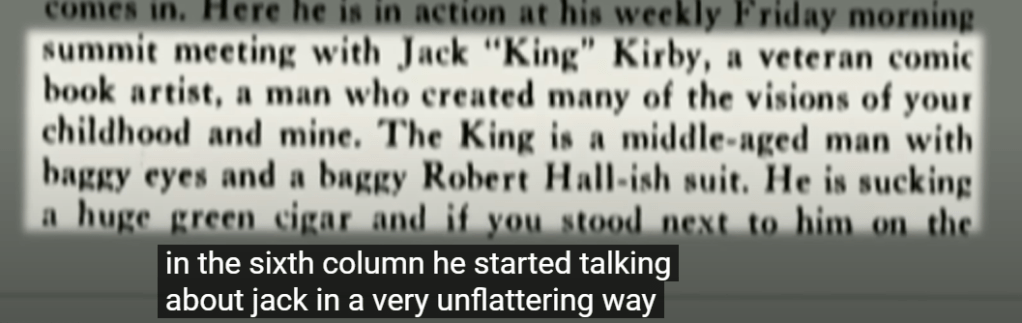
I once spoke to a younger guy who didn’t see why this would be so devastating to Kirby and I realized that we sometimes take for granted how much more prominent the newspaper was in American life. Besides fanzines which were an entirely amateur/underground enterprise produced by a small subculture, there wasn’t much press attention towards the comics book industry. Appearing in a major New York newspaper in 1965 would have been a “big deal” for any family; they likely would have told neighbors and relatives leading up to the article’s release.
- 19:36: “I got a call from Roz, Jack’s wife, and I hadn’t see the article. I thought she was calling me to say how great it was, how excited they were, and she was in tears. She said, “How could this have happened?” It was the most horrible thing, really.”
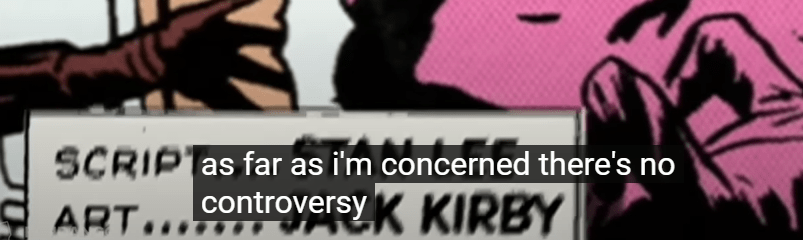
- 20:04: “As far as I’m concerned, there’s no controversy. I mean, uh, he was the greatest partner a guy could have.” – Stan Lee
- 21:13: “He interviewed a hundred juvenile delinquents, they all said that at one time or another they read comic books. Therefore, Dr. Wertham concluded, comic books caused juvenile delinquency.” -Michael Uslan
- 22:28: “See, Americans were embarrassed about comics.” -Joan Lee
The bland himself Michael Uslan speaks about the Comics Code leading to blandness in comic books, but I feel it’s more just the usual super-hero snobbery as a montage is shown set to his words showing other, non-superhero genres. This is commonplace and once thriving genres such as Romance and Mystery have been consumed by the superhero.
I found Joan Lee’s comment very interesting so unsurprisingly, it’s not followed up on. As Joan was British, she likely had a passing awareness of how comics are perceived in Europe, so I presume her comment was in reference to this. Or she’s just very perceptive about how insecure the devoted comics fan has been about “mainstream acceptance.”
- 24:40: “And Martin said, “Stan, I’m going to Miami, and I’d like you to tell the staff that we have to let ’em go.” (chuckles) That was always the thing I had to do, and that was like one of the worst moments of my life…” – Stan Lee
- 25:08: “I didn’t get any work. There was no place I could get any work. So, I got a job as a security guard for General Foods.” – Dick Ayers
I think it’s absolutely terrible that the filmmakers framed Ayers’ statement in conjunction with Lee’s Fifties-era story. Ayers was referring to being blacklisted by Marvel in the Seventies here, when he fought for royalty money and was defamed by STAN HIMSELF to other publishers so that he couldn’t get hired. Shameful.
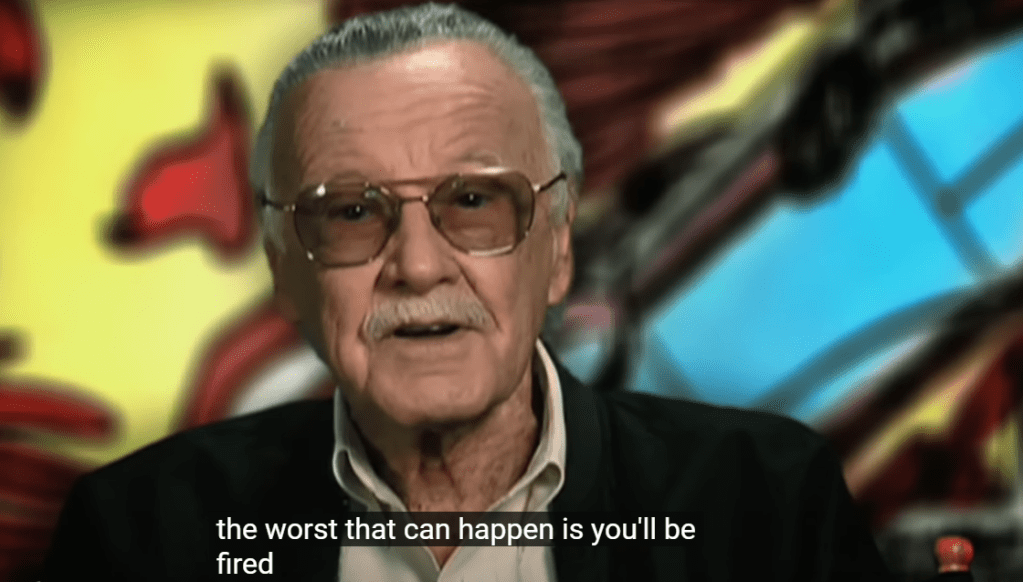
- 26:13: “But finally, I was ready to quit by about 1960 or ’61. I had been doing it for 20 years and I said to my wife, “Look I’m sure there’s something I can do. I’ll try to write a novel or something.” And she said, “Stan, if you wanna quit, why don’t you first do one comic book that way you’d like to do it for a slightly older audience. Write it the way you feel like writing it. Get it out of your system. The worst that can happen is you’ll be fired, but you wanna quit anyway.” – Stan Lee
- 26:49: “When Joan finally said, “Why don’t you do one book the way you’d like to do it,” it was like a light bulb exploded over my head. I felt, well at last, at least I’ll get it out of my system, and then I’ll quit or be fired!”
- 27:31: “I’d want everybody to know, look at me, I can do things you can’t do! I’m better than you are and here’s my name if you don’t believe it!” – Stan Lee
We are then shown footage from the 1986 episode of long-running ABC news program 20/20 that covered Marvel’s apparent 25th Anniversary- an episode which had no mention whatsoever of Jack Kirby or Steve Ditko.
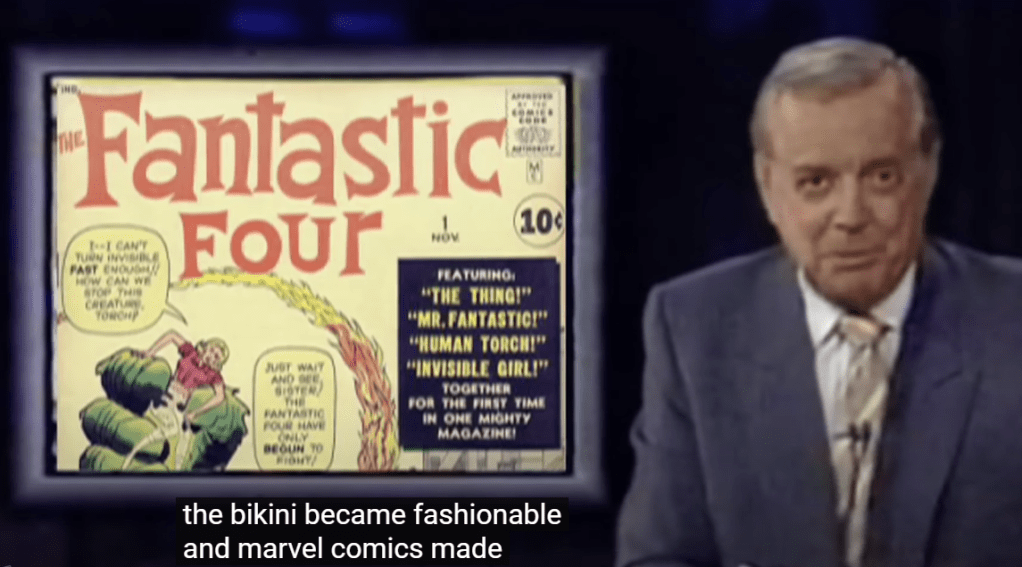
- 28:17: “Comic book superheroes, up until 1961, were cardboard characters. They didn’t really have a sense of humor. There was no texture to it. There were no subplots.” – Michael Uslan
Can someone, anyone please inform Michael Uslan about Jack Cole’s PLASTIC MAN. Has he never seen any comic before Silver Age Marvel? There are several characters from the Forties such as The Spirit, Captain Marvel and so forth that had healthy doses of humor in them. This is the issue with producing “documentary” footage with fans– their nostalgia and bias inevitably leads to shit like this.
- 31:06: “1961 on, with the Fantastic Four, comics grew exponentially. It was absolutely a miracle.” – John Romita Sr.
- 31:13: “I would say from ’60 to ’70, that’s when I enjoyed the comic book business more than I have ever enjoyed it.” – Stan Lee
What a telling comment. Why wouldn’t Lee enjoy that decade the best? Can anyone tell me what changed in 1970 that may have made things less enjoyable for Lee going forward? Hmmm…
We see footage of Lee typing on his Dell computer in his office (something called “The Monkey King“- I wonder if the filmmakers instructed Lee just to type anything for filming purposes, and am curious if anyone knows anything about a Monkey King project- that character being a 16th Century folktale in China) and I have to point out that the filmmakers are visibly shown trying not to be seen in amateurish ways when they could have just stayed in the shot. Many documentaries take that approach so it’s curious that they’ll quickly try to back up a step when a they’re seen in reflection, etc.
Joan Lee recounts a terrible fight in which she smashed Lee’s beloved typewriter. But Lee seems obtuse about why his behavior would have caused her reaction:
33:31: “Because you were a camera buff then. Probably (you said) something like, “Joan, how can you stand there, you idiot, the sun’s in the wrong position, or something.”
Stan Lee: “Well, why would that get you angry?”
Joan Lee: “You have no idea.“
We’ve often been told- even by Lee’s defenders- that he lacked awareness of when people around him were upset. This exchange seems to support that. Worth considering.
- 36:31: “He made them feel like people who you knew, they were your friends, they were your neighbors. And suddenly, people got emotionally invested in this. And they cared about it.” – Jim McLaughlin
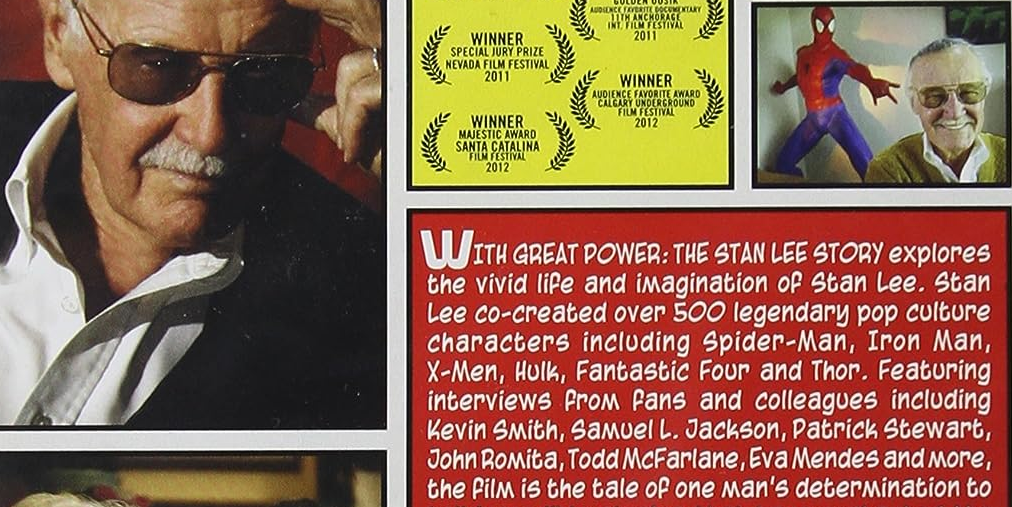
- 37:28: “It was very easy for me to identify with Peter Parker, ’cause all I had to do was think of a lot of things that happened when I was young.” – Stan Lee
Imagine if you will a history where Stan Lee still lived the life of Stan Lee but didn’t steal credit for things he didn’t do and who freely gave the proper credit to the creative forces he was associated with. Do that and consider that he still had beneficial relationship with a millionaire relative who took care of him and gave him a safety net his entire adult life.
And then compare that to what you know or remember about Peter Parker: constantly broke, fraught with a sick Aunt to worry about, bombing out with girls. When did this “I based Peter Parker on my life” bullshit actually begin??
- 38:14: “All of the things that Stan is, his morality. Uncle Ben, you know.. all of that is Stan’s attitude towards mankind.” – Joan Lee
- 39:26: “My father, he just always told me, “Stan, the most important thing is to do the right thing.” – Stan Lee
- 39:39: “So from that came the nature of the man writing Spider-Man and the whole thing.” – Joan Lee
Also, a surprising turn for Lee’s father who is only previously mentioned in Lee biographies as a bad-tempered man who literally screams about not having money or being unable to find work and then, later, becoming an alcoholic whom Larry Lieber won’t live with as a teenager and whom Lee barely speaks to. But he always told Stan to do the right thing in between all of those things.
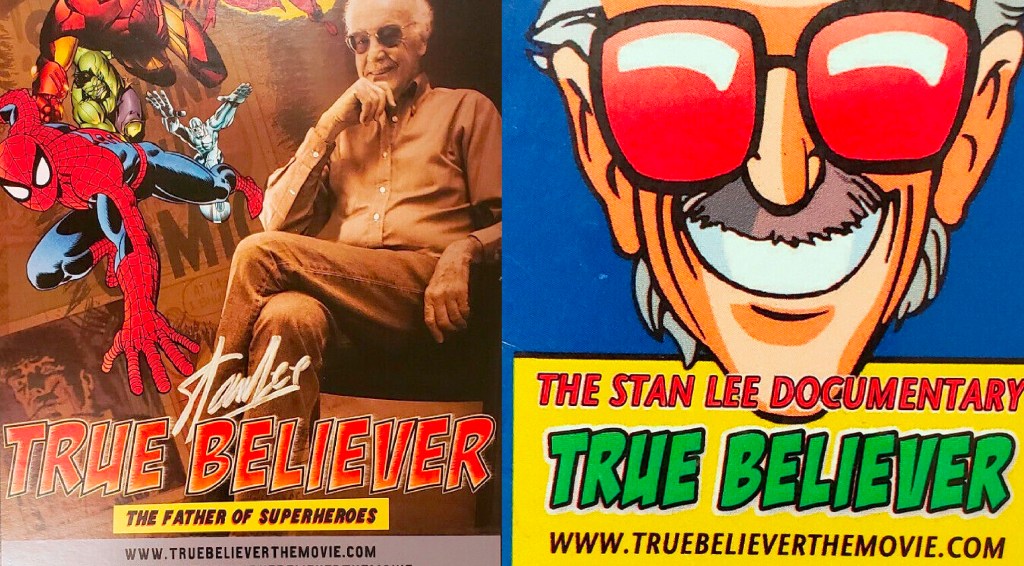
(Above: in another world, this film was called “TRUE BELIEVER”- would Jo Riesman’s Lee bio have ended up called “With Great Power…” then? These images are from an early screening before the film was completed.)
- 39:44: “How I came up with the idea for Spider-Man, I have said this so often at so many places that for all I know, it might even be true. I was trying to think of a new character, and obviously one of the most critical decisions you make is what superpower does the character have?”
- 40:10: “And then I saw a fly on the wall and I go, wow, wouldn’t it be something if I had a character who could stick to walls like an insect?”
- 40:23: “Then I needed a name. Names are very important. So, I thought of the first logical one, Insect-Man. Somehow it didn’t sound glamorous or dramatic. I figured, well, Fly-Man? Nah, that didn’t do it. Mosquito-Man? I went down the list. I got to spider, Spider-Man. I don’t know why, but it sounded dramatic, frightening.” – Stan Lee
Perhaps it’s just me but I don’t find Lee’s entirely fictious story of what went into creating Spider-Man to be charming or amusing. If anything, it works against Lee if all his process really consisted of was to literally to go down a list and discount a ‘Mosquito-Man‘.
- 41:06: “I’ve tried to call myself the co-creator of these characters. On Spider-Man, I came up with the idea and then I first gave the script to Jack Kirby to draw. And Jack drew the first couple of pages, and I was looking over his shoulder and I said, “Wait a minute, you’re still making him too glamorous looking.”
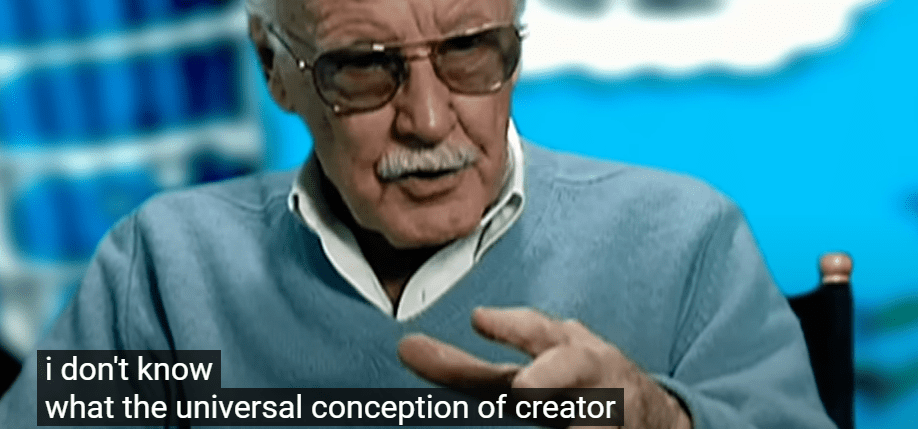
- 41:42: “I don’t know what the universal conception of creator is.” – Stan Lee
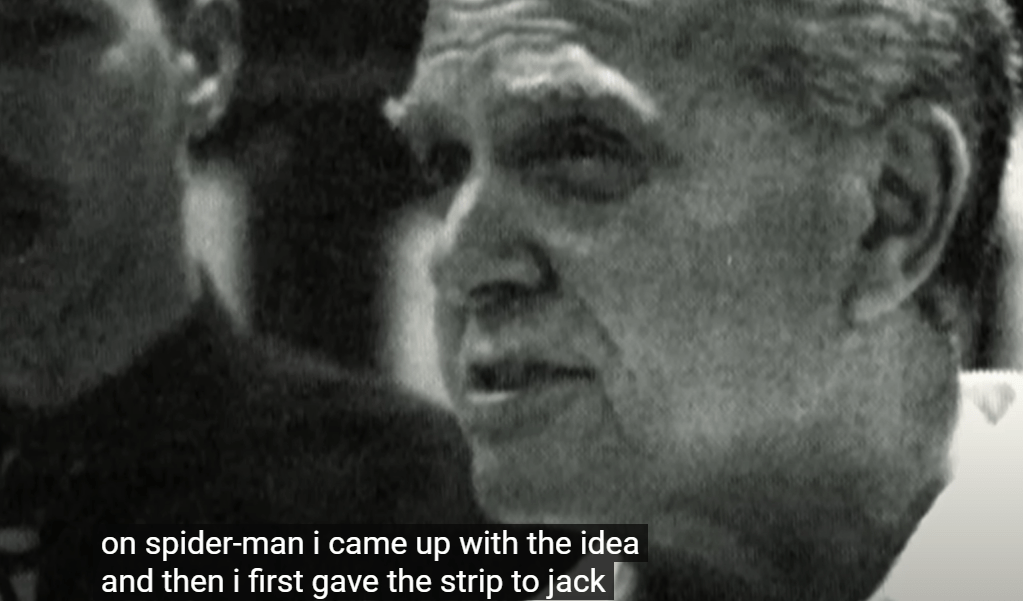
- 42:46: “Steve actually still lives in Manhattan, New York. And when I was in New York a few years ago we did meet. And we did discuss doing a strip again sometime. Who knows! Maybe we’ll still come up with something and surprise the public with it.” – Stan Lee
Lee’s misleading anecdote recounts when he legitimately met Ditko for the first time in years circa 1991 at the Marvel offices, surrounded by Marvel staff. It’s included here to give the impression that all is well and there’s always a possibility for future collaboration. This was not the case and Ditko had no interest in working with Lee, merely being polite at a gathering of professionals.
- 44:20: “You know Stan’s story told us, if you wanna be successful and prolific, put yourself in debt. And the way to do that is to marry a wife who’s a spender. And Joan Lee, he says, is responsible for half his production- because if she didn’t get into so much debt, he wouldn’t have had all the motivation to produce his body of work. So, Stan Lee’s debt has made the world richer… and Joan Lee is responsible for that.” – John Romita Sr.
- 44:47: “My daughter is not sensible and cautious, and I am not sensible and cautious. We just spend his money gleefully.” – Joan Lee
This is telling because it gives credibility towards Lee’s motivations towards developing the Marvel Method system as a means to steal plotting/writing pay from the artists as well as serving as a precursor to the problems Lee experienced at the end of his life. I was genuinely surprised Romita’s comment stayed in the film- though he does say it with a smile- and again, credit given to Joan Lee for just not operating on any pretense.
- 48:49: “One thing I felt there were not enough black superheroes, so I created the Black Panther.”
- 49:20: “Nobody could have been more different than these five or six mutants I had created.” – Stan Lee
- 50:57: “And as the 60’s started to become the 60’s, where themes of alienation and acceptance and feelings against the military industrial complex became more and more important to a growing youth culture, he really turned everything on its head once again.” -Michael Uslan
Uslan’s total devotion to the myth is palpable; he at times seems to almost weep at the beauty of the false narrative that Lee was consciously trying to turn everything on its head and challenge himself (!) in an industry still not completely secure by the time of Iron Man’s debut. Lee didn’t even script the initial Iron Man stories and it’s worth noting that Iron Man was not seen as an “A” list character until his 2008 film.
- 51:15: “At that time, everybody was turned off with the military industrial complex. Just for fun, I thought I’d make Iron Man, a symbol of the military industrial complex, and I’d make the readers like him.” – Stan Lee
- 51:45: “Stan kept addressing the issues of the day, the hot topics, and personal issues and angst that teenagers have.” – Michael Uslan
Another montage is shown of college press celebrating Lee as the Shakespeare of Comics and so forth; a voiceover from Lee describes the college kids of the late Sixties asking questions about the Silver Surfer most of all but this is set to footage of the most radical Nineties convention attendees ever, just baffling editing. It shows the directors are banking on the perceptions of Lee’s myth to carry the film.
- 55:23: “He took this character and he sort of altered it into sort of a flying flower child y’know, on a surfboard who was constantly giving in to thinking about the inhumanity of man to man and talking about how love would conquer all and so forth… and this kind of stuff spoke to a lot of the youth and I think they embraced characters like the Silver Surfer.” – Roy Thomas
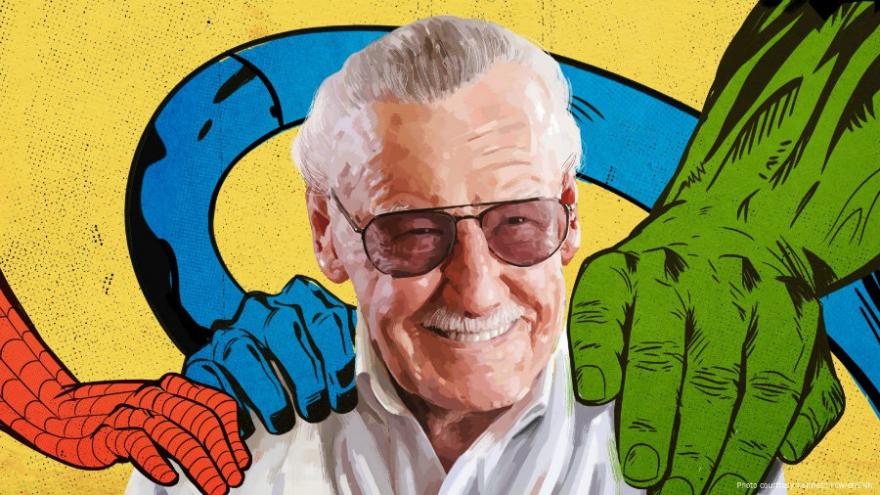
- 55:57: “Marvel Comics began to take on a personality and you began to see that there was one guy behind this whole thing.” – Ralph Macchio
- 56:07: “He marked comic books and super-heroes first to his core audience… second, to the college audience, convincing them that these were as mature and sophisticated as they thought they were, and then making sure the world at large knew about it.” – Michael Uslan
Uslan’s emphasis on “they” is significant.
- 56:35: “And I began not to spend as much time in the office. I didn’t see the writers as much.” – Stan Lee
- 56:40: “He had to have Thor and Spider-Man and Fantastic Four written by other people, and these were comics that had never, at least Spider-Man and Fantastic Four, had never been written by anybody else.” – Roy Thomas
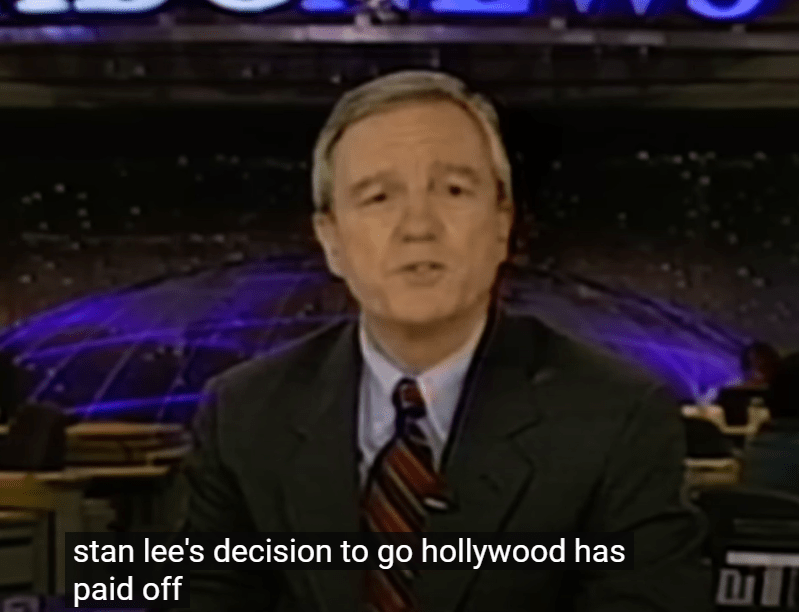
- 57:12: “So I schemed, how can I move out to Los Angeles when all of Marvel is in New York?” – Stan Lee
More bad editing from THREE Directors when we see footage of the famous 1960s Spider-Man animated series while the title on screen describes it as “Spider-Man and his Amazing Friends (1981-1983), Marvel Productions“- such a glaring error especially because that famous “does whatever a spider can” theme song is playing throughout.
Also, remember that this same exact mistake occurred in the 1995 documentary about Lee as well, this time mistaking 1980s footage of the Hulk for a 1960s cartoon! How many people does it take to fuck up so badly?
- 103:02: “I love you, I said, you’re like a father.” – Nic Cage
And, like a child, Cage tells reporters in 2023 that the man who is supposedly like a father to him created Luke Cage. And also plays the Gary Friedrich created Ghost Rider.
When asked what Jack Kirby would think of the then-growing MCU:
- 108:27: “Oh, he’d be thrilled. He would be thrilled. I’m so sorry that he isn’t here to see it all.”
- 108:37: “When Jack Kirby died, it was almost unbelievable, because… there had always been a Jack Kirby.. and he was always the King of the comics as far as everybody was concerned. I couldn’t imagine not having him around, not having him drawing.” – Stan Lee
A segment of Stan nodding and signing things and sitting in corporate offices talking to a variety of people- which may all be staged- over background music is shown. I presume this is at the offices of Stan Lee Media.
- 110:14: “And my contract was invalid as all of them were, and I- I didn’t wanna stop working! So we got a company together and they wanted to call it Stan Lee Media, which I found very flattering.” – Stan Lee
Over light instrumental music, we get a montage of screenshots of Peter Paul’s statement in court in which he pled guilty to misleading investors and blah blah blah– while I have no doubt of Lee’s ignorance in anything illegal here (he has largely seemed ingorant as to the inner mechanics of finances and corporate language), it’s arranged simply to hit viewers over the head that poor ol’ Stan is innocent at all times simply because he’s such an Artist.
- 1:12:02: “Stan is the consummate creator- has nothing to do with the business or financial side. It’s possible to get taken advantage of.” – Michael Uslan
- 1:13:03: “The new characters that Stan’s creating for POW! still have a lot of the original emphasis and problems and sincerities that he had when he created some of his earlier creations. But today’s world, they’re maybe a little bit edgier.” – Gill Champion
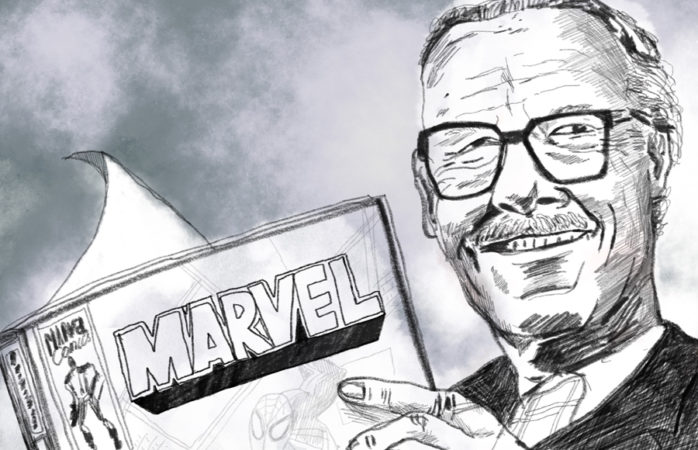
- 1:13:36: “I am still concerned with just writing the stuff and making sure that somebody’s gonna care about it.” – Stan Lee
- 1:14:27: “Despite all his successes and recognition, Stan is really a regular guy.” – Gill Champion
Unless he’s heavily sedated and gradually casting his eyes downward, Gill Champion is clearly reading his lines here on camera when he said this, I kid you not. Personally, I think that’s fantastic.
- 1:14:58: “The only problem is time. I just wish there were more time.” – Stan Lee
So, does ‘With Great Power‘ hold any substance for the curious viewer? Honestly, no. If you’re curious about how the various Lee biographical anecdotes vary, then you might find it mildly interesting. Otherwise, it’s the same usual tripe from the same fawning enablers. The proper and honest Stan Lee documentary is unsurprisingly still yet to come.


Remarkable. Can someone like Uslan really be so out of touch with reality? Is there anything Kirby did that Thomas won’t credit to Lee? The way the editing gets the footage wrong for the respective decade is an indication of the degree of care invested.
LikeLiked by 2 people
So you think theres just a mass conspiracy to give Stan Lee credit?? lmao.. why would any big company risk the lawsuit… why is this now that all of you fanboys want to bury a man who isnt here to defend himself? Kirby was a decent artist who was successful when STAN gave him a chance. Face reality.
LikeLiked by 1 person
This fawning over Stan is a recent invention based upon a narrative pushed by a large corporation. During the 1960s, many fans and professionals were well aware of the theft of credit and money by Lee, which was reflected in parodies published in humor magazines. (“Stan Bragg”)
At a NY comic book convention in 1970, the mention of Lee’s name as editor on a book was met with lusty booing by the 300 twenty-something year old fans in the Hall. I admit to being surprised but the fact is that it’s only lately that the BS has hardened and overtaken the reality of what was really going on during those years. And the fans in real time knew it.
Nostalgia is fine. I remember a lot of those issues with fondness. And I’m not here to change your opinion. But in the fanzines and during the events of the time, the fans knew who was really contributing to the books they enjoyed. As evidenced that by 1970, Lee’s sudden burst of genius seemed to disappear.
LikeLiked by 2 people
Face reality said the guy who still stuck in the 60s lol
LikeLiked by 1 person
GIVE IT A REST YOU GOTTA BASH STAN BECAUSE YOU HAVE NO LIFE OF YOUR OWN CANCELLING STAN IS SICK YOUR SICK!
LikeLiked by 1 person
HORRIBLE. But, I’m sure, nowhere near as horrible as if I actually watched the film!!!!!
“I’d want everybody to know, look at me, I can do things you can’t do! I’m better than you are and here’s my name if you don’t believe it!”
This is NOT a legitimate motivation to be a writer. This is the attitude of someone with NPD (Narcissistic Personality Disorder), a DANGEROUSLY-disruptive malady that is far more widespread than most people suspect.
LikeLiked by 5 people