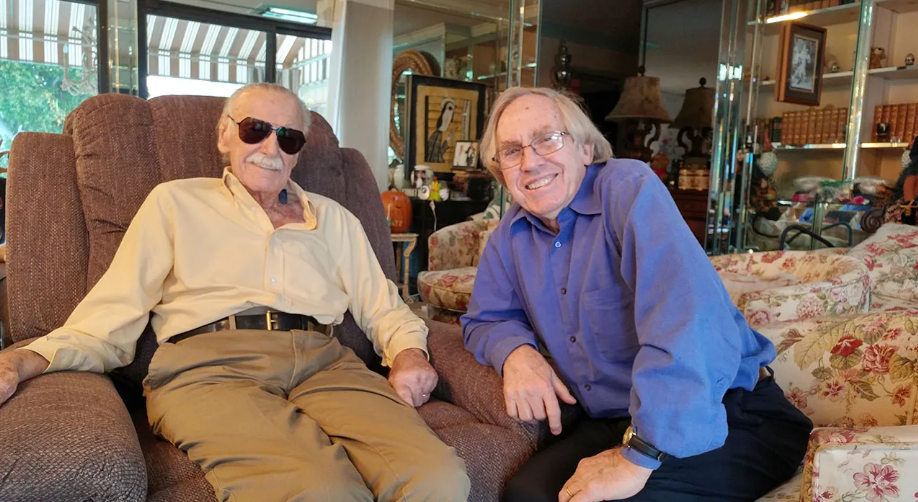
Roy Thomas is clearly seen as Stan Lee’s “de facto protege“, a title he proudly and repeatedly advertises in his press releases and the various biographical summaries that come with his many public appearances. Part of that is due to a concentrated and relentless press campaign that consists of simply telling people that Thomas was Lee’s protege, but it seems that, besides the notoriety that comes with such status, Thomas has apparently inherited something of Lee’s that continues to benefit this new stage of his life and his newfound increased celebrity:
Roy Thomas is the Last Man Standing.
As such, Thomas is in a position to speak out and defend Lee’s reputation and character a half-decade after the latter’s death, to say nothing of the credit Thomas is regularly stealing from such departed creators as Len Wein and Gary Friedrich, often contradicting recorded statements he gave decades earlier on the subject.
Most recently, Thomas has had an outlet for his revisionist history: the Hollywood Reporter, a nearly century-old trade paper regarding the comings and goings of tinsel town. Within its pages, Thomas frequently and righteously rages against anyone that has dared to question his continued meal ticket and catalyst for relevance and it’s within these pieces of his that we will find some rather telling statements and, unsurprisingly, many infuriating ones.

I had assumed that Thomas’s newfound prolificacy at the Reporter was the doing of his omnipresent “Manager” John Cimino, basing my assumptions on the knowledge that one of Thomas’s requirements for participation is a guaranteed credit for Cimino as well as sometimes a full bio for Cimino (regardless of whether he participates in the article or interview or not) and credit given to Cimino as well. Cimino is sometimes credited in print no less than three or four times per article on Thomas, even if two of those times are just to credit Cimino for managing, repping or representing.
But Thomas was writing guest columns for the Reporter as early as 2015, largely puff pieces about various characters who were then premiering in the Avengers motion pictures. As Cimino’s name isn’t mentioned ad nauseum in those pieces I’ll have to presume that Thomas had some other contact that commissioned these.
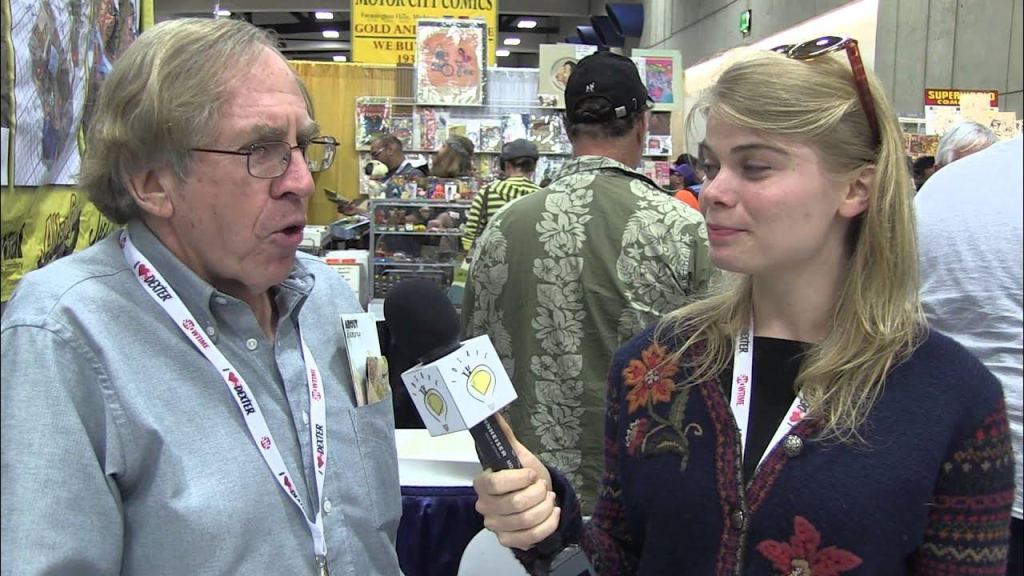
The bulk of Thomas’s impassioned articles for the Hollywood Reporter focus on what you’d expect: Stan Lee the visionary, Marvel Comics during the time Thomas worked there, and Jack Kirby being a great artist but incapable of accomplishing anything without Stan Lee.
As these are published without disclaimers or notations, we are to assume that the reader accepts Thomas’s revisionist outrage at face value- therefore, continuing the ongoing deletion of Jack Kirby and Steve Ditko’s credit in the 21st Century. There is no one to push back or challenge Thomas in these essays; there is no one giving him a proper rebuttal. Allow me, if you will, to attempt a rebuttal in some of these excerpts- for they really, really warrant it.
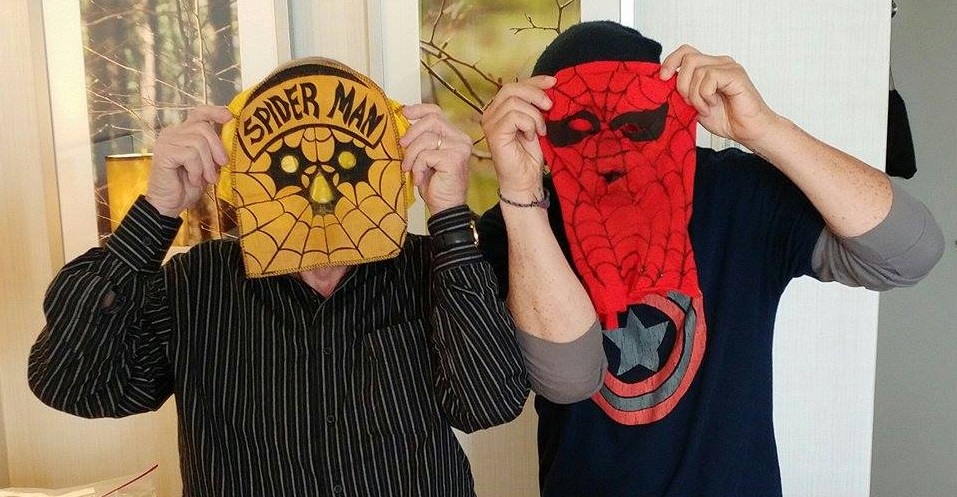
‘ROY THOMAS ON LIFE AT MARVEL IN THE 1960s’ (July 21st, 2016)
- “Of course, it could be said I’m prejudiced, because I had the good fortune to become his writing and editing protégé in 1965, being offered a job 15 minutes after I met him.”
Yes… yes, it could be said.
- “Since his method of working was to give an artist the bare bones of a plot and have him/her flesh it out with exciting drawings, to which he would then add dialogue, he used every trick at his disposal to inspire them to tell the most visually exciting story they could.”
Thomas unwittingly reiterates that the artists indeed got the BARE BONES of a plot… and then, turns it unfairly into a tactical maneuver by Lee to get the best work out of the artists who apparently needed to be inspired to produce “the most visually exciting story they could.” Completely unfair and disrespectful to the Marvel artists who actually wrote the stories.
- “Powerful pictures might pull in a first-time reader, but it was the words he read on the page, as much as the artwork, that would bring ’em back the next month.”
A subtle tactic of subconsciously diluting the importance of the artist’s story on the page- the story the artist actually fleshed out and paced, doing all of the creative lifting and storytelling, while leaving helpful margin notes for Lee to base his dialogue on.
- “Unlike many editors I knew, Stan was free with his praise — for artists, for writers, for whomever.”
I’m very curious about this statement and want to call Roy Thomas out on it, as he’s writing about Marvel as it was in 1965-1966. This is a dishonest and chronologically impossible statement as Roy Thomas didn’t know “many” editors. He’s saying this to again subtly build the case for STAN at the expense of everybody else. While Thomas had corresponded as a fan writing fan letters in a fan’s way with DC Editors, he had only met Mort Weisinger for one day– before going to work for Stan. Does writing fan letters to Julius Schwartz count as knowing many editors? Bullshit statement.
- “He was The Boss — there was never any doubt about that — but he made those of us in the office feel we were part of a team…”
Again, Thomas needs to reaffirm Lee’s competence at every turn. He also makes the mistake of speaking for everyone else working for Marvel during this time. Did Wally Wood feel like he was part of the team?

- “So strong was the foundation Stan established in the 1960s and ’70s that Marvel even survived Chapter 11 bankruptcy at the turn of the 21st century and came roaring back to become a greater phenomenon than ever.”
The foundation that Stan established. Per usual, there is simply no mention of Jack Kirby or Steve Ditko whatsoever. Thomas believes by mentioning them in passing and begrudgingly giving them credit, he has done his duty of delivering the bare minimum. The foundation of Marvel is due to the creations of Jack Kirby and then Steve Ditko, plain and simple. And while Lee did have a significant part on the flavor and tone of Marvel, always remember- he would have had nothing to work with if Kirby hadn’t delivered already conceived characters with already completed stories for Lee to dialogue.
‘ROY THOMAS, FORMER MARVEL EDITOR, PUSHES BACK ON NEW STAN LEE BIOGRAPHY’ (Feb 23rd, 2021)
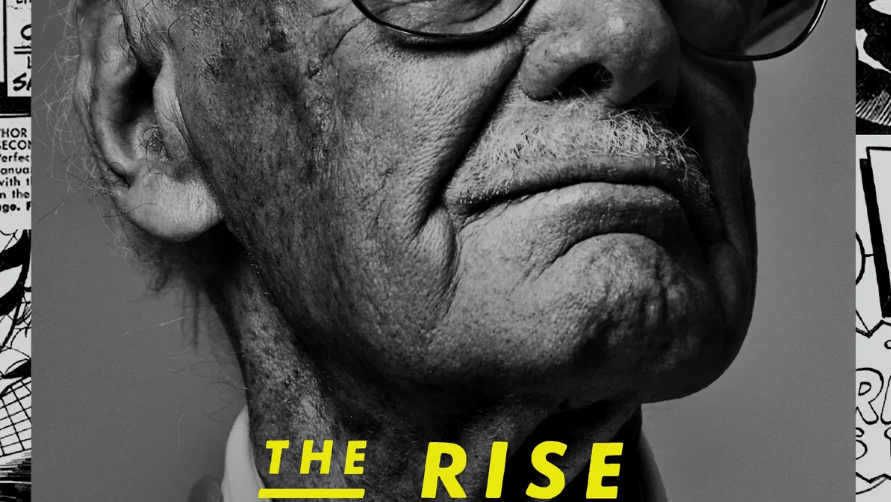
- “Something like 95 percent of the time, Abraham Riesman’s True Believer: The Rise and Fall of Stan Lee is a very good biography.”
Thomas’s bullshit statement here is to simply set a foundation that can possibly shield him from any pushback or skepticism towards his transparency: by giving Josephine Riesman credit (deserved) and then taking it away at the same time with a backhanded compliment, Thomas continues to honor a Lee tradition of passive aggressive credit while leaving openings to take, take, take.
- “As Marvel Comics visionary Stan Lee’s longtime employee and de facto protégé, and as a known student of the history of comic books…”
Ah! Thomas gets to officially credit himself as the “de facto protégé“, therefore making it REAL by getting it in print. I’m sure there wasn’t a dry eye in Cimino’s corner of Thomas’s basement.
- “That Stan Lee was the co-creator, and not the sole creator, of the key Marvel heroes from the Fantastic Four and Spider-Man through Daredevil and the Silver Surfer can hardly be in dispute at this late stage.”
Can hardly be in dispute…? It IS in dispute. It is STILL in dispute… because of people like Roy Thomas, because of these shit documentaries, because of the corporate propaganda machine that is Disney. How dare Thomas say this so flippantly?
- “…he could never really bring himself, in his own mind, to think of them as “co-creators.” The two of us had to agree to disagree, and I never saw any use in bringing it up again.”
Thomas refers to the argument he had with Lee that I’ve cited before, and admits that Lee did not consider Kirby and Ditko co-creators and Thomas does not seem to think this works against Lee but just that it’s a friendly disagreement of sorts.
- “…I’m sure I’d have encountered the same kind of blinders-on stubbornness in Jack Kirby, who saw Stan as little more than the guy who scribbled a few words of dialogue and rode to unearned glory on his back.”
The context of this is Thomas saying if someone only read Riesman’s book, the impression they’d get was what he summarizes above. The difference is that Lee really did just dialogue Kirby’s finished stories on Kirby’s completed characters. Somehow, taking exception with that makes a person stubborn.
Keep in mind that Thomas frequently puts out public statements when he feels he hasn’t been properly credited for characters like the children of obscure Golden Age characters he co-created in the 1980s’, characters that pale in comparison to the output of Jack Kirby.

- “By the way, if someone objects to my referring to Jack Kirby as well by his first name, it’s because the two of us were on a first-name basis from 1965 till the last time we met, sometime in the 1980s.”
Consider the odd phrasing of this statement as it’s easy to take it for granted if you’re reading the entire piece in one sitting. Why would someone object to referring to Jack Kirby by his first name? No one would even think about this. This is a tactic for Thomas to simply tout that he knew Jack Kirby too, hence his character assassination of Kirby is therefore more viable.
- “For one thing, just a dozen pages into the book, Reisman informs us that Stan “lied about little things, he lied about big things, he lied about strange things,” adding that Stan quite likely lied about “one massive, very consequential thing” that, if so, “completely changes his legacy.”
Well… Riesman reminded us that Stan lied about all of these things. His recorded contradictions are literally legion; he lied about his childhood, he lied about his career He lied about debating Frederic Wertham, he lied about winning contests in newspapers, he lied about how he got hired at Marvel, he lied about creating characters and then walked back contradictory claims by saying he wanted to “make Jack feel good“- the guy has lied so much that even his slobbering disciple Danny Fingeroth has had to work overtime to find ways to cleverly admit that Lee was a serial liar. This is an amazing thing for Thomas to take exception with!
- “…for instance, partial synopses written by Stan for two of the first eight issues of the crucial Marvel flagship title Fantastic Four (including No. 1) have been vouched for as existing since the 1960s.”
Vouched? By whom? Have scientists certified the actual age of the paper used in these synopses? Incidentally, the claim is not that they didn’t exist in the 1960s, but that they weren’t forged in the 1960s’.
- “Yet Riesman says it’s “maybe even probable” that the Fantastic Four (and much else at Marvel) came solely from Kirby’s admittedly fertile brain. Why is it “maybe even probable”? No supportable reason is given.”
Uhm, gosh… can I take a stab at it, Roy? How about the Challengers of the Unknown? How about the years that all Stan Lee wrote was humor and teen titles while Kirby was creating entire genres and worlds? What about a comprehensive look at both men’s output, year-by-year? What about the fact that Lee stops “creating” anything after Kirby departs in 1970, while Kirby goes on to create countless more characters and titles? That doesn’t occur to you? Hmmm…

- “Over and over again in the book Riesman attempts to undercut Stan’s veracity. Even regarding the story Stan told of his high school days, when he was impressed by an older kid’s classroom spiel intended to sell subscriptions to The New York Times, Riesman says that much of the tale “may well be apocryphal” — though he gives not a single reason why we should distrust Stan’s account.”
Oh, I can give a single reason! What about Stan’s longtime claim that, as a teenager, he kept entering a contest sponsored by newspaper the New York Herald Tribune and kept winning first prize for so many consecutive weeks that the Editor himself had to contact Lee and ask him to stop entering so that some other kids might have a chance!
This was literally disproven due to simple research, research which showed that Lee won third place- once. The entire and oft-repeated tale simply never happened. Would you accept that as a single reason Roy?
- “For instance, Jack said more than once that, as a soldier, he had landed on Omaha Beach just 10 days after D-Day, when it was actually two and a half months later. (Riesman dismisses this as “either poor memory or an exaggeration.”)
I want you to consider that Roy Thomas has so little to trash Jack Kirby over that he has to resort to pointing out that Kirby, in old age, mistakenly gave the wrong time frame for when he landed on Omaha Beach. Jack Kirby also literally killed Nazis in combat, a fact that makes him above reproach in MY book, just saying, but let’s remind Mr. Thomas that Jack Kirby was honorably discharged with the Combat Infantry Badge, the European/African/Middle Eastern Theater ribbon with one Bronze Battle Star. I apologize that he misremembered the exact date for a traumatic and bloody time of his life, Roy Thomas. I guess this makes him a terrible liar compared to ol’ Stan.
- “Jack also seems to have stated numerous times that he held Stan personally responsible for artist Joe Maneely falling to his death from a commuter train in 1958 — that it was due to “overwork” caused by Stan — a totally unsupported analysis that seems pretty much like sheer vindictiveness on Jack’s part…”
I had never heard this before but it’s worth noting that Roy carefully phrases it as “also seems to have“- which, to me, makes this sound very much like a rumor. If this is indeed something floating out there that is unsubstantiated, why include it at all? The reason is because there’s such a lack of dishonest statements by Jack Kirby that Thomas is forced to grasp at straws in his effort to paint Kirby as untrustworthy. Just despicable.

- “To Stan, it wasn’t all that important whose idea a particular story was; what mattered was that it sold comic books…”
It wasn’t important whose idea a particular story was because Stan Lee was taking the credit FOR the story. This needs to be stressed often.
- “Riesman insists artists “weren’t being PAID for the massive amounts of writing they were doing”. Well, that kind of depends on how you look at it. Certainly, by the mid-’60s at least, whenever a new artist came on board, they knew that choreographing the story, including adding details, was part of the job description of “artist” at Marvel. If they didn’t want to accept that, they were free to work for some other company.“
Wow. Consider this entire statement and how it rationalizes and defends the Marvel Method which stole both pay and credit from the actual story generators of Marvel Comics- the artists.
“IF THEY DIDN’T WANT TO ACCEPT THAT, THEY WERE FREE TO WORK FOR SOME OTHER COMPANY.”
Roy Thomas is a nebbish little man who is a gigantic piece of shit. His sense of entitlement is immense and his dismissive attitude towards comics professionals that more than paid their dues before he ever lucked out to become Stan Lee’s toadie is sickening. That quote is as much an admission of the Marvel Method being a kickback scheme as we’ve ever had.
- “Riesman himself doesn’t seem to understand the full variety of ways that the “Marvel Method” worked. It was begun primarily to benefit the artists — so that, at a time when Stan was virtually the company’s sole writer, they wouldn’t have to sit on their hands earning no money until he had time to bang out a full script for them.”
Again, with this “Stan was too busy” myth. It needs to stop- Lee was in the office literally 2-3 times a week. He dialogued what Jack Kirby wrote. What was he so BUSY doing? It’s still never been explained.
- “Sure, a lot of fight choreography therein got left to the Don Hecks, Sal Buscemas and Gene Colans, but the motivation and the storyline were there. And other writers that came along followed that example. They HAD to, or Stan (and later I) wouldn’t have hired them.”
Thomas again admits that the artists understood what they had to do in order to receive work. Write the stories without credit or extra pay, or don’t get assignments at all.
- “Steve Englehart and Frank Brunner would get together to co-plot Dr. Strange, but that was because Brunner WANTED to be involved, not because Englehart couldn’t have come up with a synopsis all by himself and simply mailed it to the artist.”
Look at how eager and slobbering Thomas is to emphasize that the “writers” COULD do it by themselves, and any artist getting co-plot credit was just because the artist wanted to be involved. More working overtime to mold a specific narrative.

‘ROY THOMAS, FORMER MARVEL EDITOR, ADDRESSES DEBATE OVER NEW STAN LEE DOC’ (JUNE 26th, 2023)
- “This is a refreshing way to encounter Stan the Man, and Gelb and his producers (which include Marvel Studios) are to be congratulated for letting him tell his own tale his way. By and large, the effort is successful and entertaining … and, so far as I can tell from my long association with him (which includes writing a humongous “career biography” of him for Taschen Books in the 2010s), it presents a reasonably accurate portrait of the man as he saw himself…”
Why the need to include “which includes writing a humongous “career biography” of him for Taschen Books” here? It isn’t necessary and doesn’t serve any narrative purpose for the piece; it’s simply another blatant example of Thomas using Lee to further his own career.
- “As the creator (or at the very least the co-creator) of a host of colorful super-heroes and related comics characters…”
Why “at the very least”? Thomas still needs to give backhanded, begrudging credit so he can continue to keep the ignorance of the masses in Lee/Marvel’s favor.
- “…And as the creator (or at least the major overseer and guiding light) of a four-color phenomenon that became known as the Marvel Universe….”
Again with “at least”, but let’s not ignore that as recently as June 2023, Thomas is still comfortable with giving Lee complete credit as the creator of the Marvel Universe.
- “As recorded in the film, simply because he often (not always, but often) fails to credit the artists he worked with, Stan often seems to be claiming full credit for milestones, be they the powerful Hate Monger yarn in Fantastic Four No. 21 or such concepts as the Hulk and the X-Men. This is partly just a verbal shorthand, yet it is also in accordance with his expressed belief that “the person who has the idea is the creator,” and that the artist he then chooses to illustrate that concept is not.”
Ah, it’s just verbal shorthand! Nothing to be upset about.
- “In L.A. in the 1980s (admittedly, at a time when I was not working for him), I argued that very point with him one day over lunch…”
I find it extremely notable that Thomas feels the need to clarify that he argued with Lee during a time he was not working for him. What does this mean? What is the context of needing to mention that at all– is Thomas saying that he WOULD have agreed with Lee, had he been in his employ at the time? So has Thomas just let it slip that he indeed is just defending Lee because he benefits from doing so?
- “And clearly, when he wrote his celebrated letter, quoted in the doc, that he had “always considered Steve Ditko to be the co-creator of Spider-Man,” he was doing so only to try to mollify Steve and those who might agree with him. Later, he admitted as much.”
Thomas mentions this so matter-of-factly and displays absolutely zero empathy or consideration for how this would have made Ditko feel. And was Lee’s letter “celebrated”? Who celebrated it?
- “(The funny thing is that, stretched to its logical conclusion, Stan’s argument could be marshalled to make Marvel publisher Martin Goodman, not himself, let alone himself in conjunction with Jack Kirby, the “creator” of The Fantastic Four. After all, it was Goodman who directed Stan to devise a team of super-heroes to compete with DC’s Justice League of America.)”
HOLY SHIT! Roy Thomas agrees with me! And cites what I’ve been calling “The Goodman Rule” all this time! I had no idea he’d said this as I was writing this- I hadn’t read this column before tonight- so this was fantastic to see. And I do not think it needs to be “stretched to its logical conclusion” any more than Thomas taking credit for “creating” characters he had nothing to do with does.
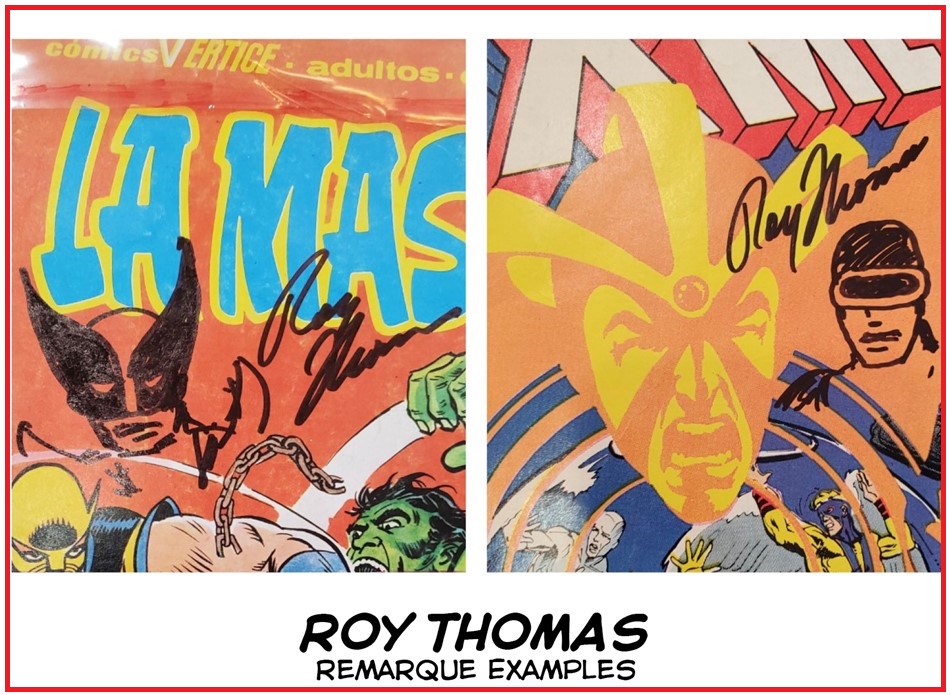
- “It’s certainly true that Stan doesn’t give his most talented collaborator, Jack Kirby, ample credit in every instance for his contributions to the early days of Marvel, from Fantastic Four onward. In a way, however, that’s only human nature…”
In a way? Yeah, I guess stealing is a part of human nature. Thomas’s casual way of simply dismissing Lee’s actions and rationalizing them as just a part of being human- while taking great umbrage at apparent slights from Jack Kirby- continues to be glaring behavior.
- “The documentary records him as saying that Jack often drew a story after a plot conference that covered only the barest essentials of the storyline; in print in the comics themselves, Stan often went even further than that. You can look it up.”
Why not cite these examples? Why should this close the matter and settle it, because Roy Thomas said that other examples that “went further” exist? Notably, Thomas leaves it up to the reader rather than use his platform to properly give Kirby any recognition.
- “One seems to look in vain, alas, for any acknowledgement whatever by Jack Kirby of Stan’s value or contributions to their collaborations.”
Alas! Once more, Stan Lee is the injured party and Kirby didn’t give Stan enough credit. Thomas exists in a world where victims need to celebrate their abusers.
- “Where is his admission or even suggestion that Stan’s dialogue and captions (to say nothing of his editorial guidance and his contributions to the storylines) added any value whatever to the feature?
- Nowhere, that’s where.”
You’ve got to appreciate Thomas’s dramatic pause as he apparently waits for an answer. He is still wounded on Stan’s behalf, still hurt after all the years that Jack Kirby didn’t admit Lee was special, during the years that Lee was literally credited as the creator of Marvel.
- “Now, Jack Kirby had a right to his viewpoint — that he himself was the major, if not the sole, genius behind the success of the Fantastic Four, Thor, and all the rest. But that does not mean that we need to accept that viewpoint.”
I mean, you don’t. You don’t accept it and you continue to promote misinformation and falsehoods- so why whine in the Hollywood Reporter?
- “But if/when we do get full-fledged Kirby and Ditko docs, I hope they are at least as fair to the talent, contributions, and legacy of Stan Lee as Stan’s words were to the talents, contributions, and legacies of Jack Kirby and Steve Ditko.”
…as fair as Stan’s words to the contributions of Kirby and Ditko? This guy just said that? Wow. Just no shame whatsoever. I also look forward to that documentary.
- “After all, he was not just the scripter but also the editor — the man who had been placed in charge of story and art, to deliver sales for the company that became Marvel Comics. No one else had that responsibility; almost certainly, no one besides Stan was looking at the big picture, from first to last, day in and day out.”
Almost certainly no one besides Stan was looking at the big picture, day in and day out… except perhaps for Jack Kirby, who spent literally every evening in his basement, hunched over his art table, generating the majority of the Marvel Universe himself? Thomas himself admits that Lee only came to the office 2-3 times a week. How much responsibility did he really hold?

In closing, Roy Thomas continues to be a tool, a toady and a general buffoon who was in the right place at the right time and excelled in a field that enabled people of average talent and questionable ethics to get ahead. His actions in his eighties are humiliating and the main legacy he leaves to us is fellow buffoon John Cimino as well as a late-in-life makeover as Lee’s disciple and continued defender.
But it’s his proactive habit of denigrating the work and legacy of Jack Kirby and others that’s the most disgusting and deplorable actions of all. People who know better need to speak up and push back on this. Don’t let real villains like Roy Thomas continue to prosper. Don’t rationalize his actions out of misplaced sentimentalism. He certainly never held back himself over feelings for others; he callously and maliciously defames and degrades at every chance he can. All to maintain his status as Lee’s fair-haired boy. All to maintain his relevancy in a burgeoning pop culture autograph market. All to grow the awareness for his moronic poseur of a manager.
With all his defenses and excuses for the documented actions & behavior of Stan Lee, the diminutive and nebbish Thomas really does come off as the Lindsey Graham of comics. Vote him out.

 Four Color Sinners
Will you cover the recent cancel scandal with Tony Isabella and Eric July
LikeLike
Hi Rosp… no, I don’t think so for the simple reason that I’m not educated on it and didn’t know there was a scandal in the first place. I’m only comfortable writing about things I’m exceedingly well read on and I wouldn’t feel confident just writing something for the sake of it being scandalous apparently. I only have a vague idea of who Eric July is… I know he has to do with something regarding “anti-woke” comics but that’s literally all I can remember. I don’t mean to limit him or label him, I just don’t really know anything about him.
LikeLike
The man who studied at the feet of the man who studied at the feet of Josef Goebbels. Thomas practices “accusation in a mirror” when he attributes Lee’s motivation to Kirby and vice versa: “To Stan, it wasn’t all that important whose idea a particular story was; what mattered was that it sold comic books…” Kirby was driven by producing comic books that sold; Lee was instructed to make it clear that all the ideas were his when they weren’t.
The false equivalencies (“Lee lied, Kirby did too” or “Stan needs to be given the benefit of the doubt, Jack was confused”) have been put to effective use by Morrow and Evanier, so why shouldn’t Thomas get in on that strategy? As you’ve shown, Thomas has been hard pressed to come up with legitimate examples.
LikeLiked by 2 people
“his method of working was to give an artist the bare bones of a plot and have him/her flesh it out with exciting drawings”
A LIE.
This is what Roy Thomas & HIS protoges did… to CON people into believing that S*** L** ever did that… when, in fact… HE NEVER DID.
“Alas! Once more, Stan Lee is the injured party and Kirby didn’t give Stan enough credit. Thomas exists in a world where victims need to celebrate their abusers.”
NARCISSISM aside… I’m reminded of the time I took someone’s advice and forwarded a link to my “Daredevil” blog article to Thomas. He wrote back, saying he felt I “hadn’t given S*** L** enough credit in the creation of the character.
In direct response to this, I went back over my blog article and, carefully, REMOVED every single instance of S*** L**’s NAME. It wasn’t easy!
http://professorhswaybackmachine.blogspot.com/2013/01/daredevil.html
LikeLiked by 2 people
Jack KATZ of Lost Kingdom fame is the guy who said that about Manley being worked to death. Roy got them mixed up and should amend his statement about it, IMO.
LikeLike
LINDSEY GRAHAM OF COMICS…. SHIT MAN, THAT IS PERFECT PERFECT PERFECT FOR DESCRIBING HOUSEROY!!!!!!! LMAO
LikeLiked by 1 person
I honestly had no idea how disgusting and deplorable Houseroy was until this.
Gawd damn. How is it more people involved in comics don’t know/don’t care about this?
LikeLiked by 1 person
Not trolling here but, have you ever received any response or acknowledgement of your exposes on Roy/Cimino? Nobody has gone as hard on his antics as you have so I do wonder. Thanks!
LikeLiked by 1 person
Not really, not directly.
LikeLike