
Where to start and how to describe the staggering talent and versatile career of American Artist and Eisner-nominated Cartoonist James Romberger? Well known as a fine artist, his depictions of New York’s Lower East Side hang in both prestigious private collections as well as The Metropolitan Museum of Art, Brooklyn Museum and others, and exhibitions of his work have appeared at the New Museum of Contemporary Art, Gracie Mansion, The Grace Borgenicht Gallery and several others. Along with his partner Marguerite Van Cook, he created and curated the legendary Ground Zero Gallery in the Eighties.
Besides his remarkable career in the arts world, Romberger is also an established and highly acclaimed cartoonist and comic storyteller; from underground and alternative publications like World War 3 Illustrated and The East Village Eye to working with Marvel in 1981 for Epic. He would go on to do prolific work from every publisher from DC Comics to Image to Fantagraphics as well as his own independent work such as POST YORK which was nominated in 2013 for Best Single Issue or One-Shot. Working with his partner Marguerite Van Cook, 7 MILES A SECOND was and is an extraordinary piece of graphic storytelling, telling the story of Romberger and Van Cook’s friend and collaborator, the artist and activist David Wojnarowicz in both vibrant and haunting tones. The pair would go on to create the critically acclaimed THE LATE CHILD and OTHER ANIMALS, and Romberger would give Jack Kirby a spotlight and a voice again in 2019’s emotional story ‘The Oven’ in Romberger’s own FOR REAL from Uncivilized Books. That’s a long background for context and I’ve barely scratched the surface of this man’s remarkable life- which is still busy, still prolific, and James is still highly active! This interview was conducted in late October 2023 and copy-edited by Romberger himself.
FCS: This might be a bit random to start with, but you and Marguerite were running the famous Ground Zero Gallery in NYC in ’84-85, around the time that Jack Kirby’s artwork return story with Marvel was gaining prominence in the industry and fan press. Were you aware of it during that time, were you paying as much attention to the industry while dealing with the logistics of running a gallery is basically what I’m trying to ask? You’d done work for Marvel as early as 1982- the same year you’d met Jack Kirby and showed him pages from your “Jesus in Hell” story- I’m curious what your feeling about all of that as it was happening in real time.
JAMES: When I sold work to Marvel in the very early 1980s, I had no connection to the fandom at the time. I had consumed a lot of fanzines in my teens. I subscribed to CBG and Paul Levitz’s Comics Reader and Richard Kyle’s Graphic Story World, etc—but I kind of lost interest in comics for some of my later teen years (after Kirby stopped working in comics, in fact). My interest was rekindled as I graduated high school, when I somehow found an issue of Metal Hurlant somewhere and freaked out over the extraordinary work of Moebius and Druillet, and Heavy Metal soon translated that stuff over here.
Then when I moved to New York circa 1981-82, Kirby started doing Captain Victory and I became a little more engaged. But still I was not truly aware of what Marvel had done to him. In fact, I was introduced to Jim Shooter at my first ever NYC con. I had no idea who he was; I recall being told he was head of Marvel and so I said to him, “Oh cool, I work for Epic.” He said, “I hate Epic.” I was taken aback but being a little less than thrilled with some of Epic’s contents myself, I replied, “Well, it would be better if they got Kirby to do something.” He responded, “I hate Kirby.“
So, I knew right then that this poxy doofus was an asshole. Later I heard all about what he and Stan Lee and Roy Thomas and the rest of their exploitative ilk had done to Jack. And when I became friends with Gene Colan years later, I heard all about what the wretched Shooter did to HIM. But all the artists were victimized by these abusive Marvel writer/editors who were exploiting them via the “Marvel Method“, getting them to do the ideas and storytelling and adding an over gloss of copywriting, while claiming full writer credit and pay.
Still, I wasn’t really in comics at this time. I only did a few things in Epic and in the next few years only focused on gallery stuff, although I started buying comics again, just in time to get all the good Frank Miller and Alan Moore stuff, actual well-written comics. And so when I actually met Jack at that same con, I really didn’t know about his original art battle or any of it. I just loved Jack. And when he said that to me, he wasn’t all defeated; he was just honestly warning me about how shitty the comics business is, full of wankers, sociopath power trippers and rip-offs, as it was and still is.
You only did a few things for Epic as you say, but that’s still working for Marvel. However long it lasted, what, if any, memories do you have about your Epic experience? Did you meet Archie Goodwin? Did you get any editorial encouragement or feedback for those stories?
I hitchhiked to NYC from Utica twice to sell 3 stories, Satri drawn by my ex which I inked, and her poem In the Heart of the City and another poem The Condora that I did color art for. Archie bought these pieces and lent me money to get home. They were all published in Epic. Archie showed my work to regular Marvel, he told me, in the person of Art Director Al Milgrom, who called me “crude“–ha ha Milgrom, the clown whose Frank Miller inks look like he used a broom.

Kirby’s advice to you has become famous, co-opted and used by other people even though no examples, anecdotes or reports containing his “comics will break your heart” line had ever been documented before you shared this. This might be a heavy question but, in all the years that have passed and all the ways the comic book industry didn’t improve how it treats artists- did you ever mull over Kirby’s advice about sticking to being a fine artist instead of dealing with stupid fuckin’ editors?
Of course, I always took Jack’s advice very seriously, and for years, avoided comics like the plague. Actually, at Epic, I had been the beneficiary of the best contracts that artists in comics had ever gotten to that time, but I didn’t know that and didn’t really follow up with them. For quite a while, I only contributed pro-bono semi-comics to a very far-leftist political comics zine, World War 3.
Well, that had its own issues, because people who don’t pay artists tend to treat artists even worse that the ones who do pay, and the editorial meetings for that zine were often populated by unartistic clowns without any aesthetics and a level of fanaticism that made them impossible to deal with. And conversely, I always had a problematic relationship with the intrinsically elitist nature of gallery art, being that the art objects are meant to decorate the walls of rich people, rather than being seen by the general public.
I was fortunate that the lovely 57th Street gallery of Grace Borgenicht placed my work in quite a few public collections, but nevertheless I continued to be ambivalent about fine art. In the mid-nineties Grace closed her gallery and for that and a variety of other reasons, I finally bit the bullet and tried to get work in regular comics. I started at DC’s imprint Paradox Press, doing shorts for their Big Book series, and moved up to Vertigo. I had finished 7 Miles a Second and although it had been on the desks of several editors there who assured me that it would never be published by DC, publisher Jeanette Kahn was friends with friends of the late writer, David Wojnarowicz, and so she ordered Vertigo to do it.
So that was great, and I did some other work for Vertigo, for instance on the dystopian miniseries 2020 Visions, drawing the 3 issue “Renegade” arc, which I was told other artists had turned down because of its queer protagonist.
But it was always a thing like, you will get a nice page rate, but you have to do what we want. If you want to do what you want, it may get published, but no page rate, and you are going to get a very low advance on royalties and of course, you’ll probably never ever see more than the lowball advance —-unless you are a genius at promotion yourself. And that holds true to this day even in the alternatives like Fantagraphics, etc. That IS heartbreaking, lol.

I’m curious why artists working for Vertigo would have concerns about a Queer protagonist- it reminds me of Roy Thomas publicly lamenting that Alan Scott being Gay might affect his bottom line with royalties. This might be a futile question, but- do you think an Editor can serve any positive purpose with a creator? Whether as a production manager of sorts or even a facilitator? What are some of the things you think an Editor should be more sensitive about in regard to the needs of an artist?
What I can say is both 2020 Visions and Aaron and Ahmed were presented to me as books that other artists had turned down because of their queer subject matter. A good editor puts the right artist with the right writer and facilitates the collaboration. Not sucks the dick of the writer and fucks the artist over, or vice versa. Both writer and artist are equally important to the result—- as is the colorist, hello. No one should be diminished in a collaboration.
Post York came out a little over a decade ago and it was topical then, but it’s especially topical now. It’s almost insane how rampant the signs of global warming have gotten; do you ever think about a follow up? I always liked how that story ends; Crosby saying “I think we can change this story“- nobody can say it doesn’t end on a hopeful note.
After getting an Eisner nomination with the first one-off comic published by Tom Kaczynski’s Uncivilized Books, Berger Books/Dark Horse’s expanded graphic novel was unfortunately released at the height of the COVID pandemic, so it sank like a stone with little publicity or distribution, a tragedy given the subject and because of how much important information about the very real effects of global warming on New York City is in the afterward, which collates research done by the sustainability thinktank Unbuilt Labs.
Fortunately, a recent hardcover published by Planeta in Spain has gotten much more notice, and I hope to see the same with other translated editions. I want to do a follow-up Post York #2 for Uncivilized Books that ignores the one-off Post York #1 they did, and the graphic novel, and instead reconfigures the narrative to incorporate Unbuilt Labs’ fearsome revelations. Much harder to look at.
I’ve read a lot of interviews with you but haven’t seen too much biographical information about how you got into art per se- and my apologies if you have covered this and I’m just not hip to those- do you remember what visual art you gravitated towards at a young age, what influenced you?
I always liked comics, movies and TV. My kindergarten teacher reportedly said, “We should change James’ name to Superman“, lol. I recall being like 6 and watching King Kong right after I fell out of a tree and broke my leg, scared shitless.
Early on I was scared of and fascinated by sci-fi stuff especially, I remember peeking around the couch at The Outer Limits or The Invaders, scared shitless. My mom had taken most of the Famous Artist’s Course, and so I grew up with those 3 huge loose-leaf lesson binders full of acute information by the likes of Norman Rockwell and great deep-space illustrators like Albert Dorne. Comics got better: Toth, Kirby and Steranko. And I always liked Rembrandt and Degas, as far back as I can remember.

I thought it was brilliant that the 7 Miles a Second cover- which I always think of when I’m walking by Union Square- contains a loose homage to Kirby’s New Gods #7- I’m also sorry in advance if you’ve covered this elsewhere but I’ve long been genuinely curious if David Wojnarowicz himself was into comic books as a medium at all or just experienced them through your work with Marguerite in the East Village Eye, etc.
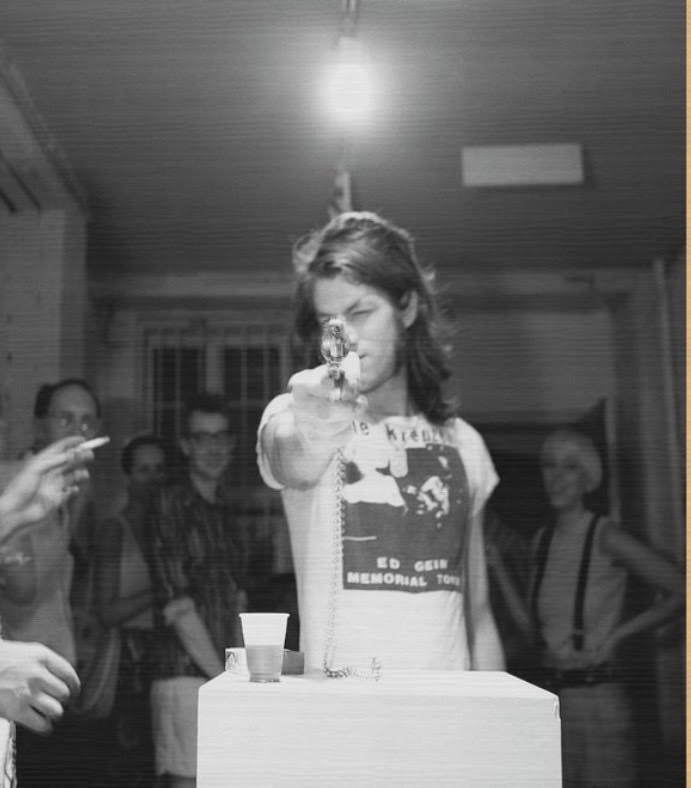
Do you only know about the New Gods/7 Miles a Second equivalence because I told you? You could add Steranko’s Daliesque SHIELD #7 cover (see above). David loved comics, I think. At a show in NYU’s Fales Library there were some sort of undergroundy Crumb-looking comics he did when he was a teen, about a pothead Dave, clearly a self-portrait. In the 1980s he painted a pop-arty comic on a wall in the West Side piers; I saw it there a few years before I met him (see below).
He did a transgressive cutup of Archie comics re-ballooned to be a Manson-esque family murder fest (Archie et al slice up Mr. Weatherbee) for Tommy Turner’s crazed zine Redrum. While we were working on 7 Miles a Second, I gave him a copies of Kirby’s New Gods #6, Otomo’s Akira #16 and Charyn and Boucq’s French graphic novel Billy Budd KGB. The influence of those comics is in the book.

I don’t believe you ever told me about that actually, I read it somewhere and then immediately saw it in my mind’s eye and all over again I awed at your creative brilliance. Do any of those homemade comics work David did survive that you know of?
I’m sure someone has a Redrum with David’s awful Archie revision and NYU has his old Dave undergroundy stuff, though I’d be embarrassed as fuck if anyone had the stupid-ass comics I did as a stoner teen (laughter).
You’re an established professional and widely published artist, educator, lecturer and storyteller in 2023. Let’s say a kid with raw, tangible talent approached YOU with their work at a convention today- what would your genuine advice to them be about breaking into comics?
I’d be like, okay, go into television where there are so many possibilities for expansive lateral storytelling, and know the value of your ideas and efforts and how to promote yourself. Or, go into comics and do what you want and please yourself first and foremost, but get whatever you are doing right so that you believe what it is that you are doing so the audience can believe it too, and also learn how to promote yourself. Or, be accommodating to the corporate team to get your page rate and don’t complain and maybe learn how to enjoy drawing people in their underwear or whatever your genre restrictions are, and how to promote yourself. Because no one is going to do it for you, even if it is their ostensible job.
In regards to that advice- going into television-do you think that’s the one moment of foresight or awareness that Stan Lee ever had, being that he made such a concentrated effort to break into Hollywood around 1979-1980? Could he have had the clarity to recognize that television storytelling would be a much better industry for people interested in sequential storytelling? Of course the television industry was in a much different place in 1980 than today, but…
I have heard for many years that Lee spent a lot of time hustling to get Marvel product on TV and in movies—I expect so he could get a bigger payday for himself. He demonstrably never wanted to include the artists in the rewards. He got a terrible Captain America TV movie made and got himself credited as creator of the hero 100% created by Jack Kirby and Joe Simon! Hell, he attached his signature to stories for many years that it turns out he had nothing to do with creating.
I doubt Lee anticipated or cared that TV would become a great place for expansively novelesque lateral storytelling, even though he swiped a lot of narrative tropes from soap operas, lol. But, I must admit that he was a good hustler and his instincts as editor were successful, and so I suppose he must have had something to do with how the stuff made it to big and small screens. Still, IMO it is a testimony to the talents of Marvel’s powerhouse storytelling writer/artists like Kirby, Steve Ditko, Wallace Wood, Neal Adams, Colan and Miller that the MCU is now the world’s biggest entertainment monolith; a thousand times more than to the efforts of the blurbist copywriters like Stan. Really Stan is the only one of the so-called “writers” who really can claim credit, because he was the head cheerleader.
This might be topical and possibly even inevitable in an interview that covers the comics medium, but what are your thoughts on the Marvel Cinematic Universe and how it’s infiltrated popular culture to the degree that it has? I’d imagine for a professional comic artist, there are things you sometimes have to reconcile when and if you enjoy that content, but I’m very curious as to your specific feelings on this.
By the mid-80s I finally realized the depth of the exploitation of Marvel’s founding artists via the Marvel Method. But in taking that info on board, I ended up subverting my own career. I’ll never forget the day when my editor at Vertigo, Axel Alonso, the guy who was giving me work, told me when I was visiting the DC offices that he was leaving to go work for Marvel. He said I should join him there, “perhaps to draw Spiderman!” But because of my love for Kirby’s work and my friendships with Colan and Steranko, I couldn’t work for them and told him so. Hah, Axel ended up on a very high level actually running Marvel, as did another friend, David Gabriel.
I think now that my intractable boycott was a mistake–it is better to try to change things from within. And unfortunately, no one else at Vertigo was hiring me and so some years went by, until I finally saw Karen Berger at MoCCA and ended up drawing two graphic novels for her at Vertigo again. You have to be in it to win it. But all that was over by 2011 and honestly, in comics, page-rate opportunities are hard to come by.
Meanwhile, I deliberately avoided the MCU productions for many years. That is, until the Kirby family took an estimated 8 figure settlement from Disney/Marvel (according, that is, to the confirmation of a certain M.E.), mainly it seems so the corporation could avoid having to justify old questionable business practices before the Supreme Court. At which point, I soon said “fuck it” and watched almost everything, especially when I stayed at a friend’s house during Covid who has Disney plus.
I actually love some of it: the Iron Man and Captain America movies have a lot of brilliant sequences, often obviously honoring the work of Kirby and Colan. In fact, in a lot of it Kirby’s work is finally brought to life across the MCU in a way that truly “gets” his massive, magisterial imagination. Even the jokey Guardians of the Galaxy did the Living Planet pretty much right. I’m uncomfortable with the funny Thor stuff, but I liked a time-travelling X-Men movie and some parts of all The Avengers films (what a great and fitting ending they gave to Captain America!). A few of the Netfix TV series were very good; Daredevil has incredible nocturnal urban battles that honor both Colan and Miller, and The Punisher is an impressively emotional exploration of PTSD that upends the idiotic Right-Wingers’ embrace of that character. He’d kill them first! In fact, I got an idea for a Punisher story that I’d love to do.
So, the MCU are doing a pretty good job. It’s kind of shocking how much better they are at it than the DC movies. However, I must point out that after an initial few years of properly crediting Kirby as (co)creator in the MCU films, more recently the credits have discontinued accurately reflecting his creative impetus—doesn’t that violate the Kirby family’s settlement? And Disney+’s recent Stan Lee “doc” was just flat-out bullshit.
I also enjoyed that perfect ending- and a definitive and conclusive arc- for Captain America within the films and hope that they stick to it. In regards to your idea for a Punisher story, would you ever consider pitching it to Marvel, or springboarding some sequences from it?
Yes I would, if I knew who to talk to. I have no idea if there is an editor there who would be willing to work with me. I don’t need a writer, I’d do it myself. But I don’t much want to do it on spec, if that’s what you mean by springboarding—sounds like waterboarding to me, haha, if a lot of work would go to waste. I mean, I could do it anyway, and just use a different name and physical aspect to the character, but it would really suit The Punisher, and perhaps go a ways towards making him if not exactly progressive, at least less appealing to Right Wingers. Maybe if I used a pseudonym…

Let me ask you this, though I’m sure I can guess your answer: you accept an assignment from a publisher to illustrate a story. The Editor proceeds to tell you after that that said story will be executed in the Marvel Method style, with you receiving the bare bones of a plot, just one or two sentences- and you’ll just be credited as the artist. What would you say to that editor? Would you ever entertain working in that method?
I’d find it difficult if not impossible to work that way. Well, I don’t believe that Marvel Method stories always start from a writer’s prompt. It wasn’t the case with Kirby or Ditko, who most often did the things from scratch themselves, always with an overlord blurbist only coming in after-the-fact to take the entire writing credit AND PAY to add a gloss of copywriting based on the story notes and “suggested” dialogue written by the artist in the page margins. But even artists like Colan, Don Heck, John Romita, John Buscema et al who articulated and choreographed stories from the sort of minimal editorial prompts you describe did the lion’s share of the storytelling effort.
Any kid that reads comics could come up with plenty of “few sentence ideas” that these hack writers claim as their cash cow brainstorms. The drawing of comics is very hard already; I find the actual moment to moment “story” stage, the details of the situations (which we should call writing) to be incredibly difficult, challenging and complex, and no way would I want to have some exploitative clown take the credit and pay for that part if they didn’t do the work involved. By contrast, I like to work with writers who actually do the work of a writer in comics and provide a script, which I can then dedicate my energies to bringing to life with everything at my disposal. That’s a collaboration. The Marvel Method is robbery.
One of the best comics of the entire fucking decade was FOR REAL #1 with ‘The Oven’- you’ve spoken positively about the benefits of anthology comics for some time and I thought For Real might be the ideal vehicle for that- what specific thing would you like to do next in comic form? Do you have any interest in ever working as an artist in a work for hire situation again, or in collaboration with a writer? Do you have something you’re planning that you’d prefer to do on your own?
I’d like to do more issues of For Real for Uncivilized as an editor. For instance we have a possible expose of North Korea issue in discussion with a writer who knows that situation well, which I would find artists for. And I also have a true ghosts issue in mind that I could all by myself. So that is possible.
I’ve railed against the trend in over crediting comics writers so often that I wonder if any writers would work with me again! But I always love to collaborate, and I’ve loved working with writers who are lovely and talented: Annie Nocenti, Jamie Delano, David Wojnarowicz, Brian Azzarello, Peter Milligan, Stephen Lack, Jay Cantor, Marguerite Van Cook and Josh Simmons, and there are other writers I want to work with, like the brilliant Ales Kot, and the prolific artist/writers Matt Kindt and Jeff Lemire, who all understand visual narrative. I have often adapted prose and love to work that way, but then as well as in a script situation, I always strive to “plus” a writer’s work, to honor the text and make the narrative as a whole work as best I can.

7 Miles a Second, The Late Child and Other Animals, Post York, For Real… and many more I’m leaving out… if someone said to me, “give me the quintessential Romberger story to experience“- and yes, I know how impossible for any artist, but- let’s say, not to sum up but to expose a new reader to your work- which work of yours would you pick if you had to, and why?
I can’t ignore that 7 Miles a Second is an essential comic in the queer canon; that is why I did it in the first place, it needed doing. So maybe that is my best work so far. I take pride that a huge demographic of LGBTQ+ comics fans suddenly had a powerful statement in the medium, that looked like the most dynamic American comics, but reflected some aspect of their experience. Amazingly and to his credit, even Steranko recognized its’ significance.
I know you’ve got a relationship with Steranko, but I’ve got to ask what the fuck is with that guy. Of all the aging legends to slip into this Conservativism bullshit, it’s Jim Steranko. I imagine you’ve not really talked to him about all that shit.
I carefully and clearly laid out the absurdities and ironic permutations of Steranko’s progressive and conservative leanings in my book Steranko: the Self-Created Man, particularly in the final film essay—which apparently was never read by Jim’s mostly comics-obsessive fans. But anyway to me in the end, other than the annoying flag-waving in his superhero covers etc., Jim’s more rightward affectations don’t poison what I care about in his work, any more than they do in the case of Alex Toth. The work is the work. I’m excited that Coppola has finished what he says is his final film, Megalopolis. Jim showed me the incredible exacting architectural renderings he did for this film a few years ago, they are great; I expect them to be shown as the movie is released and I also expect the film to be something to see, at the very least.
In all of your extensive work with Steranko, I’m curious if the issue of proper credit has ever come up significantly, even in passing. Certainly, Steranko was very outspoken on his social media when the Agents of S.H.I.E.L.D. television show was being aired. As these issues are the primary focus of Four Color Sinners, I’d be remiss if I didn’t ask you.
Stan Lee’s trivial, senseless alterations of Steranko’s work, apparently imposed only to establish the power hierarchy of editor over talent, basically drove the artist away from the comics medium. And Marvel doesn’t pay artists royalties on Silver Age work, they only pay royalties to the glorified copywriters that fed like ticks off the artists who plotted i.e. wrote the stories and explicated them in their notes on the margins of the pages. Any payments to the founding artists are not obligatory but termed “incentives”—carrots on sticks.
But y’know, Steranko has expressed to me that despite the lack of royalties, he keeps a cordial relationship with the company because that work of his still resonates with fans and keeps his profile high. As regards Agents of SHIELD, I really liked that TV show, too. After a not-great sort of CSI-ish first season, the thing took off and became a surprisingly gripping, imaginative show. When Steranko recently asked me to write an introduction to an IDW artist’s edition volume 2 of his SHIELD and Captain America work, my first draft began with praise for the SHIELD show—here’s what I wrote:
“The show is credited “Based on the Marvel Comics by Stan Lee and Jack Kirby” right up front, and in the original 1960s superhero comics, the technocratic spy organization SHIELD with its massive helicarrier and evil counterparts such as Hydra are particularly impressive examples of Kirby’s furiously inventive worldbuilding and sci-fi design.
However, Steranko always tops the closing credit thank-yous, because as great as Kirby is, Steranko’s SHIELD run is legendary; it revolutionized comics narrative and inspired generations of cartoonists and filmmakers: Miller, Spiegelman, Resnais, Lucas, Coppola etc. — and it also fuels many aspects of the SHIELD show. For instances, Agent Coulson’s Corvette with swivelling jet thruster wheels is based on the red Ferrari that Steranko designed for Nick Fury. The show’s title sequences are continually re-invented in Steranko’s innovative graphic spirit, and TV’s Madame Hydra reflects the coiled power of the dominatrix Jim drew. And, Steranko’s apocalyptic cover for Nick Fury, Agent of SHIELD #6 of Fury adrift in space over an exploding Earth apparently inspired the entire 5th season.
But Steranko himself is ambivalent about the SHIELD show. Why?– because he’s only ever watched the first episode! But that’s understandable, because in fact, he doesn’t have time to watch TV! He always has a relentlessly full calendar, not only doing his commercial work i.e. advanced digital graphics and sophisticated film pre-production designs, in addition to his near-constant slate of personal appearances at comics and fantasy-related conventions and festivals worldwide. But he should watch it all, because he is missing out on a major honoring of his vision.”
Yet, this initial focus was one reason why Steranko chose to relieve me of the assignment; he saw only one episode, but apparently went on Twitter denouncing the series at length, nonetheless! I wouldn’t know, I avoid Twitter like the plague.
As you say, Stan Lee meddled and did a lot of alterations to Steranko’s work so I’m curious why Steranko is such an avid defender of Lee in modern times. I specifically refer to tweets like this one: “Stan did not steal their thunder, but extolled virtues some barely had! My point: I WAS THERE and witnessed what happened first hand!” Is this a case of simply Steranko needing to not alienate or annoy Marvel’s corporate owners?
Steranko likes extreme perspectives. I ignore his Twitter/X “henchmen” blather (um, hello Jim, henchmen are BAD GUYS), but with Marvel, I’d guess it goes to his bottom line. I think Lee mostly left him alone to experiment, but a few times, Lee wanted to show him who was boss. I think a lot of old Face Fronters still think Lee wrote Jim’s 3 classic solo Captain Americas because the credits read “A Lee/Steranko production,” and Lee definitely pissed him off a LOT messing unnecessarily with the short perfectly finished horror story “At the Stroke of Midnight” in 1969.
But as time goes by and Jim still plays the Marvel fan favorite at cons, even decades after not doing a lick of comics because work-wise he’s interested in doing other things, he’s just settled on what seems like an inexplicable Marvelite boosterism, which includes perpetrating the Lee creator fiction, but it is really just a matter of preserving a cordial relationship with the corporation in order to continue to reap income from the connection. Steranko’s work is always kept in print, and he still does covers occasionally. And there’s artist’s editions that he does new work for; in fact, I was sad to blow the intro gig for the new one because I hear his new chapter break pages are some of the best stuff he’s ever done, and I wanted a comp copy!
When you would talk to Gene Colan or Dick Ayers, did you ever have an urge to just ask them how they could continue to tolerate Stan Lee? I’m being serious and not snarky here; you were friends with both men and even inked some of their work- I recognize that they had to assimilate a bit in order to stay in Marvel’s good graces but surely this came up in all of your talks with them.
I knew Ayers much less well than Gene; I only knew that Lee cited him early on as one of the artists he could count on to “plot” a complete story with minimal input from himself. But at the end of Ayers’ life, he was left embittered and impoverished by the company he worked for for many decades. Apparently, Lee never cared enough to make any provisions for ANY of his artist “collaborators.”
Gene told me he liked Lee and the freedom he believed that the Marvel Method afforded him to draw the sorts of things he wanted. And while he was certainly capable of remarkably urbane realism and a great choreographer of action scenes, I suspect Lee may have given him more basic storyline prompts than he ever did to experienced writers like Kirby, Ditko and Wood. I don’t recall Gene ever taking writing credit for stories later.
But despite doing definitive, accomplished work over decades on Daredevil, Iron Man, Dr. Strange and Dracula et al for Marvel, Gene had to work on commissions well into his dotage with failing eyesight, while dying of cancer. Marvel only did a single benefit comic for him, which basically deflected responsibility to the fans.
If I may ask, I know you’ve been friends with the artist Tony Salmons whose work fascinated me as a kid in the Eighties. He’s always been a kind of mysterious figure, hard to pinpoint or track down. This is a James Romberger interview but do you know what Tony Salmons has been up to?
I don’t. The last thing I saw from him was that Lovecraft miniseries. Tony is maybe the greatest artist of all my contemporaries age-wise. But I guess he has reasons for staying so far off the grid.
What’s an average working day look like for you? Do you adhere to any kind of schedule at the drawing table or anything like that?
I try to do something every day.I tend to work in bursts, nowadays. I’ll think a lot about whatever it is. Sometimes I stare at stuff in progress for hours, drib and drab on it—or do it in a rush. Days go by sometimes when I don’t do anything. I watch TV—there’s lots of TV to watch. But the work always consumes me—as it does one.

So, what’s the atmosphere like when you’re working at the drawing table? Do you have the radio going, the TV on in the background, anything like that?
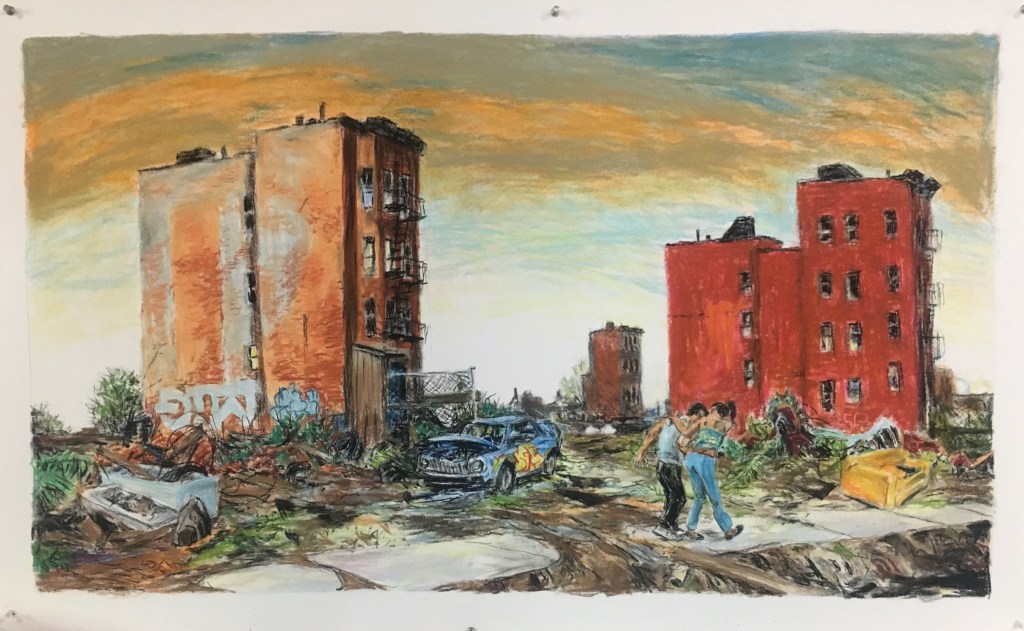
I don’t even have a drawing table. Mostly I work on pastels pinned on the wall or to a board. If I do comics, I do them on my lap. I work in short bursts; all my drawings take more thinking time than physical time. I have to have a few projects going at the same time, so I can work on a drawing, then shift to computer stuff like writing, Photoshop, email or social media. And household stuff that needs doing wherever I am. I might have a TV on, but that would be news, because the kinds of dramatic shows I like demand attention. I listen to music when I travel in and out of NYC, which I’ve been doing a lot since Covid began.
You captured the essence of Jack Kirby and his dynamic with his wife and partner Roz perfectly in ‘The Oven‘- I’m curious, if you had to do a similar story about Stan Lee, what would that look like?
Blank pages. I have no interest in making a story about an abusive gladhanding jerk. But I should maybe take on the view of a South Korean TV showrunner—I’m a big fan of K-dramas. They very often do something new and unexpected, and they tend to make you hate a character and then abruptly humanize them with some sort of extreme motivation. So, I shouldn’t be so definite.
If there’s one misconception about New York City- and the Lower East Side in particular- of the Eighties that you’d like to clear up for younger people, what would it be? And if there’s one thing about it that you think more people should know about?
Huh? I don’t have just one… Um, I love it but NYC is a dirty old town, I mean literally. The East Village scene of the 1980s was a lot of fun, but it was ended by AIDS and greedy landlords. I found Basquiat personally a bit gnomic, Haring was a bit rude, and Wojnarowicz could be hilarious. Kids coming to the city today probably feel the same magic that we felt getting out of our shitty little towns to come here, but they have to pay a hell of a lot more rent. And NYC bicyclists should have to be licensed and insured so they adhere to traffic laws. As it is now, they are a total menace to pedestrians.
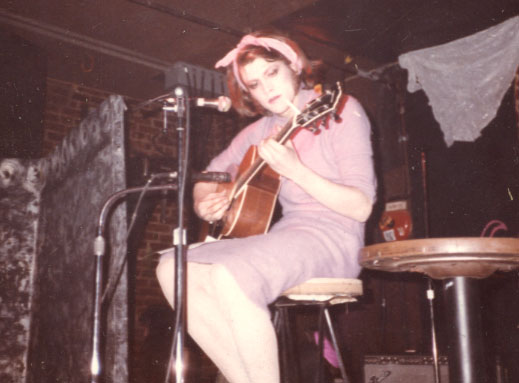
Your partner Marguerite Van Cook famously ended up in New York with her punk band and was sort of forced to make it her home after her manager sent her there from the UK for gigs that didn’t exist! I’m curious if Marguerite had any sort of influence whether suggestive or subtle on your stories outside of the collaborative sense; I’m not articulating this as well as I’d like, but essentially, comic storytelling is viewed much differently in Europe- did Marguerite ever look at American comics and give you some new considerations or observations about them with her response?
Marguerite has been a huge influence on me. She always recommended I draw wee doggies running with strings of sausages, like in Beano. Actually, my very first conversation with her at the sorely missed East Village dive bar Park Inn was about Kirby and Vaughn Bodē, both brilliant cartoonists that she knew of in England. In fact, when I first visited her hometown of Portmouth, I found a decent shape copy of Kirby’s Sgt. Fury and his Howling Commandos #13, the valuable crossover with Captain America, at a book stall on the High Street for 5 pounds! I still have it–it’s a bit dogeared now. But we bonded about artistic expression, sexual freedom and world-building.
After she and her husband the late great guitarist Greg Van Cook separated, we started Ground Zero, our collaborative semiautobiographical semiotic sci-fi serial strip. Marguerite’s stories and design ideas took the application of deconstructive principles degrees further than Art Spiegelman’s earlier experiments that are collected in Breakdowns. Someday soon we will collect all the Ground Zero strips that have been published in wildly diverse media and finish a bunch of sequences we have in various states of completion as a graphic novel.
Here’s a question for you: what, if anything, could “fix” the comics industry?
I don’t know. We have all these possibilities now, but I feel we haven’t figured out how to make it work. It seems a lot of publishers put books out to be insulation for their warehouses. Graphic novels are hardcovers or expensive paperbacks that take a lot of disposable income to keep up with. And who even buys the floppies? Artists have come to accept not getting page rates; they work day jobs to support their ostensible hobby of making comics. And some writers over credit themselves at the expense of their artist collaborators.
Meanwhile the publishers jet set around the world, wine and dine themselves and stand behind tables of books that they don’t really try to sell. They print the books, but they don’t promote them, because they don’t know how, or they hire the wrong people to do that part of their job. They always say anthologies don’t sell, but most comics since they started have been anthology titles—collections of short stories.
Most of my favorite stuff is in those kinds of comics, the artists could draw a few pages and get paid and try different things out, not get stuck drawing hundreds of pages that take years of lonely solitary effort. Yeah, we always wanted to do books, but now that all one can do.
The whole business is absurd. The last head of DC apparently did everything in her power to destroy the company. I hear the talent are dancing in the halls of the nonexistent bullpen in LA now that she’s quit. Meanwhile some people who call themselves writers are saying out loud, oooh, now we can get AI to draw whatever we want. Go figure. Well, Kirby warned me.
Why do you think people want to become comic editors? My theory is because they desperately want to be in the industry but can’t write or draw or create themselves.
Do you want me to make 100% sure I’ll never get hired again? Too late, haha, >choke<
Let’s do a brief “name association” if you will. Your thoughts on the following people, whether you worked or interacted with them or not.
Nope. LOL.

follow James Romberger on Instagram at: @james_romberger_artist

 Four Color Sinners
Jeez, I didnt realize how far back this guy went. I got his Kirby book a couple years ago and thought it was dope. Good interview
LikeLiked by 2 people
What a great, in-depth interview from a fascinating figure! Speaking truth to the “poxy doofuses”!
LikeLiked by 2 people
Ok, big f’n deal. I admit this guy can draw but he also unfortunately thinks it’s “cool” to trash talk a legend who was 95 when he died!!! oooo impressive. Look here some advice that will help u make it in comics: dissing the greatest creator EVER isn’t gonna get u work at Marvel. #Truth
LikeLike
Cimino stalking the forums like he stalked an elderly legend. oooo impressive.
LikeLiked by 2 people
Terrific interview. Thanks, gentlemen.
LikeLiked by 1 person
Interesting… I may have to dig out my magazine boxes and look at those epic illustrateds.
LikeLiked by 2 people
….fascinating figure, especially appreciate his impressions of haring, basquiat, et. al…. world war 3 was and is profound and what seth and peter kuper started should be discussed about more…a little disappointed you didn’t follow up with james here about working on ww3… i knew sandy jimenez, i knew seth and peter, i know i met and saw james more than once, i think the last time i saw him was seeing him walk out of the sadly defunct st marks comics around 2005 but he didn’t see me… all in all, this brought back memories and the vibes of reading “inner city press” on my train ride and looking forward to the influx of zines and papers and comix that sustained us in our little rent-controlled adobe… cheers
LikeLiked by 1 person
Compelling Artist.
LikeLiked by 1 person
Talented?
Yea.
Bashes Stan?
Yea.
Sigh
LikeLike
Stan Lee, the eternal sacred cow of comics! Never to be questioned, never to be criticized, and never, ever to be bashed!!
LikeLiked by 1 person
I was thinking of this the other day. If I watched a boxing match and one guy landed 140 punches in round 2 and the other guy only landed 17… and I turned to people and said, “wow, that guy outpunched so-and-so”, no one at all would respond with “well, you don’t need to take away from that guy to build up the guy who threw more punches!” The Stan Lee fans really overreact to any factual observation because they’re so fragile about potentially puncturing the nostalgia they desperately and pathologically need to maintain their adulthood.
LikeLike
Good interview Wills, I like this guys stuff
LikeLiked by 1 person
Thanks Mon Ami.
LikeLike