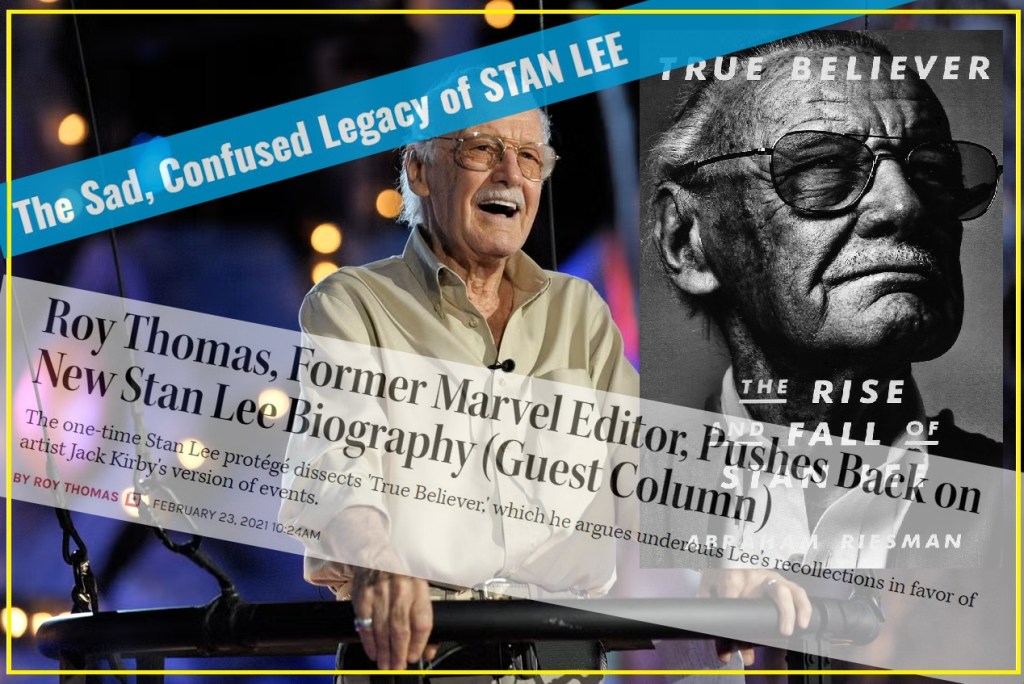
It was only four short years ago (as of this writing) that a truly monumental work was published, a work that, for a short time at least, seemed to signal a possible push towards a truer narrative in the long-cultivated myth of comics history that we’re all so used to. That work was the Stan Lee biography “True Believer: The Rise and Fall of Stan Lee” by Josephine Abraham Riesman.
When Four Color Sinners started, I made the naïve remark that I’d inevitably and unavoidably cover every single biographical piece on Lee ever put out– and, by golly, I’m not about to risk damaging my reputation now, o frantic ones. Riesman’s book is indeed engaging and interesting with new areas of research into Lee’s Jewish identity and family origins, as well as the relative novelty of it being a book written by a biographer who wasn’t already a fan or former Marvel acolyte.
(I should note that I won’t be covering every notable anecdote in this book (for there are many), nor will I respond specifically to each excerpt shared, as some simply should be read for a fuller context. Please do the right thing and purchase Riesman’s book if you’re so inclined.)

When True Believer was announced, there was a palpable feeling of curiosity combined with nervous energy, as it was released not long after the memory of Lee’s passing in the collective memory of mainstream culture. This led to some preemptive shade from certain people who were both prominent in the industry and prominent in the fan-press. (Well, “prominent” is arguable depending on which subsect of fandom we’re talking about, but.)
What struck me initially when this book was announced and being publicized was simply that I observed a handful of people who were denouncing it while publicly announcing that they hadn’t read it and wouldn’t read it.
Which is fine, but I still found that sort of baffling if you felt that strongly about it. As readers here know, I will routinely write or review something that annoys me if only to (factually) point out and counter what I find to be contradictory or information that stands to be corrected. (Which, to be fair, Roy Thomas did to some extent, as we’ll see later.)
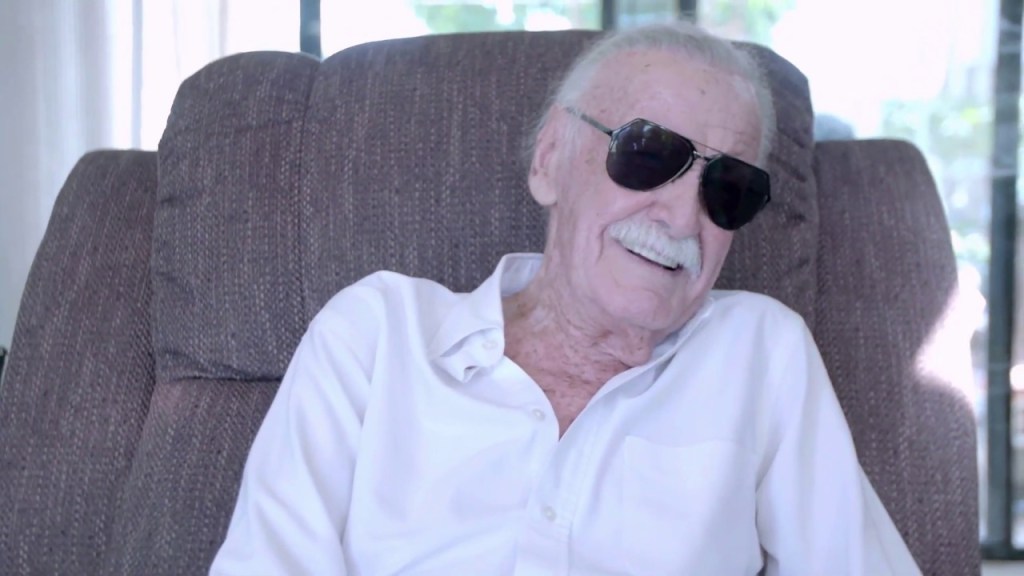
- “A smart journalist I know named Abraham Riesman has written a probably-controversial book about Stan Lee and it’s being released this weekend. Full disclosure: I was interviewed for the book and answered a number of the author’s questions, but I haven’t seen a copy of it and have no idea what I’m quoted as saying in it. I may not for a while.
Anyway, stop writing to ask me if you should be a true believer in True Believer. I haven’t read it yet.” – Mark Evanier, February 13th, 2021
- “As for that creep Reisman’s book, I read enough to know he’s just another Stan Lee-hater and not worth my time. Already several people have pointed out numerous errors in his hit job. He can go fuck himself.” – Tony Isabella, April 7th, 2021
- “In writing his book, Abraham Riesman set out to correct the record, to expose Stan Lee as a fake. He was not the sole creative force at Marvel. As I said, I haven’t read Riesman yet, but I suspect he doesn’t recognize Stan Lee’s rise as largely an accident.” – R.C. Harvey, September 3rd, 2021
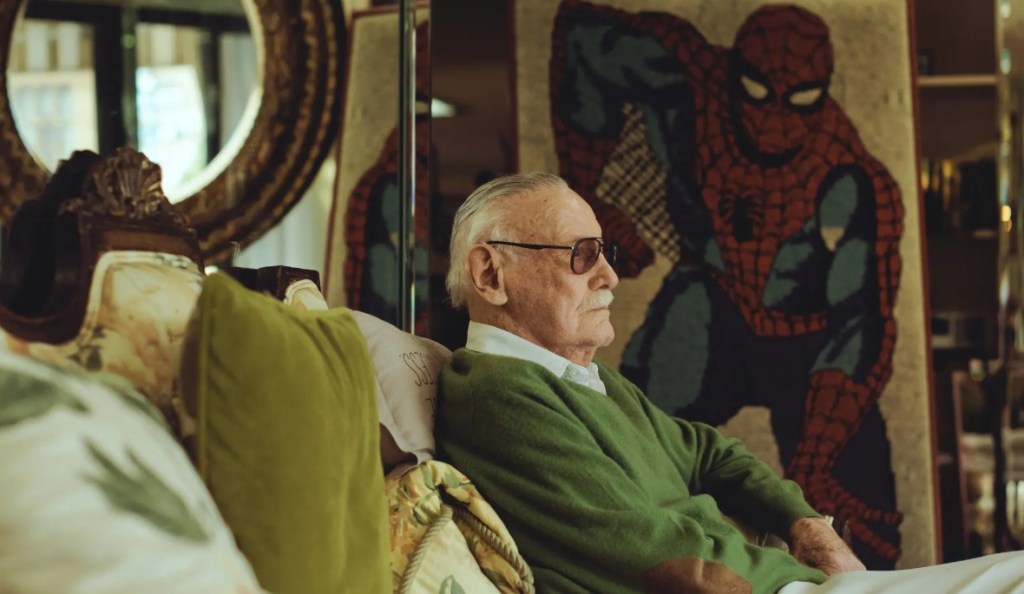
- “Mr. Riesman does not establish that he actually read any the comics of the Marvel Age, or their competitors, nor does he demonstrate the much knowledge of the comic book industry and how the publishers produced their books. The actual stories are never analyzed or discussed. If you have read any of my blogs you know that I have read all of the comics of the Marvel Age…many times!” – Barry Pearl, February 17th, 2021
- “As Marvel Comics visionary Stan Lee’s longtime employee and de facto protégé, and as a known student of the history of comic books, I suppose I would be expected to denounce Riesman’s book as scurrilous, a pack of lies.
Certainly, by the mid-’60s at least, whenever a new artist came on board, they knew that choreographing the story, including adding details, was part of the job description of “artist” at Marvel. If they didn’t want to accept that, they were free to work for some other company.” – Roy ‘Forever Boy’ Thomas, showing his compassion for pay-for-hire artists & plotters of stories that he got to dialogue, February 23rd, 2021
- “I only made it about halfway through, because it’s so grindingly negative…” – Kurt Busiek
Again, I found it rather curious that so many full-grown adults were broadcasting their intentions not to read a book. Could this be that this one was known to not glorify Lee as Fingeroth’s did? Could this be one that brought up indisputable arguments that would make it more difficult for so many fervent true believers to clutch and hold onto their youthful pledges of eternal devotion?
This was a clear case of what is called Selective exposure. Selective exposure theory is frequently used in communication and mass media research that refers to someone’s tendency to favor information and propaganda which reinforces their pre-existing view while they will avoid all contradictory information. (See also: Trump voters)
Confirmation bias is a hell of a drug and once practiced heavily by Jenny Blake Isabella, among others. I’ve got to give a special shout-out to perennial Marching Society member Barry Pearl, whose slobbering and fannish argument against Riesman was that Riesman, unlike Pearl, probably didn’t read all the original Silver Age Marvels.
Selective exposure aside, I’d like to tackle Riesman’s biography and will annotate certain passages that I find meaningful and worth sharing. If you haven’t read this yet, whether from defiance or from a lack of time, I’m once again doing the heavy lifting for you. No need to thank me.
- “But also, I came at this using as many of the journalistic tools that I have accumulated in my 15 years in this industry as I could in order to investigate this guy’s life, which… again, I don’t want to speak ill, but previous efforts had often—not always, but often—not really been serious journalistic efforts. They’ve been [about] analyzing his work and talking about why he was great.” – Josephine Abraham Riesman, February 15th, 2021

At the very beginning, Riesman quotes Macbeth, Act I, Scene 7:
“I have no spur to prince the sides of my intent, but only Vaulting ambition, which o’erleaps itself and falls on th’ other.”
- (Hey, I already think that’s a marked improvement over other Lee biographies, considering these guys frequently called Lee things like “the Shakespeare of comics” even though they’d never actually read any Shakespeare. (Trust me- all these comic fuckers read are comic books and message boards. Shakespeare is a metaphor and not a reference at this point.)
Pg. 5- “Celia and a man named Jack Lieber begat Stanley. Less famously, Celia and Jack also begat Larry, and that was it for their begetting. Stanley, as it turned out, sort of begat himself- he invented a character to play named Stan Lee and never got around to being Stanley again.”
Pg. 6– “He had different sides to him,” Larry said of his late brother in the near-extinct New York Jewish accent the two of them had shared. “I feel like I’m almost talking about Charles Foster Kane. Who was he? What was he? What was he like?” Larry paused and pondered his own questions. His answer was simple, though entirely accurate: “It depends on who you talk to at what moment.”
Pg. 11– “Stan was an astoundingly poor judge of character and was very susceptible to being conned, or at least woefully manipulated. He lived to regret it. His final year and a half, after his departed wife could no longer act as bulwark against mountebanks, had been a hellish maelstrom of abuse and theft.”
- (I mean, this is true but jeez Riesman, “bulwark against mountebanks” and “hellish maelstrom of abuse and theft” is so wordy- are you starting to write reviews for the online version of The Comics Journal?)
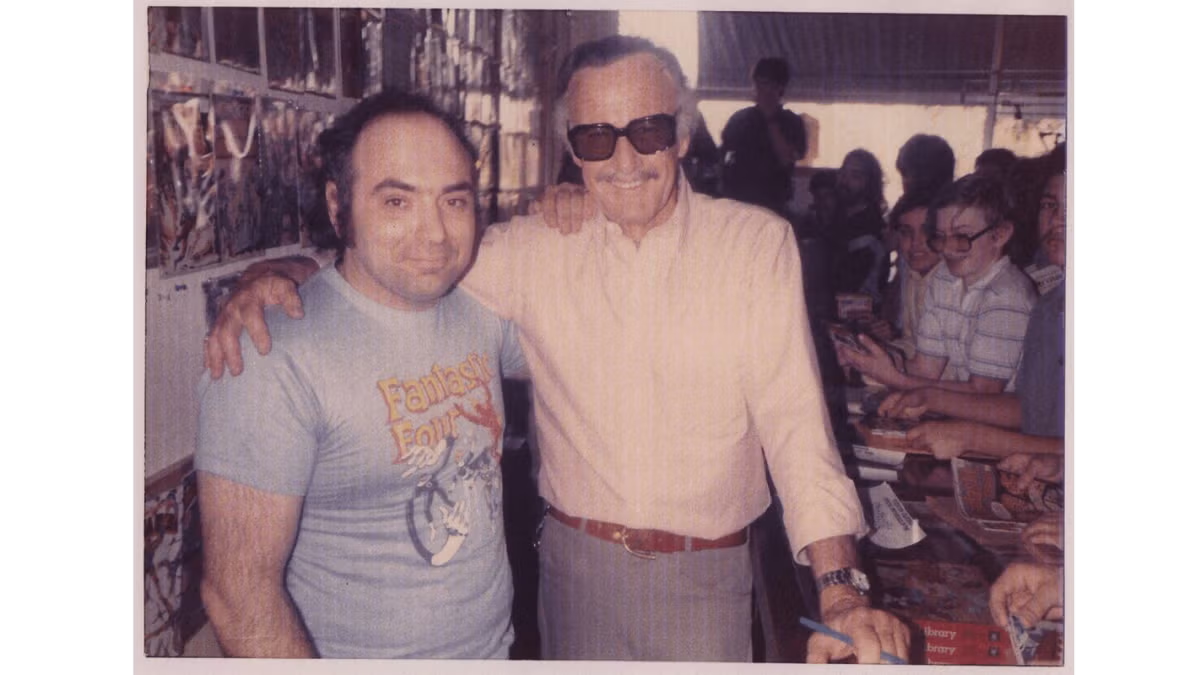
Pg. 12- “We can be certain of one thing: Stan Lee was far less than truthful about his life and accomplishments. He lied about little things, he lied about big things, he lied about strange things, and there’s one massive, very consequential thing he may very well have lied about.”
- (I know this statement seemed to agitate some of Lee’s public defenders, but the truth is that Stan Lee was frequently recorded contradicting himself as well as repeating blatant untruths. It’s simply factual. While you can’t prove his anecdote with Eleanor Roosevelt, for example, you can prove that his newspaper contest story was massively exaggerated.
- Well, let’s just quote no-less-a-staunch Lee defender than Danny Fingeroth: “Look, Stan’s relationship to the truth is very interesting. I went to Stan’s archives in Wyoming, and I listened to a lot of tapes of his talks and events. I like to say that Stan was a compulsive truth-teller. Because he would often say stuff that was very frank. Of course, sometimes he’d bend the truth or outright lie.”)
Pg. 13- “Stan Lee was, by most accounts, a remarkably pleasant man to deal with. He was charming, self-effacing, kind, warm, and gracious.”
Pg. 26– “At age fifteen, Stan entered a competition for young scribes held by the New York Herald Tribune, a publication that would come to be significant in Stan’s later life on multiple occasions. The challenge was to write a nonfiction piece about the news of the week. “I won it three weeks running”, he said in 1977, “and finally the editor called me down to the Tribune. He said, ‘Will you stop entering the contest and give someone else a chance?”
Pg. 27– “Surely Stan never expected that anyone would bother fact-checking something as trivial as that little anecdote. And a dive into the paper’s archives reveals that young Stanley Martin Lieber had, indeed, competed and won seventh place on May 7, 1938, then netted an honorable mention (as did ninety-nine other kids) on two subsequent weeks. But that was it. No first-place finish at any time, but less a jealousy-inducing streak at the top, which makes the idea of his having an inspirational audience with an editor quite unlikely.”
- (Riesman goes on to logically explain that, since this incident was easily proven as a falsehood, it tends to cast doubt on any other youthful accounts Lee would have offered up. This sort of thing seems to be seen as having an agenda, per Lee’s defenders- it is as if Riesman is just “being mean” by writing a fact-checked piece of journalistic autobiography. But let us continue.)
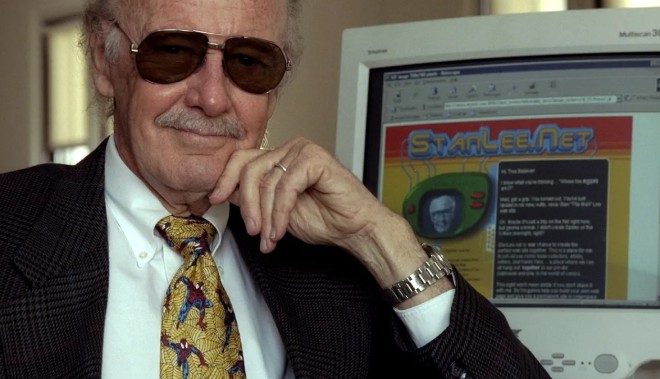
Pg. 31– “Most important, there was the afore-mentioned cousin Jean and an uncle from a different branch of the Solomon tree, Robbie. Robbie had been an athlete in his youth and grew up to be, as Larry puts it, “a nice guy,” working for and marrying the sister of publisher Martin Goodman. Jean further solidified the familial connection to Martin by marrying the man. Those two marriages would prove crucial in changing the history of the arts.”
Pg. 38– “There was the time the Goodman family apparently linked him up with a Jewish employment network that netted him a remote job writing publicity copy for a tuberculosis hospital in Denver called National Jewish Health, although the hospital tells me they have no record of his doing so. He said he did paid acting work in a theater program run by the Works Progress Administration, in no small part because a girl he liked was doing the same- but no record of his being employed there has survived, if there ever was one.”
Pg. 40– “The interviewer was friendly, but he’d done his homework and confessed to Stan that he was a little confused: Wasn’t Goodman Stan’s relative? Was there professional link really the result of happenstance?”
Pg. 41– “That is, except for the fact that he quietly threw the story out the window in his later years, perhaps after being caught wrong-footed in the lie one too many times.”
Pg. 50– “Stan’s chronic abuse of that musical instrument, variously remembered as an ocarina or whistle or some such, left an early negative impression of Stan on Kirby. “I remember him sitting on my desk and playing the flute, interfering with my work,” Kirby later said. “I remember being serious about what I was working on, and Stan was never serious about anything.”
- (I didn’t remember this statement from the first time I read this book (back in 2021), but now I’m struck with how absolutely fitting it is in describing the gulf between these two men and the difference in their outlook and passion for comic books, which is no judgment on Lee. But “I remember being serious- Stan was never serious about anything”- it’s difficult to make up for a bad first impression, they say.)
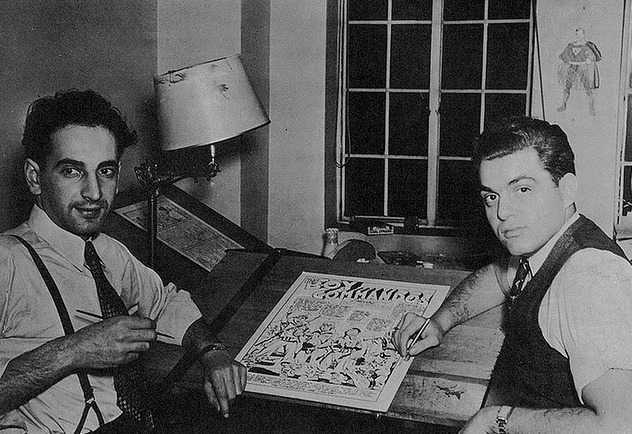
Pg. 55– “One more notable bit of career foreshadowing came in September 1941’s Marvel Mystery Comics #25, in which Stan penned a text story about various superheroes who were series regulars coming together for a confab. Although it wasn’t superhero fiction’s first crossover- that honor belonged to a Namor and Human Torch epic in issue #8, written by someone else- it was the first to suggest that everyone in Timely’s stable could occupy the same space. Twenty years later, when Stan embellished the endlessly interconnected Marvel Universe, he likely didn’t remember those two pages of prose…”

Pg. 55-56– “This is where Stan comes in, and not necessarily favorably. “We were spending a lot of time in our hotel studio, and one time Stan Lee followed us- like he always did- refusing to be sent back,” Simon recalled. “When he saw what we were working on, we swore him to secrecy.”
- (This statement is astounding. A teenaged Lee refuses to leave, was he really this bold, this curious, or instructed by his relatives that employed Simon & Kirby to go find out what else they were doing? Note this all comes from Joe Simon…)
“A couple of days later, in Simon’s account, a pack of Goodman relatives who worked for the boss (Stan and Solomon were hardly the only ones to get a nepotistic spot on the payroll) surrounded Simon and Kirby in the bullpen.”
- (It’s long been said that Kirby blamed Lee for the rest of his life over THIS incident, and it’s why Kirby had issues and resentment with Lee during their Sixties period. It’s all from the grudge Kirby apparently nursed, but it needs to be said, again- this is completely from Simon’s statements. Why do we accept it, when Simon is the one who reported it in the first place?)
Pg. 57- “In his 1978 autobiography outline, Stan wrote, “MG was father figure to me- most successful man I’d ever known.”
Pg. 58- “Here, too, we see Stan, later in life, ragging on Goodman and convincing his audience that he had eventually bested his Oedipal oft-nemesis by becoming a trendsetter, an inventive creator, and a generally fun guy.”
Pg. 61-62- “Adding further intrigue is the fact that documentation of Stan’s time in the military is notably spotty. There are no extant records of most of his claimed accomplishments in the playwright division, though his accounts seem plausible enough.”
Pg. 65– “As soon as Stan had the opportunity to go back to his full-time job in comic books, he started trying to get out of it.”
Pg. 66– “His schemes for departure from the comic-book trade in the 1940s and ‘50s were varied, but they all hit dead ends for one reason or another: tragic luck, infertile business climate, deficit of inspiration, what have you. As a result, he never quit his day job.”
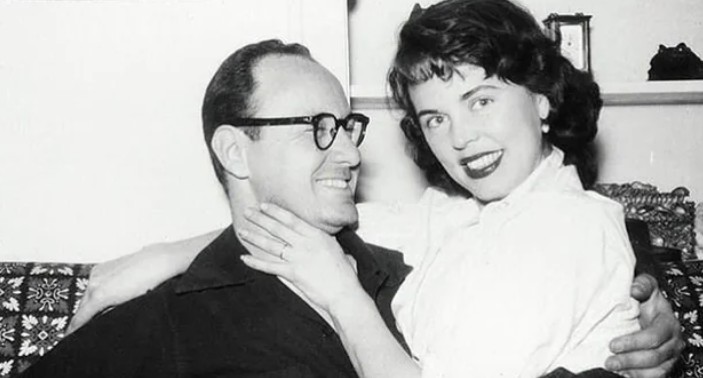
Pg. 70– “However, Secrets Behind the Comics contained Stan’s first provable commission of a cardinal sin for the arts, one that he would commit countless times, to a degree that would eventually be catastrophic for his reputation: obscuring credit. Secret #12 was all about the creation of Captain America, who was still probably Timely’s most famous creation. It presented, in comics-panel form over the course of a few pages, a dubious narrative never uttered by anyone else.
…The narration then claims, “During the next few weeks, Martin Goodman had the nation’s top writers and artists submitting ideas for a new patriotic type of character, until finally, one character was chosen! Captain America, sentinel of liberty!”
Pg. 74- “Later, when Larry asked Stan if he’d ever thought about writing a novel, the younger brother recalls the elder replying, “I don’t enjoy writing that much. I write because I can do it and I do it easily and to earn a living.”
Pg. 76– “As it turned out, JC would spend her life singing Christian devotional music with her mother, putting crosses up in her houses, and even going so far as to attempt to record a single about the infant Jesus when she was in middle age.”
- (Included this just because I think it’s awesome and I’d like to hear that single, though I have to defend JC here, is there ever an age when someone can’t record a song?)
Pg. 81– “There’s just one problem with these “Lee/Wertham debates”, as Stan called them: They don’t appear to have ever happened. Historians have pored over archives to find out about these supposed verbal tussles and have turned up nothing.”
Pg. 83– “Nevertheless, in spite of this public ridicule, Stan continued to come to work, albeit with a provision from Goodman whereby he was able to write from home on Wednesdays.”
- (Note that, even in the 1950s’, Lee was able to come into the Marvel offices on a part-time status. Yet, he was always “too busy”.)
Pg. 96- “Thus begins the duel of narratives- Kirby’s versus Stan’s– that will forever muddy the waters about what happened between the two men from 1958 to 1970. The general public is generally aware of only one narrative of the Marvel Revolution, and that is Stan’s.”
Pg. 97- “In fact, when one does the math, it appears that Kirby likely picked up his first new assignment on Monday, June 9, less than 72 hours after Maneely’s death. Given how close Stan and Maneely were and how crucial Maneely was to the operations of Goodman’s comics publishing, is it not plausible that a devastated Stan may have been shedding tears in the paltry office of a business that was on its last legs?”
Pg. 97– “I was given monsters, so I did them,” Kirby would say in 1975. “I would much rather have been drawing Rawhide Kid. But I did the monsters.”
- (I felt this comment by Kirby was an admission that he was taking what Lee gave him upon his return in 1958, while also backing up Kirby’s claims that it was he that was pushing Lee to return to superheroes and pitching concepts while imploring Lee to tell Goodman the time to return to costumed characters was now. Consider that Kirby had recently just done Green Arrow and Challengers of the Unknown at DC before returning to Atlas/Marvel.)

Pg. 98- “There’s little reason to doubt Larry’s account, as he is explicit about how little he cares about his comics career and is never eager to claim credit for anything. I ask Larry whether Kirby came up with the initial stories without any input from Stan; he replies, “Maybe he did. See, I was never there when the two of them were there.”
Pg. 100– “However, there is at least one instance of Stan’s admitting that Kirby would usually dictate the plot himself. It is a damning one, the closest to a smoking gun that you’ll find. He did an interview around 1965, back when few cared about credit, and said the following:
- “Some artists, of course, need a more detailed plot than others. Some artists, such as Jack Kirby, need no plot at all. I mean, I’ll just say to Jack, “Let’s let the next villain be Doctor Doom”… or I may not even say that. He may tell me. And then he goes home and does it. He’s so good at plots, I’m sure he’s a thousand times better than I. He just about makes up the plots for these stories. All I do is a little editing… I may tell him that he’s gone too far in one direction or another. Of course, occasionally I’ll give him a plot, but we’re practically both the writers on the things.”
- (I find it tremendous that Lee admits he will occasionally give Kirby a plot. 1965 Stan is telling the truth that Kirby is the main generator of the story. I’m also in the minority of Lee critics who believe Lee’s dialogue brought something to the readers of that era, whereas Kirby’s dialogue may have gone over their heads. Consider that I do not mean that as a critique of Kirby’s dialogue but more a comment on the readers of that time, who called Stan Lee the “Homer” of their generation, etc.)
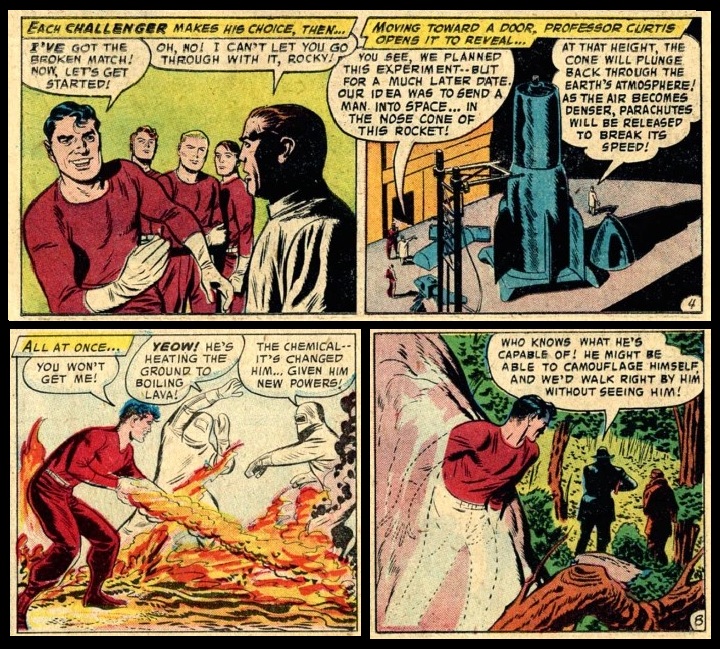
- (I also would like to point out that I’m surprised Riesman didn’t choose here to showcase the Challengers of the Unknown, especially issue #3 from 1958. In this story, Challenger Rocky goes up in an experimental rocket, comes back to Earth and emerges both deranged but with newfound powers such as the ability to generate flames and turn invisible. The closeness with this and the first issue of the Fantastic Four are beyond coincidence. Riesman mentions them briefly a few pages later, but nothing consequential except that Kirby mentioned them “only glancingly”.)
Pg. 109– “But a few years later, Stan started to present a different account, one we might call the Joan version. In this one, it was his wife who promoted him to get the gumption to shake up his process and create the FF. The earliest use of the Joan Version that I can find was published in 1969, when Stan told an interviewer about how he’d been frustrated by his comics work and had been longing to produce things outside the medium.”
Pg. 110– “Then Stan sort of merged these two previous versions into an account that we might call the Martin-and-Joan Version. In 1974, Stan wrote at length about the FF’s real-life beginnings, in a book called Origins of Marvel Comics, and he said the process began during a conversation between him and Joan about comics and his various gigs in other media.”
Pg. 110- “This iteration, too, was tossed by the wayside with time and replaced by a slightly but revealingly altered one, the most commonly repeated one todich we might call the Quitting Version.”
Pg. 111– “And yet, even in this final version, the story would change. Sometimes Stan said Joan told him to do comics the way he wanted to do them first and then the pitch from Goodman came next; sometimes, vice versa. Sometimes he didn’t even mention the Goodman part, only the Joan part. Sometimes there was a golf game; sometimes it was just information that Goodman had gathered in an undefined way. In short: it’s hard to synthesize what, exactly, Stan wanted his fans to believe about the FF’s creation- though by the end of the line, one message was clear: Other than drawing the characters, Kirby had nothing to do with coming up with them.”
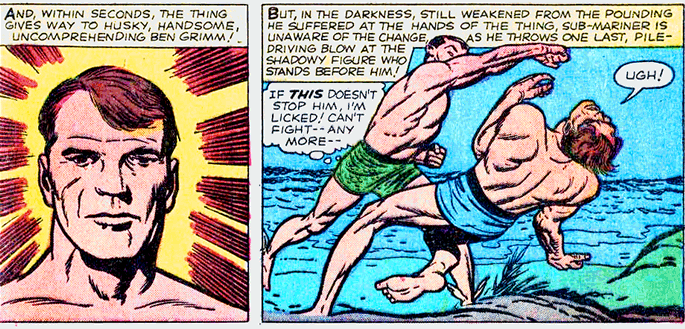
Pg. 118– “The problems with this narrative are twofold. For one thing, it’s extremely unlikely that anyone was inviting Stan onto the radio to talk about Marvel during the time when Thor was conceived. Given the many months required to produce a comic in those days, this supposed interview would have had to occur in late 1961, mere weeks after the debut of the Fantastic Four and before even the Hulk had first appeared.”
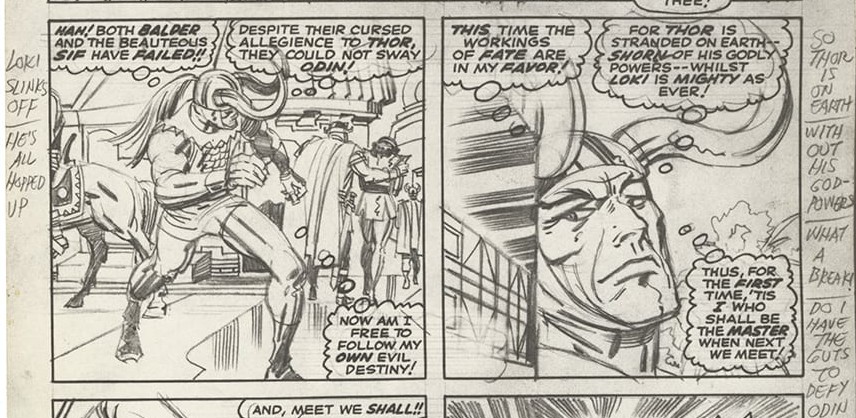
Pg. 118– “What’s more, Stan had previously displayed no interest in Norse myths, not even in his own accounts of his youth. In stark contrast, Kirby had a long-standing and public fascination with such legends- indeed, he had already done not one but two comics stories starring different versions of Thor in the fifties, one at DC and one for Goodman.”
Pg. 131– “Perhaps more important, the writer/artists weren’t being paid for the massive amounts of writing they were doing. Stan was getting freelance cash for his writing duties, given that his staff job was still as the editor, but guys like Kirby and Ditko, who were laboring without the benefits of staff positions, were also being denied writer’s fees that were by all rights theirs.
On the rare occasions when writer/artists did speak up, Stan was known to shoot them down.”
Pg. 132– “Stan began talking trash about his writer/artists, too. In a letter to fanzine editor Jerry Bails, Stan blithely insulted an idea Ditko had proposed. “Well, we have a new character in the works for Strange Tales (just a 5-page filler named DR. STRANGE-),” he wrote. “Steve Ditko is gonna draw him. Sort of a black magic theme. The first story is nothing great, but perhaps we can make something of him- ‘twas Steve’s idea, and I figgered we’d give it a chance, although again, we had to rush the first one too much.”
Doctor Strange would go on to become a key member of the Marvel pantheon, and Stan later claimed it was all his idea: “In July of 1963 I gifted the world with another favorite of mine, Dr. Strange,” he wrote in Excelsior.)
Pg. 134– “In what is possibly his first appearance on film outside home movies, he looks and sounds nothing like the toupee-wearing, bespectacled, hey-now-how-ya-doin’ character he would later become.”
Pg. 141– “O’Neil has a slightly more cynical eye when it comes to his memories of starting out with Stan. “He was the first man I ever knew who really wanted to be rich and famous,” O’Neil recalls. “One of the first jobs he gave me the first week I worked for him was to look into the possibility of him getting an honorary degree. I guess I qualified because I was a college graduate. But I said, ‘I don’t know anything about this, and my impression is, they have to invite you, it’s not something you can apply for.’”

Pg. 144- “While chatting with Freedland that day, Stan tore into Ditko with his signature passive-aggression. “I don’t plot Spider-Man anymore,” he told the reporter. “Steve Ditko, the artist, has been doing the stories. I guess I’ll leave him alone until sales start to slip. Since Spidey got so popular, Ditko thinks he’s the genius of the world. We were arguing so much over plotlines I told him to start making up his own stories.”
Pg. 149– “But the period between Ditko’s departure and Stan’s eventual assumption of the publisher’s chair was one in which he lost Kirby, then his writing duties, and ultimately saw his glory days come to a close. This era was as good as life ever got for Stan, but he remain unsatisfied, and, due to events both within and beyond his control, he would never again feel the mix of achievement and respect that the era brought.”
Pg. 152– “That dispute over credit lay in the future, but Kirby was being disrespected and underpaid in the present as of 1966, as well, despite Stan’s efforts at ameliorating the situation.”
- (I just learned a new word, thanks Jo. “ameliorating”- though I never consider myself to be a ‘real’ writer, this sort of thing just smacks me in the face to remind me I’m not!)
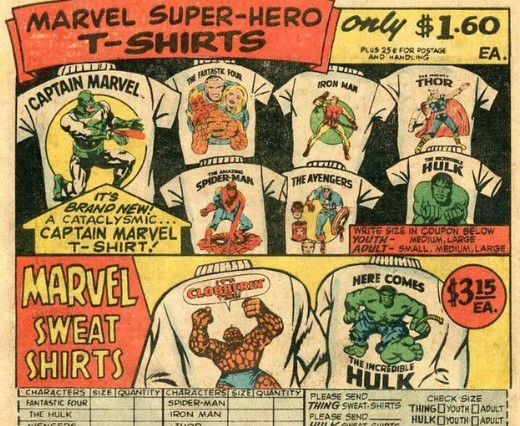
Pg. 152– “That year brought the debut of a whole line of Marvel merchandise- T-shirts, posters, and the like- which was fed to a hungry and growing consumer base. The items almost exclusively featured artwork by Kirby. He received no extra payment for this use of his work.”
Pg. 163– “Throughout their marriage, Joan was a profligate spender. By the reports of others and Stan’s own admissions, she had something of a shopping addiction and accumulated piles of jewelry and strange tchotchkes: statues of animals, excavated minerals, and the like. Stan loved his wife deeply and, as such, rarely turned her down.”
Pg. 166- “The deal was a mixed bag for Stan. On the one hand, Ackerman had made it clear to Goodman that he very much wanted the ever-more-famous Stan to stick around as the public face of Marvel Comics. But at the same time, other than reportedly getting a five-year contract (probably the first formal employment contract he’d ever had) with provisions for a raise, Stan would not share in the windfall profit that Goodman had coming to him, despite all his labor over the decades.”
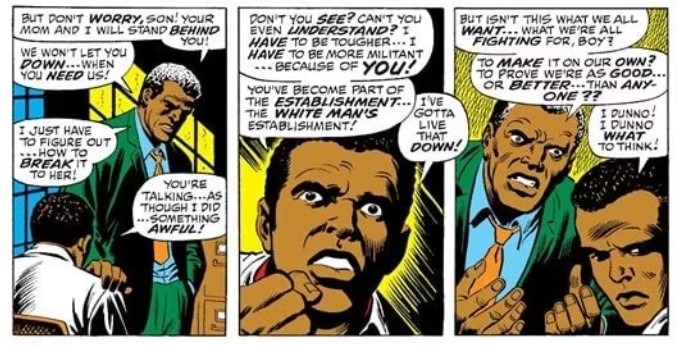
Pg. 167- Stan’s dialogue played with fire, putting words like “whitey”, “Uncle Tom”, and “soul-brother” into black characters’ mouths and depicting Peter (Parker) as telling them to see the administration’s side of the story and yelling, “Anyone can paint a sign, mister! That doesn’t make you right!”
Pg. 173- “To the audience’s surprise, Stan used some of his time to denounce comics in bitter terms. “I would say that the comic-book market is the worst market there is on the face of the Earth for creative talent, and the reasons are numberless and legion.”
Pg. 173– “The article revealed that, at this point, Stan was actually coming to the office only two days a week- Tuesdays and Thursdays- and was spending the other five days at home, writing.”
Pg. 179– “The plan was for Chip (Goodman) to take over as publisher of Marvel Comics. “Stan was very unhappy about that,” recalls Roy Thomas. “They just didn’t get along well and Stan was increasingly restive at that stage.” Stan, it seems, executed a plan to seize control and expel the Goodmans from his professional life, once and for all. “Martin had his son working there, and he told Cadence that he wanted the son to be the publisher after he left,” Stan would recall late in life. “I said to Cadence, ‘If he’s the publisher, I’m quitting.’”
Pg. 184– “All of these comics bore a new heading on their title pages: STAN LEE PRESENTS. Even when he wasn’t doing anything to directly create a given comic book, his name still came first in the credits.”
Pg. 185– “He signed with a lecture-coordination agency called the American Program Bureau, which put together promotional materials touting his genius: a one-sheet text biography recounting the origin and evolution of Marvel (Jack Kirby was nowhere to be found and Goodman wasn’t mentioned by name, only as “someone else” who used to run the company) and a goofy comic strip in which a superheroic Stan was envisioned as “Speaker-Man:, flying to the rescue of program directors.”
Pg. 189– “Stan and Martin Goodman were estranged all the way until Goodman’s death in 1992, and the former would often denigrate the latter in interviews as the years wore on. Near Stan’s own death, he did an onstage interview where he was particularly blunt about the relative without whom he would never have had a career. In recounting the origin story of Spider-Man, he said Goodman had been initially skeptical about the character- that part Stan had said many times before- but punctuated the anecdote by saying, “I got to do the kind of books I wanted to do, not the kinds of things that moron wanted.” The audience laughed and cheered, but Stan didn’t crack a smile. “As you can tell,” he said, “I was not his biggest fan.”
- (I’ve never understood Lee’s seldom but consistent modern slagging of Goodman and can only speculate it’s a psychological thing in that Lee knew how indebted to Goodman he was and resented it.)
Pg. 191– “When I ask (Gerry) Conway for his general estimation of Stan, he pauses for a moment and replies, “He’s a good guy. He’s just not a great guy.” That comment is revealing. Talk to anyone who worked for Stan in his days as publisher and they’ll tell you something similar or at least allude to it.”
Pg. 199– “He also got to taste success in a medium he’d once tried to escape to: newspaper comic strips. January 1977 saw the debut of The Amazing Spider-Man in newspapers across the country, with art from Romita and writing from Stan- at least ostensibly. In fact, despite his writing credit, Stan was just doing the meager dialogue each strip contained, while a succession of Marvel Comics writers came up with the plots- for a fraction of the pay Stan was receiving from the strip’s syndicate. It was the Marvel Method multiplied, but no one seemed to mind much.
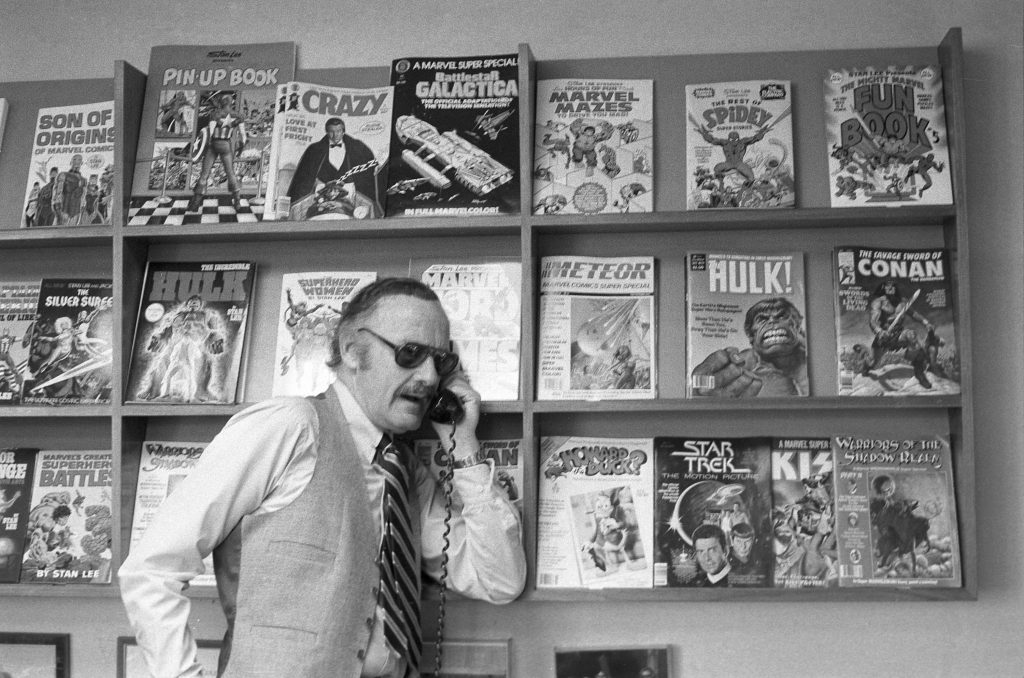
Pg. 205– “But when he made his rare visits to the Marvel offices in New York, he demonstrated that he was completely out of the loop as to what was going on in the comics he was ostensibly publishing.”
Pg. 215– “It’s hard to overstate how much of an impact these sorts of statements had among people who took comics seriously. Previously, you had to have dug pretty deep and made some wild extrapolations to believe that Stan wasn’t the primary writer on the classic Marvel stories. Now, here was the only other man in the room when the books were hashed out, telling the world that Stan had virtually nothing to do with what was put on the finished page. Kirby was a trusted and venerated figure- in no small part due to the cult of personality Stan had built up around him- so his words carried substantial weight.”
Pg. 216– “What was Stan’s response to this full-frontal assault? For the most part, it was condescension. “Well, I think that Jack has taken leave of his senses,” he told an interviewer.”
- (Pg. 231– I am fascinated by a list of pitches that Lee created for Whoopi Goldberg in the nineties, after meeting her at Fabio’s birthday party– that’s a sentence I never thought I’d type, I’m sure Riesman felt the same way- and, apparently, Goldberg made small talk with Lee and said she’d like to be a superhero. (I genuinely wonder if she was just being polite?)
- Lee’s pitches are- I’m not kidding- Femizon, a “waitress who drinks a concoction made by an eccentric nutritionist and gains supernatural strength”, Chasity Jones, the offspring of an alien and human whose power is “to be sexually irresistible to men”, which Lee states “It’s a power any woman would want!”, before concluding with- wait for it- Baaad Girl, the child of a woman impregnated by Satan. I wonder if any of these 21st century companies putting out “new” Stan Lee concepts will go for any of these characters?)
Pg. 246– “Simultaneously, Stan was in negotiations with Marvel to establish a new contract with them, and, on November 17th, 1998, they signed a deal whereby Stan would continue to act as a figurehead for Marvel in exchange for $810,000 a year, with annual raises capping at $1 million, pensions for Joan and JC, $125,000 a year for the still-ongoing Spider-Man newspaper strip, stock options, and a 10 percent cut of Marvel’s film and television profits.
However, there was also a clause that would prove problematic in the future: He signed away to Marvel “forever throughout the universe all right, title and interest solely and exclusively which you may have or control or which you may have had or controlled” to the characters he claimed to have created in his work for them. In Marvel’s eyes, this meant an extra layer of reinforcement in the foundations of their edifice.”
- (This secures what Cadence began in 1974 with Origins of Marvel Comics and, again, the corporation buys out Lee and places him as figurehead/creator for the sole fact of controlling and owning intellectual properties actually largely created by freelance work-for-hire artists. Also, note that Lee was getting $125,000 a year for the Spider-Man syndicated strip and Roy Thomas began ghostwriting it around 2001 and later stated Lee never ever gave him a raise “for the entire 18 and a half years I did it”, as Thomas put it. LOL!)
Pg. 249– “So Stan and (Peter) Paul issued an open letter, published in August 1999 on Stan Lee Media stationary for anyone to see, in which Stan declared, in part, “I have always considered Steve Ditko to be Spider-Man’s creator.” This failed to satisfy Ditko, who put out a pamphlet in which he made a compelling point about the presence of Spidey, whom he visually designed, on Marvel’s official documents: “Check Marvel’s stationery, mailing labels. Which creation is used? Word or art? Name or costume?”
That may seem like a pedantic distinction, but Ditko turned out to be on to something: In subsequent years, Stan made it clear that his use of the term “co-creator” was a purely formal effort, one that he didn’t truly believe in.”
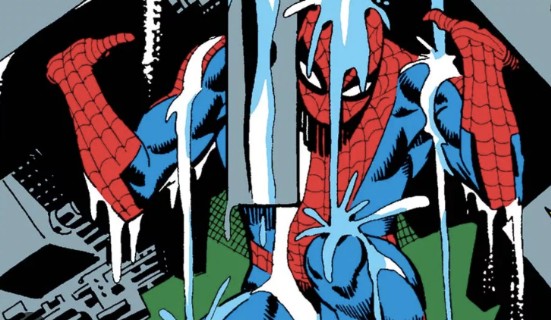
Pg. 277– “A few months after the merger, the first book-length biography of Stan was released, Tom Spurgeon and Jordan Raphael’s Stan Lee and the Rise and Fall of the American Comic Book. If the Arturion shareholders read it, they would not have been pleased, given that the slim volume contained skepticism about Stan’s creative claims at Marvel. Stan had agreed to be interviewed for it and, near the end of the tome, one could find yet another quote from him about how he wished he’d been successful in a bigger venue: “I didn’t have any big compulsion to write comics. It was a way of making a living,” he said.
Pg. 282– “It also appears that Stan looked the other way when Anderson was convicted of abuse again and served probation in 2010, this time for choking and hitting his son with a belt. Anderson, who had to undergo court-mandated counseling, would later claim to be repentant and a changed man, but rumors of his violent tendencies never stopped circulating.”
- (Included because of the incident I have alluded to in the past when having to mention Max Anderson; he did indeed try to get tough with me in 2008 at a private function- one day I will tell the whole story but let me again reiterate I was not even speaking and certainly not to Anderson when he began randomly berating me (of all people) in a loud voice out of nowhere.)
Pg. 282-283– “The process of creating these products could be bizarre, rocky, and slipshod. For example, in the mid-aughts, the Sci-Fi Channel signed a deal with POW to make a movie called Stan Lee’s Harpies, but, as with Stripperella, the title was literally all the creative direction that the initial deal consisted of.”
- (It is still utterly amazing to me that 100% of every Stan Lee “project” in the late 20th/early 21st century was greenlit purely and completely on vague public awareness of his status as a creator of Marvel Comics of the past.)
Pg. 284- “They took a meeting with (Gill) Champion present, in which Lester presented the concept: a movie about a superpowered werewolf, tentatively titled Werewolf. “You can always sell werewolves and vampires,” Lester recalls Stan saying.”
- (I included this excerpt just because I found it funny. Imagine how broke you or someone you know is right now and then imagine the tens of thousands of dollars spent on Stan Lee and his cronies pitching the most absolute fucking dreck in Los Angeles, just to fund POW! Entertainment.)
Pg. 305– “We were the mercenaries”, says Jonathan Bolerjack, a Southern lilt in his voice.
- (I know what use of the word ‘mercenaries’ Bolerjack means, but it’s still hilarious to consider him saying it with a hint of machismo and implied danger, like a dork like him or Max Anderson could ever be perceived as dangerous, soldier-of-fortune types. And it’s generous of Riesman to say his voice has a “Southern lilt” rather than “obnoxiously fucking nasal” which is the correct way to describe Bolerjack’s grating voice.)
Pg. 306– “I guess the one skill you needed was to be a really good bullshitter”, he says with a smile. “That’s what you needed to get in. You needed to know either how to kiss ass or bullshit your way into something. But also- it’s like anything else- nepotism. Someone liked you.”
- (Wow. This is pretty blatant admission from Bolerjack, and distinctively different in how he describes his role and intentions in 2025, when he’s hustling a terrible documentary. I’m gonna hazard an educated guess that Mark Waid also didn’t read “True Believer” in 2021, so he didn’t know about Bolerjack’s bullshitting when he endorsed Bolerjack’s as-yet-unreleased film.)
Pg. 306– “There is no way to sugarcoat Stan’s final act. From the minute Joan died until his own passing sixteen months later, he was beset by malign forces that sought to extract maximum value from an ailing and depressed man in his nineties.”
Pg. 316- “It is within this category that some of the most troubling audio exists. On a number of occasions, I heard Stan making racist, homophobic, and misogynist remarks either to or in discussion of JC. “I think you’re the dumbest white woman I’ve ever known!” he screams at her in one (to which she replies, “Fuck you, Stan”). In another, Stan talks to (Keya) Morgan about JC and says she’s “supposed to be an attractive lady,” but instead, she’s “like the worst lesbian you can imagine.”
At one point, JC tells Stan she’s going to adopt an African American baby (something that others in the inner circle say became a brief obsession for her), and Stan grunts back at her, “The hell you want a black baby for?”
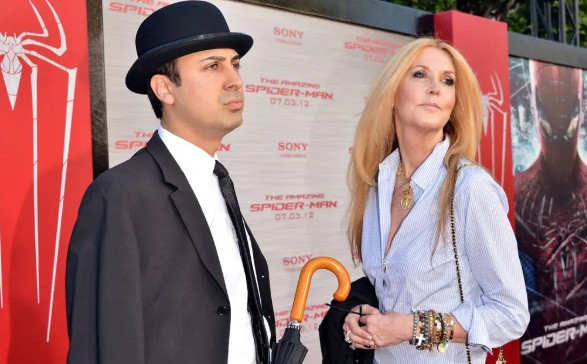
Pg. 323– “Another public shock arrived after Morgan took Stan to the Silicon Valley Comic Con on April 8th and set him up for his autograph session. Bystanders took cellphone video of Stan signing, and it quickly went viral in geek circles. The footage showed a near-passed-out Stan struggling to hold his pen and having to be told by a looming, dark-suited, and bowler-hatted Morgan that his name was spelled S-T-A-N L-E-E-.
Pg. 330– “Less than a day after news of his death went worldwide, JC appeared on the television show of online ultra-tabloid TMZ to enthusiastically talk about how she was going to soon unveil a new superhero that she and her dad had created (though insiders say it was just her) called Dirt Man. That same day brought an announcement from POW’s parent company, saying that fans shouldn’t worry, because plenty of Stan Lee products and projects were still on the horizon.”
…all in all, this book was a success, but I was somewhat surprised to see that it did not herald in a new understanding and approach to covering Lee. The response from Disney/Marvel and compromised comic professionals doubled down almost in a proactive campaign towards any prospective new readers picking up Riesman’s book and figuring out that Stan was not always The Man they’d been told he was.
I did not find Riesman at all unfair or with a sinister agenda and, in retrospect, am surprised that people like Busiek and Brevoort (who, admittedly, can be less harsh and dismissive in public discourse than creators like Isabella) found it overwhelmingly negative. Was Larry Lieber’s actual real-life experiences just too negative to bear? Riesman approached it with less sentimentality and more journalistic tendencies, which bore out results as we find no factual documentation of many of Lee’s claims. What was Riesman to do then? Share the results and report the facts.
As many other writers have suggested, there isn’t any “Rosebud” for Stan Lee- he did not contain multitudes per se, and the only layer of complexity was his own feeling that he was above the industry that made him a global icon, that toiling in the comics medium was beneath him. Literally, this is how he felt. How he reconciled it and how he resented Martin Goodman is all the depth you can plumb with this guy.
Now that I think of it, it makes complete sense that new generations of “geek culture” would embrace and anoint someone as transparent, if genial, as Lee to be their Godhead. As he really stood for nothing outside of sustaining his position and had no great creative passions to define his character or output, he can be whatever they imbue him with, a symbol of endless regurgitated hype and nostalgic comfort. An empty mask, celebrated by legions of people who, like their hero, also have no original ideas of their own.
Thanks to Josephine Abraham Riesman, Jordan Raphael, the late Tom Spurgeon, JC Lee, and legions of Merry Marvel Marching Society members. Max Anderson would like to send thanks to ME for not beating the shit out of him in 2008.

 Four Color Sinners
Count me among the naysayers.
I’m not sure what I expected from this book. My only prior knowledge of Riesman was from two situations. The first was a social-media rampage she went on in response to a negative review of an Adrian Tomine book that was published by a (now inactive) online magazine I used to contribute to. The second was an appalling article in which she recounted, without any sense of embarrassment, her stalking of Steve Ditko. She seemed up there with some of the more distasteful people in the comics press. But this book was from a major publisher, my local library bought a copy, and so I checked it out.
It was pretty terrible. I was put off right away by the gaudy, “Look Ma! I’m writing!” prose style. I was further put off by the lack of emotional intelligence on display. The treatment of Lee’s surviving daughter, who is apparently a deeply unstable individual, was pretty gross. Even grosser was the bit where Riesman called her a replacement for an earlier child who died in infancy. Parents who have lost a child never stop grieving on a certain level, and they certainly don’t regard a subsequent child as a replacement. The lack of empathy was pretty disgusting. And then there were the rampant problems with the research.
The most conspicuous problem on this point was that Riesman seemed to have her mind made up that Lee was a liar and a fraud before she started writing. The book overall is an extremely tendentious anti-Lee polemic. I found it very hard to take seriously after a certain point because Riesman is so demonstrably ignorant.
She doesn’t begin to understand the publishing world Lee operated in. (To pick one detail that jumped at me, she claims that at the time the Comics Code started, it was a question whether Marvel or DC was the biggest comics publisher. Neither was. The biggest comics publisher was Dell.) She mocks some Goodman-published fumetti books that Lee authored, but she doesn’t understand that there was a market for that stuff in the early 1960s. Lee and Goodman were not the only people putting books like those out. And on and on. Don’t even get me started on the passages dealing with Jim Shooter, which were completely divorced from reality and misrepresented their main source, which was Sean Howe’s MARVEL COMICS: THE UNTOLD STORY. Howe’s book is also a rubbish pile of misrepresented research, but he didn’t claim several of the things Riesman ascribes to him.
The worst thing is that Riesman doesn’t understand the aesthetic dynamic at work in the Lee-scripted comics. Lee would often use the copy to add subtext, provide dissonance, and at times subvert the narrative altogether. For better and for worse, he would occasionally take this near the level that Woody Allen did in WHAT’S UP, TIGER LILY? Although several Lee detractors treat this as vandalism to the cartoonists’ material, it can’t be dismissed. Gil Kane was enormously appreciative of Kirby’s work, and he didn’t like Lee personally. But he is one of the many who insist that Lee’s scripting was the factor that made ’60s Marvel a hit. Lee was also able to impose a tone that kept the Marvel books successful despite the cartoonists’ departures. It was not a coincidence Kirby, Ditko, et al. never enjoyed the success their work had with Lee after they stopped working with him. His tone was more compelling than theirs. Riesman refers to an article TCJ published about whether Lee or Kirby deserved to be considered the true author of Marvel. Riesman, demonstrating a lack of professionalism typical of much of her book, lied about reading the article, and falsely claimed it sided with Kirby. The article actually sided with Lee, and the reasons were similar to the ones I’ve given. Barry Pearl wondered if Riesman had even read the ’60s Marvel comics, and I understand where’s he coming from.
This comment is getting way, way too long. There’s a lot more I could say, but I’ll stop here.
LikeLiked by 1 person
Interesting comments. Of the three, Lee, Kirby, and Ditko, I met Mr. Kirby so I prefer, as you have, to focus on the work produced. And this, of course, is where it becomes subjective. Lee’s dialoguing on the Fantastic Four was great to me as a 11 year-old. But as the years have gone by, I don’t think it stands any artistic test of time. Youtube is filled with comments from MCU fans who, when checking out the original source material, find, to their surprise, the dialogue is a “slog to get through.”
I prefer the work of Ditko and Kirby after their Marvel stint and for me, it’s way more successful, most especially because it stands the test of time of still being worthy of discussion. The work of the two men in later years was more personal, which I prefer over the assembly line that was 1960-1970 comics. The nuances and characterizations were richer. Lines and depicted events in the Fourth World series are still rattling around in my noggin whereas after reading FF 1 -105 in real time, none have had a lasting impact on me, and only four issues aren’t painful to re-read. The rampant sexism is especially painful. Even for the time, it was degrading, and I’d submit that in my neighborhood and family, I assure you every woman there would be able to pick a name for her baby without their husband’s help.
Lee’s work also contains for me SO many missed opportunities for REAL emotion and depth. My prime example is Kirby’s notes for when Surfer is about to silence Alicia and stays his hand. In the printed Lee version, Surfer goes on and on about traveling the galaxy and he finally UNDERSTANDS beauty. In Kirby’s margin notes, the Surfer simply says, “Are you…beauty?”
Love it. In just three words instead of Lee’s usual expository twenty, it shows the Surfer’s ignorance and innocence. He’s heard whispers of this thing called beauty in his travels through the universe and thinks he’s found the creature that embodies it. That IS beauty. It’s so much more PERSONAL.
My overall problem with the produced work is the Marvel method was not a true collaboration and it constantly shows with characters’ expressions not matching the dialogue and the constant tug of war to lower and lower the depth of true characterization. It was merely a way to steal credit and wages. Anything springing from such despicable roots will not be evergreen in the endless chase for artistic triumph.
LikeLiked by 2 people
Mark–
People’s tastes get more idiosyncratic and rarified as they get older. They also find that a lot of material they liked when they were younger doesn’t hold up for them very well, or that they may like it for different reasons.
The work Kirby and Ditko did away from Lee does not have the commercial appeal of the work they did with him. DC has never had much success in marketing The Fourth World material in an inexpensive general-audience format. The most recent attempts, which were published in 2018, sit at the bottom of their backlist. Their most successful efforts have been with the expensive omnibus editions, and those have tiny print runs. The market for Ditko’s work away from Lee is small to non-existent. The ’60s Marvel work, on the other hand, has been in continuous print in inexpensive editions for decades now.
None of this is a put-down of Kirby and Ditko’s work away from Lee. But it’s certainly for more specialized audiences.
LikeLike
This is a response to RSMartin’s statement: “The work Kirby and Ditko did away from Lee does not have the commercial appeal of the work they did with him. DC has never had much success in marketing The Fourth World material in an inexpensive general-audience format. . . . The market for Ditko’s work away from Lee is small to non-existent. The ’60s Marvel work, on the other hand, has been in continuous print in inexpensive editions for decades now.”
I used to think the same way, for the same reasons, but then I realized that there’s also a large body of Lee/Kirby and Lee/Ditko work that no one cares about and that has no commercial appeal: that is, their work at Timely/early Marvel from before the dawn of FF/Thor/DS/S-M. It’s clear that at least with Ditko those earlier Lee scripted stories really were written by Lee, who considered Ditko the easiest artist he worked with (because Ditko did exactly what Lee told him to). Lee was writer and EIC at Timely/Marvel for about 20 years before the FF debuted — where are the enduring commercial successes Lee co-created then? Lee was working with a lot of artists, including Ditko and Kirby, and yet he wasn’t associated with a single big hit in all that time.
And after Ditko and Kirby left Marvel in’65/66, did Lee keep up this creative output (as those two artists did)? Where are Lee’s amazing creations and enduring properties from the late ’60s or 70s? Marvel still had plenty of talented artists, and Lee was still at Marvel. Why did he suddenly dry up? Meanwhile, Ditko and Kirby kept launching new titles and characters for other companies. It’s almost as if Stan Lee wasn’t a genius writer or even a creator at all, but instead was a good editor with a feel for appealing dialogue, and the ability to draw fans in with his avuncular and playful banter.
LikeLiked by 1 person
I didn’t know anything about Riesman, including the Ditko stalking thing. Not that I doubt you, I only mean to clarify I know next to nothing outside of the fact that they also wrote a tell-all on Vince McMahon (who I have absolutely no interest in), so that is disappointing to hear.
Been meaning to get to Howe’s book, I haven’t read it since it came out and what I can recall of my initial impression was (thinking I was going to get previously unrevealed historical information) that “this is all TOLD history that you could’ve read in Comic Book Marketplace and various Alter Ego and Comics Journal interviews that this guy just compiled”- and I also noted some minor errors, even with titles of various comics. Not to knock Howe but I didn’t get the impression he was a historian of any serious note after that, besides the fact that I felt it jumped ahead too much.
I don’t think it’s purely Lee’s scripting that made 60s’ Marvel a hit (I know that’s not what you’re saying here), but an unprecedented confluence of consequential things. I do believe that Kirby was the main character generator so let me put it this way- if Kirby didn’t generate the basic seed of the characters and plots, what would Lee’s hit-making scripting accomplish? Al Hartley stories just didn’t have the same magic.
LikeLike
I plan on saying more later, but here’s the Ditko stalking article.
“Figuring I’d give it some time, I slumped against the wall to the left of the door and buckled down for a stakeout.”
Doctor Strange’s Creator Will Not See You Now — Vulture
LikeLiked by 1 person
FCS–
Howe’s book is largely a fanzine digest. The problem with it is that he so often misrepresents his sources. He has no training in historical research and writing, and it shows. He’s not even literate by the standards of the average holder of an undergraduate humanities degree. He doesn’t believe he has biases, so his work is always undercut by them, and he’s got serious reading-comprehension problems besides. That said, he’s not as bad as Riesman.
It’s not a put-down of Kirby or Ditko or the other cartoonists to observe that Lee’s contributions, which are pretty distinctive, were the most important part of the commercial appeal of the ’60s Marvel work. Actors would be nothing without the writers, directors, and crews they work with, but a strong actor in the right role will generally do more to sell a film or TV series to the public than the contributions of anyone else working on the project.
LikeLiked by 1 person
You never have to hold back in comments here- they only add to the initial article and then more voices than mine make it a more immersive experience. Except when people tell me Roy Thomas is THE MAN and bullshit like that.
LikeLiked by 1 person
i mean this with no shade whatsoever but imo your comment debates with Jeet were really compelling i learned stuff
LikeLike
Thanks for this article, especially the well-written last paragraph.
It’s gotten me thinking again how incredibly ungrateful and how so totally unself-aware Lee was to diss his cousin-in-law. Without Goodman, there would’ve been no career for Lee in any creative field. Talk about lucky. Whew!
LikeLiked by 2 people
Mr. Marderosian, as always, I am very appreciative of your kind words and you taking the time to begin with. I completely agree that the stuff with Goodman deserves its own psychological analysis- it’s as if, the older Lee got, the more and more his myths about Goodman for journalists became seeped in his subconscious so he built it up more and more- and, also in his subconscious, was the awareness that he literally screwed over Martin Goodman after Goodman basically set him up for life.
And what do some people who have mistreated people in their family sometimes resort to, as a coping mechanism and device to not have to face their behavior? They vilify and find excuses. Lee’s ardent defenders and pseudo historians who go out of their way to trash Goodman as a “trend follower” (as if any comics publisher wasn’t) or make fun of Atlas/Seaboard (god forbid a man who put over three decades into building a company HE started want to leave it to his kids and grandkids) because it helps THEM preserve the myth of Stan they so pathologically need in their minds.
It’s sad stuff man!
LikeLiked by 1 person
I was just reading back through this review, and was struck by your comment above: “I completely agree that the stuff with Goodman deserves its own psychological analysis- it’s as if, the older Lee got, the more and more his myths about Goodman for journalists became seeped in his subconscious so he built it up more and more- and, also in his subconscious, was the awareness that he literally screwed over Martin Goodman after Goodman basically set him up for life.”
You mention psychological analysis, and it strikes me that in all the critiques I’ve ever read about Stan Lee, no one’s ever pointed out that he was clearly a grandiose narcissist. I don’t mean that in a casual, “he sure had a big ego” kind of way, but that he overwhelmingly meets the DSM criteria for Narcissistic Personality Disorder. Within the realm of pathological narcissists, he’s definitely the grandiose type, and these types of narcissists can often be quite successful (witness the current president of the USA).
What’s particularly telling is that Lee reacted with the narcissist’s standard playbook to defend himself whenever he was challenged, by either his collaborators, or interviewers: turning the conversation back on whoever is challenging him, saying he was just making a joke, false self deprecation (“well, my memory’s no good”), confusion, evasion, projection, sarcasm, contempt, anger, manipulation, rewriting history, and handing out meaningless complements in lieu of giving credit (“I always said Jack was the greatest” instead of acknowledging Kirby as a/the primary creative force at Marvel). And the ultimate narcissist’s weapon: character assassination.
There is no evidence that Lee ever suffered from any kind of guilt, most likely because as a narcissist he lacked empathy. Lee appears to have been completely incapable of honest self-reflection or admitting genuine fault, a sure sign of a malignant narcissist. This also fits with the constant little jabs and slights that Lee regularly dished out to even his most loyal artists and writers. Lee worked well with artists who were lacking in self-esteem and were comfortable seeing him as their creative superior (e.g., Romita and Colan, who talked about their lack of confidence in themselves and difficulty creating stories), while confident artists like Kirby, Wood, and Ditko could only take it for so long before bolting.
LikeLiked by 1 person
i haven’t read this but remember reading the general chatter when it came out and the tone that got repeated was that the author just projected and speculated too much. In the passages you selected, I didn’t get that essence too much, but again I’m not getting the whole book. Do you feel there was a lot of spec about Stan’s deeds and misdeeds?
LikeLike
There were a couple of instances where I felt I wouldn’t have phrased them in a certain way, but, to my memory, only two or three- in those instances (and I’m paraphrasing, which I really shouldn’t, but just don’t want to flip through every page again right this minute), Riesman would state something like “It’s possible Stan was lying about this too” or something- I feel presenting it like that is speculation and leaves you open for criticism.
That being said, the extreme pushback from comic professionals was a little over the top. I re-read it for the purposes of this review and didn’t find it over the top with an evil agenda whatsoever. Lee is cruel to his little brother, frequently changes his story, and exists just to be used as a figurehead for Marvel’s owners. If that’s being mean, I’m sorry, but that’s a fair assessment of big portions of Lee’s life. Was that his entire life? Of course not. But Riesman’s journalistic approach is refreshing after you read things like Fingeroth’s rather gross devotee approach.
LikeLiked by 1 person
the author shouldn’t be criticized. Stanley should!
LikeLiked by 1 person
hit piece about a bigger hit piece… It’s funny, without the legends that are Stan and ,(his heir) Roy Thomas, you would have nothing to write about!!! Getting through your (laughable) blog is painful! Just give this up, no one takes you seriously!!!!!!!!
LikeLiked by 1 person
“Are you…beauty?”
That sounds…silly.
Well, at least “space creeps!” wasn’t included.
LikeLiked by 1 person
It might SOUND silly but within context of the running story, alongside the visuals of the Surfer pausing, I thought it got across the fumbling innocence of the character better than Lee’s usual diarrhea of the mouth. You’ve made me wonder though, if given a chance to actually dialogue beyond his “cliff notes” in the margins, how Kirby would’ve expanded upon it…if at all. I know the margin notes were meant only as guides but I thought their simplicity often worked fine as is.
It remain unfortunate how much the Marvel method was a lousy way to collaborate. Oftentimes, there was an unnecessary discombobulation between the dialogue and visuals, like a movie with the sound sync skewed by just a second
LikeLiked by 2 people
I’m also not the biggest fan of Riesman buuuuuttttttttttttttt, got to admit these selections you shared (And thanks for that, ‘cuz I wasn’t gonna read that entire book!) don’t seem like a “hit-piece” or whatever the Stan slans claimed!
LikeLiked by 2 people
Terrific review. Thanks. You’re right, that one Kirby line sums up their relationship: “I remember being serious about what I was working on, and Stan was never serious about anything.”
It really is alarming to consider together the voices arrayed against the book by people swearing they’d never read it. Isabella’s comment is particularly malicious, but I’m also disappointed in Busiek. The worst misrepresentation by Thomas in his “review” was that it’s Not Stan’s Fault everyone believes he was the creator/writer of everything: it absolutely is because it was Lee who represented it that way. Sad to hear Thomas use “de facto protégé” to mean he wasn’t a real protégé: Lee never so much as acknowledged his existence until he needed his help to rehabilitate Lee’s legacy in 1998.
The book is great, probably the best we’ll ever see in a Lee biography, and you’ve chosen excellent representative passages. I have two quibbles with Riesman’s account (that I can recall). One is an offhand comment that Lee was a liar, but “there is reason to doubt Kirby’s retelling” about the crying/furniture story. This seems like a placating gesture to readers who would call the book a hit piece, and as appeasers are currently learning, that never works.
You quoted the other line I take issue with: “There’s little reason to doubt Larry’s account…” There is every reason. Riesman somehow omits Lieber’s main motivation in life, the desire to please the brother that had nothing but contempt for him. This drive of Lieber’s is what gave us the completely bogus campaign of “Larry wrote everything” the year after Kirby died. And you’re right, this book is another instance of Joe Simon’s tales being presented as fact.
LikeLiked by 2 people
It occurs to me that those in the industry that thought they still had something to lose closed ranks against the book. Riesman is wrong about the TCJ interview: the same thing happened, with Kirby being demonized by even his alleged allies for daring to speak out against Lee.
LikeLike
Even if he didn’t intend to read the book before writing his “review,” Barry Pearl might at least want to get his facts straight before suggesting Riesman hadn’t read the Silver Age Marvels. The only truth to his statement is that it’s likely very few have read them as many times, which is precisely the problem with the incestuousness of the Lee hagiography machine.
Not that I cared about James Gunn one way or the other, but I was saddened to see that he denounced True Believer sight unseen on twitter in February 2024: “This [Hollywood Reporter] article by Roy Thomas, who knows the inner workings of Marvel Comics as much as anyone, is worth reading for anyone considering reading the Stan Lee biography.” This is akin to Michael Uslan engaging in a “golf story round table” with Thomas in Alter Ego.
LikeLiked by 1 person