“As much as ninety-percent of what Lee said at any given time might have been bullshit, but it was delivered happily, and with an admission that it was mostly bullshit, which made him a rather hard person to hate. And hey, he cared enough to bullshit you. That’s something, right?” – J. Caleb Mozzocco, 2009
When I recently reviewed Josephine Abraham Riesman’s Lee biography, I was reminded of my early on vow to review each and every book or publication on Stan Lee’s life, how utterly foolish it was to make such a promise, and just how many disposable and interchangeable books exist in the cottage industry of hastily written Lee profiles.
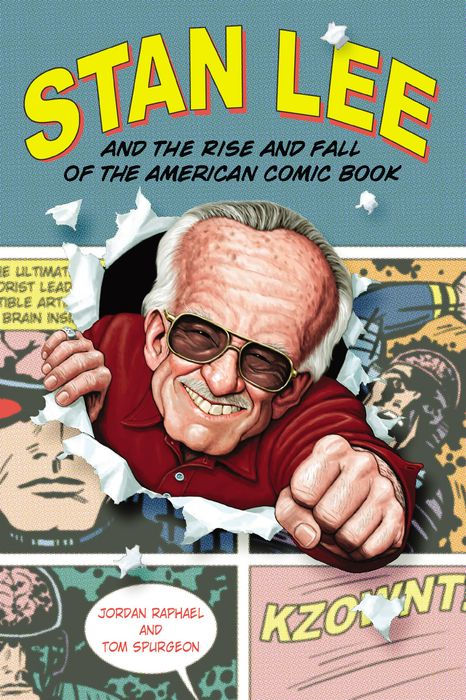
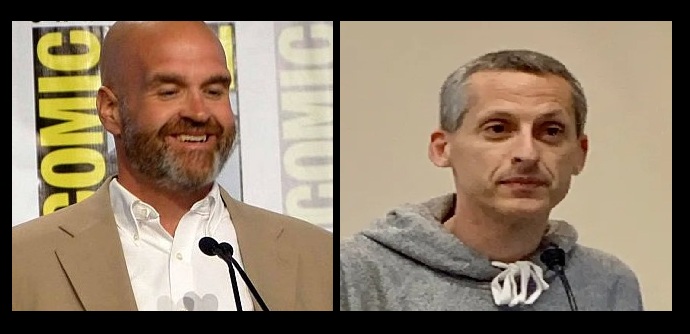
Obviously, books like Riesman’s are an exception within that genre, as is the book we’re about to explore now: 2003’s ‘STAN LEE and THE RISE and FALL of the AMERICAN COMIC BOOK’ by Jordan Raphael and Tom Spurgeon.
The inside flap states “This book, based on interviews with Stan Lee and dozens of his colleagues and contemporaries, as well as extensive archival research, is at once a professional history, an appreciation, and a critical exploration of Stan Lee and his many accomplishments.”
I stated this book has its charms and I’d like to stress that I don’t mean that in any sort of dismissive tone- what I mean is that it holds up over two decades later and was written when Marvel was on the cusp of their pop culture domination in the film world. Notably, it was also written when Lee- and co-writer Spurgeon- were still alive.
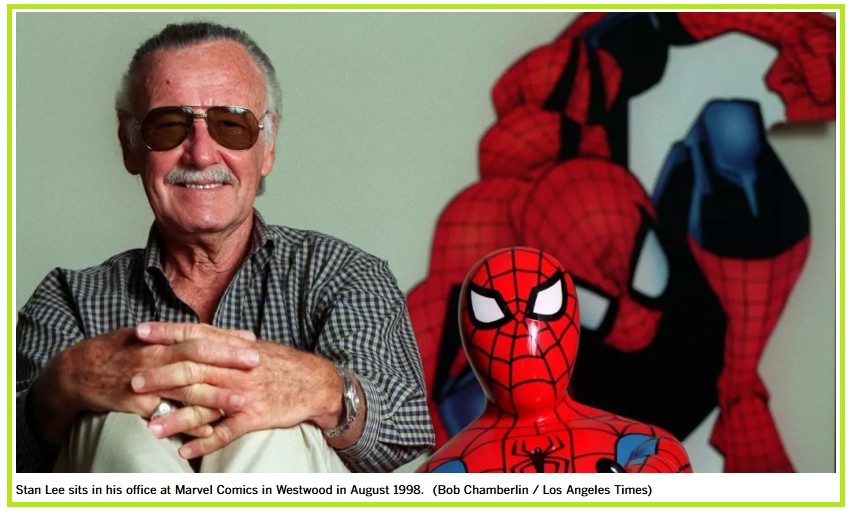
This is a minor thing that I don’t mean to imbue with any special meaning outside of recognizing the coincidence, but Spurgeon died one year and one day exactly after Lee did. They also are less than two weeks apart in birthdays. (I can’t speak for Raphael, whose birthday I am unaware of.)
As its title infers, this book also covers the rise and trajectory of the American comic book industry, so there’s much here ranging from the talent of Alex Schomburg to the senate hearings of the Fifties to firebrand creators like Neal Adams fighting for creator rights. I’ll mostly be concentrating on the Stan Lee content and highlighting particular excerpts that I find notable or amusing.
I do think this book is a forgotten gem insomuch that I haven’t seen it discussed or referenced that much in the years since its release. We’ve gotten more disposable so-called biographies of Lee than worthwhile ones, so this especially should stick out. Again, it’s written while Lee was still with us and still an active presence, so it has a noticeably different tone.
That being said, the more you read on a subject the more adept you are at comparing and contrasting all of the information. So! Let’s dig in, frantic ones.
Introduction: “Stan Lee is one of the most important figures in American popular culture. He is also one of the least understood.”
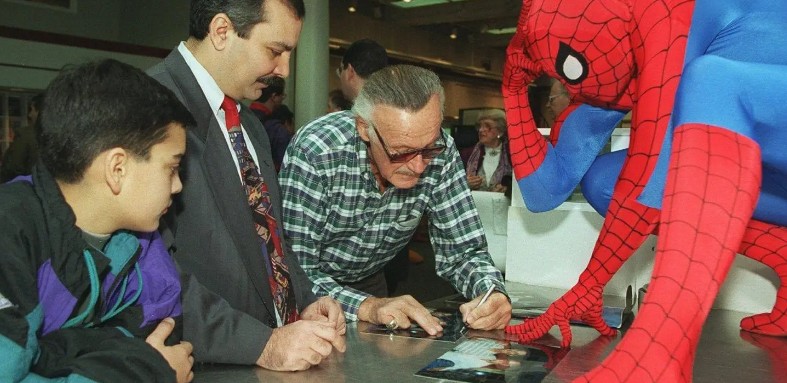
Prologue: “Soon it was time for autographs. The crowd pressed forward, hundreds of boys and men, a few women, clutching comic books, posters, and action figures that, once anointed with Lee’s signature, would find their way into keepsake boxes hidden under beds or comics-shop display cases or, more likely, onto eBay. Since time was short, the autographs were limited to one item per person. Lee gamely inscribed everything put before him with a felt-tip pen, doling out a minute or so of merriment to each fan. Thirty minutes later, he was gone.”
Pg. 6: “It’s a nice story, gilded with classic themes- the archetypal father figure, a wide-eyed youngling who finally recognizes his burgeoning talents. But it’s also false. At best, it’s vastly distorted. Stan Lee never won the New York Herald Tribune’s Biggest News of the Week contest. An exhausting search of the paper’s archives turned up no first prizes for Stanley Lieber, only a seventh-place finish on May 7, 1938, for which he netted $2.50. The following week, Stanley didn’t place.
Perhaps, in his misty memory, Lee has confused the editor with a teacher or some other authority figure. And maybe, after so many decades, a seventh-place finish and a pair of near-misses have acquired the nostalgic sheen of three first prizes.”
- – I couldn’t tell if the authors are being sarcastic or genuinely trying to give Lee some leeway here with his repeated and rather blatant lie. After all, it’s not like he started telling the newspaper contest story in the 2000s’ when he was turning eighty. He was telling it in the 1970s.’
Pg. 7: “Lee may not be an intentional liar, but he has been known to massage the truth on occasion. Not that most people seem to mind. His enthusiastic amiability usually gets him off with some good-natured chiding- “Oh, that’s just Stan.” After all, Lee is a storyteller…”
Pg. 8: “I think I would have enjoyed going to college,” he says. “Like you see in the movies- living on campus, having beer parties, getting laid every night. It would have been nice.”
- – Included this excerpt just because of Lee’s forwardness here.
Pg. 9: “Then Robbie Solomon, his mother’s brother, has an idea. Timely Publications, the publishing company where Solomon works, might have an opening. It so happens that Timely is owned by Martin Goodman, another relative.”

Pg. 20: “But it also presages the vigorous physical action that would characterize many of the early-1960s Marvel comics by Lee and his collaborators, Jack Kirby and Steve Ditko. Spider-Man, for example, didn’t just lay into bad guys with his fists; he bounced over them, under them, flipped them head-over-heels like flapjacks, with the spirited verve of the heroes in the Errol Flynn moves that Lee once thrilled to as a child.”
- – I object to this claim, which implies the kinetic fighting style of Ditko’s Spider-Man stems from Lee’s visual direction and inspiration of Errol Flynn. I can’t speak for Ditko, but I do know that Simon & Kirby’s early Captain America fights were inspired by Flynn’s predecessor, the acrobatic Silent Film swashbuckler Douglas Fairbanks Sr.
Pg. 24: “A few days later, Goodman confronted Simon and Kirby, demanding to know if they were moonlighting for other publishers. When they acknowledged that, yes, they were, Goodman fired them. Lee disputes Simon’s account of his involvement in the events surrounding their departure, saying that he still has no idea why they left.”
“If any element of that muddled affair is certain, it’s this: the departure of Simon and Kirby gave Lee a terrific career boost. With Timely’s editor and art director both gone, the bulk of the comic-book line’s editorial duties fell into his eager lap.”
- – This was especially interesting and something I hadn’t previously considered, at least not consciously- that Lee had the foresight to report Simon & Kirby to Goodman partially to benefit from their departure. I’ve not heard it presented like this anywhere else.
Pg. 26: “Lee also wrote quickly. Goodman paid him by the page for script work, in addition to his editorial wages, so the more stories he churned out, the more money he took home. Lee wrote two to three stories a week, sometimes more.”

Pg. 34: “For a brief period, Stan had three secretaries seated in plain view of the entire office, to whom he dictated stories simultaneously. “I was kind of cocky, and I think I enjoyed doing it,” Lee recalls. “But then I said to myself, ‘What the hell are you doing? You’re a showoff. If I was someone else, I’d hate a guy like you.’ So, I stopped.”
Pg. 38: “According to Mrs. Lee, Stan would dictate his notes into a wire recorder and type them up in the morning. Lee eventually found a way to reduce the pressures of the morning commute. With Martin Goodman’s permission, Lee stayed home one, then two days a week. At home, he wrote comic-book scripts and received pages of art from illustrators living nearby.”
- – Again, I ask a simple question to anyone accusing me of “Stan bashing” and that is- what was Stan Lee so busy doing that prohibited from writing scripts for the Marvel artists if he was able to stay home two (it would later become three) days a week, as far back as the Fifties?? Lee already stated that Sol Brodsky did the administrative and managerial aspects of the job at the Marvel offices, so- what was Lee doing, except exploiting Martin Goodman’s generosity and support?
“Martin Goodman’s oldest son, Iden, who recalls the Lees’ time on Long Island in idyllic fashion, was a constant visitor from the Goodman home two miles away. “I remember it as a very warm, happy place,” he says, and the Lees were “very generous, very welcoming.” Iden learned to drive a car in the Lee’s driveway and once tangled up Stan’s wire recorder, “the first I ever saw.” It was a very different way of life than the one Stan Lee had experienced growing up in the Bronx.”
Pg. 41: “This argument became so ingrained in the consciousness of industry professionals that in 1978 Stan Lee proclaimed to Nelda Clemmons of the Tampa Times, “I learned to read by reading comic books.” Considering all evidence to the contrary, including Lee’s advanced age when he claims to have first encountered comic books, his boast is best understood by taking into account the pressure of decades spent justifying his livelihood.”
- – Again, the authors are very kind to continue to give Lee “outs” for his repeated untruthful statements. I do get that Lee gave many, many interviews with the mainstream press- but it isn’t as if he did them under duress. He lived for them.

Pg. 42: “One admirer was Stan Lee, who, according to (Charles) Biro, often called asking for the secret by which he might imbue his copycat efforts with (Lev) Gleason’s winning box-office formula. “The secret,” Biro reportedly told Lee, “Is Charlie Biro.”
- – Let’s note that artist Bob Fujitani stated on more than one occasion that he was present for one of Lee’s calls to Biro, and Biro displayed exasperation, referencing that Lee called on a somewhat regular basis.
Pg. 48: “Other comic-book industry figures- none of them as bright or quick on their feet as Lee- were the ones asked to testify on the field’s behalf.”
“In his autobiography, Stan Lee wrote about a series of public debates between Fredric Wertham and himself. It is a highly emotive but vaguely phrased discourse, and it appears in the text without the slightest bit of factual confirmation. No record exists of a series of Wertham/Lee debates.”
Pg. 65: “For Lee, Marvel would prove to be everything; for Kirby, Marvel was the joyful afternoon of a long day in comics. Jack Kirby’s career during the years 1941-1961 was everything Stan Lee’s was not.”
“Whereas Lee served stateside in a creative position about which he would later brag and continued to do as much comic-book work as he could squeeze in, Kirby fought in Europe with the infantry, rarely spoke of the experience, and whatever artwork he could muster went into foxhole sketchbooks or letters to home. Lee and Kirby held very different views of the war, emotionally opposite reactions to a shared experience.”
- – Worth noting that while I feel Lee’s tenure during the war effort is certainly not shameful, he DID brag about being able to sneak out, see various women, and avoid being punished for breaking the rules. Whereas Kirby LITERALLY KILLED NAZIS and suffered frostbite to the extent that he was hospitalized in France before he could return to the States. And Roy Thomas dared to criticize Kirby for being two weeks off in one of his accounts of his war service.

Pg. 68: “The Challengers (of the Unknown) shared a centrally located headquarters and wore professional jumpsuits rather than gaudy, decorative costumes, and their adventures consisted of matching their various skills and personalities against outsized obstacles.”
Pg. 69: “By working with Jack Kirby, Stan Lee wasn’t simply engaging the talents of a capable veteran artist. Lee had on his freelance staff perhaps the most important creator in comic-book history, a dynamic artist slightly out-of-favor who remained at the top of his game. Kirby was a formidable industry presence. He possessed a peerless visual imagination, and he was sublimely fast. All of these factors would come into play in the heady years of 1961 to 1965, when a universe of pop culture was brought to life on Jack Kirby’s drawing table- the Marvel Universe.”
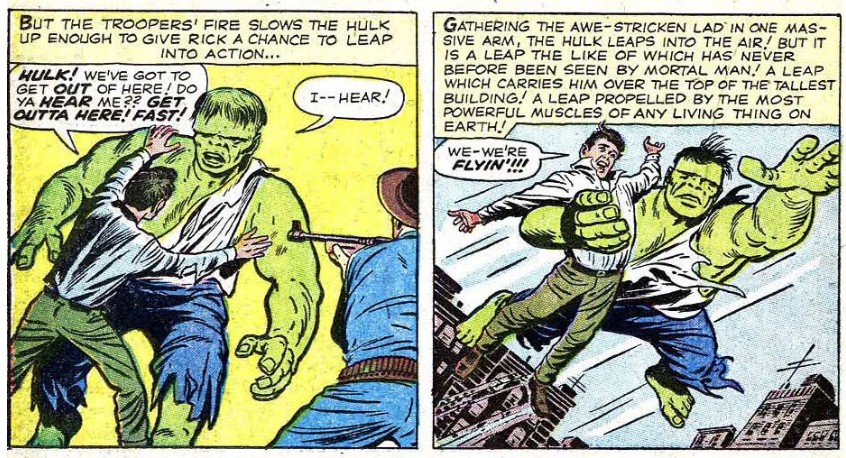
Pg. 71: “During his two decades in the industry, Stan Lee had never worked with artists as significant to comic-book history as Jack Kirby or Steve Ditko. These creative relationships would prove to be very different from the friendly camaraderie Stan had felt with Joe Maneely, Dave Berg, or Vince Fago. Kirby and Ditko were every bit as formidable as Lee himself, so matter how many hats Stan wore at the company or to whom he was related.”
Pg. 73– “Lee wanted out, and he was willing to take on as many new ventures as he needed to find his creative escape hatch. He spent a growing percentage of his time exploring his options as a writer, folding outside work into his already furious schedule.”
- – I’m going to take exception with “already furious schedule”- didn’t this guy only come into the office three days a week?
Pg. 89- “He had the leeway to decide what kind of title would be published within Goodman’s parameters or market demands. And, as an editor and writer, he could greatly influence content at two stages of production. The fact that Lee had not taken full advantage of this freedom in previous decades underscored his lack of creative ambition at the time regarding comic books and the blinding speed with which Goodman’s line was traditionally produced.”
- – These guys DO make some very good points though, wouldn’t you say?
Pg. 90- “Kirby was given incredibly wide latitude in his working relationship with Lee. On becoming the primary writer for the Goodman line in the late 1950s, Lee popularized a little-used system of creating comic books that later came to be known as “The Marvel Method.”
Pg. 93- “No character exemplifies this point better than Spider-Man. In Lee’s later account of Spidey’s creation, he said the character burst wholly formed from his imagination after- depending on which version of the story he tells us- the writer either recalled a favorite pulp character or viewed a spider making its way down a windowpane.”

Pg. 95- “No one does anything quietly or deliberately. Jack Kirby’s art, which was everywhere on those early titles, seethes with a fury angry enough to set the entire world on fire.”
- – I find it odd when some writers seem to find Kirby as being insatiable with rage. I always find his work to be grandiose and awe-inspiring and seldom angry.
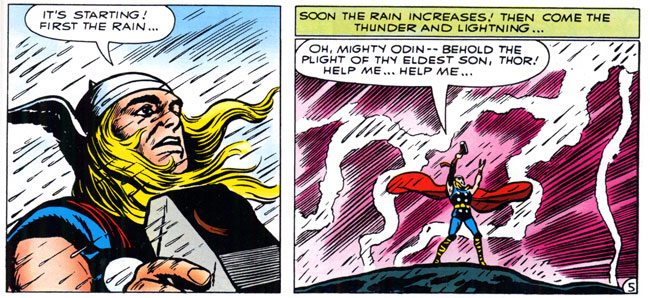
Pg. 104– “Then he began to do something even savvier. Lee’s writing started to become more solicitous of the readers, pointing out various fourth-wall absurdities or even speaking to them directly. The tone always flattered the readers, praising them for their intimate knowledge of past adventures and the high standards they brought to the work in front of them. It was the same tone of voice that he brought to the letters and commentary pages he had instituted in the new titles, that of the kindly “with-it” uncle.”
Pg. 114– “Lee hired the first in a series of agents to handle his lecture business, and his speaking fee slowly began to climb. Soon the trips became a respectable secondary source of income. He also briefly entertained a spin-off career as a corporate speaker, lecturing on the subject “Communicating with the Teenage World.”
Pg. 115- “Lee was accessible to the reporters, was eminently quotable, and, when he started to read what they were gleaning from his comic books, was able to grasp the essence of what they were saying and repeat it back to other journalists from other magazines.”
- – Again, another very astute observation on the author’s part about Lee’s innate abilities at working and gauging the press.
Pg. 116– “(Roy) Thomas was a competent writer who could manage his own version of the Marvel style, but he understood comic books in a much different way than Lee. A well-connected and respected member of the small but vital comic-book fan community, he had presented Lee with the fan-voted Alley Award as best writer and editor before his hiring.”
Pg. 118– “Kirby’s finest work remained The Fantastic Four. During one period from late 1965 to 1967, Kirby produced enough resonant characters to start yet another superhero line. The misunderstood and freakish family of outsiders known as the Inhumans, the first major black superhero, the Black Panther, and the noble but suffering Silver Surfer all sprang to visual life from Kirby’s pencil in slightly over a half-years’ worth of comic-book issues.”
Pg. 128- “The rest of the titles were spread among a crew split between veterans and a growing assortment of creative people with backgrounds similar to that of Roy Thomas.”
“Kirby had suffered a number of humiliations at Marvel, a company largely fueled by his creative drive and ambition. He had watched Stan Lee’s name be presented above his own on nearly every one of their joint credits.”
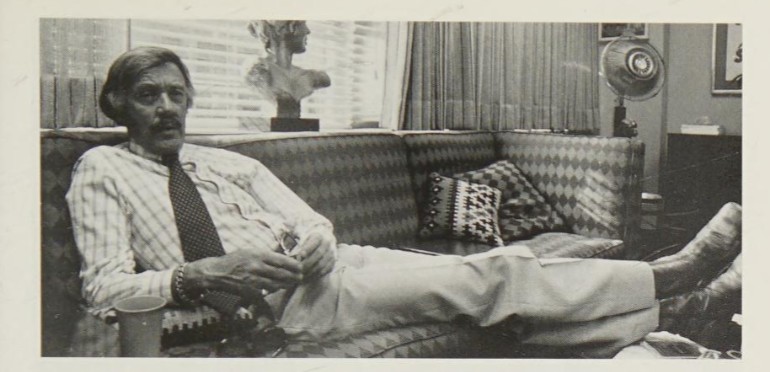
Pg. 129- “Kirby’s departure was observed in fan magazines but hardly obsessed over; such was the status of his celebrity in comics relative to that of Lee.”
- – That in itself is notable to me about the level of intelligence as well as empathy from hardcore comic fans, even in 1970.
Pg. 131– “Stan Lee had his eye on a bigger prize: national celebrity. On Wednesday, January 5, 1972, at 8:00 PM, Stan Lee found himself in his most curious position yet. He was standing on the stage at Carnegie Hall, hosting the first few minutes of a “Marvel-ous Evening with Stan Lee” before a full and eager crowd.”
Pg. 132- “The show was a complete disaster. Promoter Steve Lemberg agrees. ‘It was a weird show, quite honestly. It’s very difficult to do a Marvel evening with Stan Lee, because all the things you celebrated, except for Stan, are drawn characters.”

Pg. 133– “The crowd became restless and eventually began to turn on the performers. The jazz player Chico Hamilton and his band performed a ten-minute set, during which bored fans ripped apart their comics and threw them at the musicians.”
- – Please remember that the MARVEL fans considered themselves sophisticated and elite! Yet, they do crass things to jazz musicians like this…? What would the Silver Surfer say??
Pg. 138- “Lee was still smarting from having been left out of the $15-million bonanza that Martin Goodman had raked in when he sold his publishing empire in 1968.”
Pg. 139- “Stan had, in effect, supplanted Martin Goodman, and in doing so, he left Chip in the lurch. Pater Goodman was furious. As Lee recalled in his autobiography, “Martin actually had the gall to accuse me of disloyalty, of betraying him after all he had done for me. By then, I was beginning to realize that the fantasy tales I wrote might be more credible than some of the things that seemed to happen in my real life.”
“In the 1940s and ‘50s, whenever Goodman had scaled down his comic division, laying off dozens of employees, he always kept a job open for Stan, protecting his cousin-in-law from the vicissitudes of the freelance life. In light of all of this, Goodman’s sense of betrayal was understandable.”
- – THIS. And it’s about time someone accurately specified just how beyond the pale and galling Lee’s literal betrayal of Martin Goodman was, no matter how much we’d all agree that Stan Lee is a better figurehead to comic dorks than Chip Goodman would have been.
Pg. 152- “Stan’s leadership style, which was sometimes slack, entailed placing a lot of faith in the abilities of those who worked for him. He was quick to recognize talent in a new writer or artist, and he had no qualms about assigning important responsibilities to young staffers.”
Pg. 154– “In the early 1970s, DC publisher Carmine Infantino began taking his workers out for Friday dinners. It was a semiofficial gathering, a chance to mingle with the boss, and Infantino usually picked up the bill. A Marvel staffer who asked not to be identified recalls that Lee heard about the DC outings and decided he needed to do the same thing.
“Of course, Stan had absolutely no real interest in hanging out with people,” the staffer says, laughing. Regardless, the boss’s order came down: We’re going to the bar and we’re all going to hang out. One evening after work, the staff dutifully followed Lee to a nearby watering hole and grabbed their drinks. “We’re all sitting there looking at Stan,” the staffer recalls. “And he’s like, ‘So, here we are, guys, we’re hanging out.’” A long, awkward pause followed. Finally, after around ten minutes, Stan looked at his watch and stood up: “Well, gotta go.” He left without paying the bar tab.”

Pg. 157- “In 1972, a decade into his reinvigorated life, Lee gave up the day-to-day management of a comic-book line and channeled his boundless energy into a vocation that suited him equally well, if not better- publicity.”
Pg. 158– “Lee took to his new role as if he had been rehearsing for it his whole life. Gone were his 1950s-era suits and ties, replaced by hip attire- open-neck shirts, casual slacks, Gucci shoes, a heavy-link silver bracelet. He bought hair, a toupee at first and later a transplant. He grew a mustache. He completed his look with the tinted prescription glasses that have since become his trademark prop.”
Pg. 160– “Lee would eventually respond to such criticism with mild indignation. He had no control over how an article or TV spot portrayed him. He had tried to set the record straight, to give Kirby and Ditko their rightful credit. What more could he do?
If only Lee could time-travel back to the 1970s and revise Marvel’s press material. Because for all of Lee’s good intentions, it seems that the company and its outspoken impresario were operating from different playbooks in that decade.”
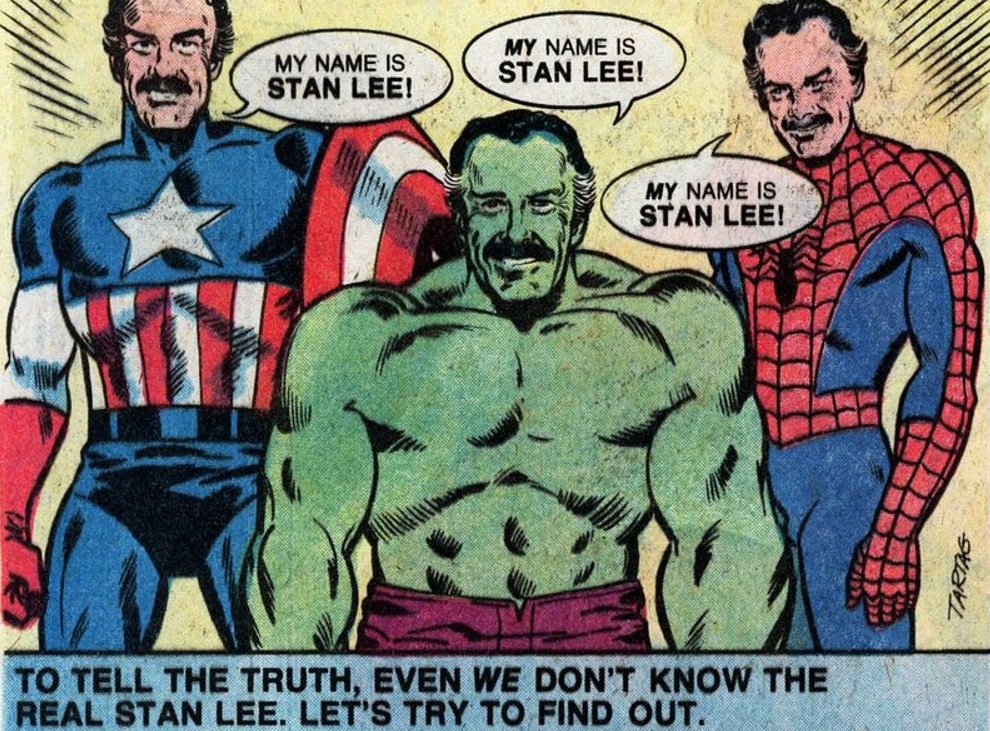
Pg. 162- “There were other things Lee did in the 1970s to weaken his later contention that he had always given his early-Marvel cocreators sufficient public recognition. But on the whole, the available evidence indicates that in the 1970s Lee and Marvel were engaged in a spin campaign that placed Stan in the spotlight and gave short shrift to the artists on whose backs the company had been built. Some historians have suggested that this might have come about as a preemptive measure on Marvel’s part to stave off possible lawsuits by Lee’s former colleagues.”
Pg. 165-166- “I’m not a hippie, I’m not a conservative, I don’t know what the hell I am,” Lee told Rolling Stone. “And I just don’t think it matters what kind of philosophy you have as long as you’re a good guy within that philosophy. I belong to all worlds, am comfortable in all worlds.”
Pg. 172- “By his own admission, Lee didn’t especially miss making comic books.”
Pg. 173- “To call Origins of Marvel Comics a book is a bit of an overstatement. It was a collection of reprints fronted by colorful Lee-written reminiscences about the genesis of the company’s major heroes.”
Pg. 174– “At other points, he plays down the contributions of his cocreators Jack Kirby and Steve Ditko, setting the stage for years of withering criticism from both men, as well as from comics fans and historians.”

Pg. 180-181- “Staffers seeded the letters columns of Kirby’s book with negative comments- some of which were fake- in a seeming attempt to spite him. They referred to him as “Jack the Hack.” Some editors scrawled derisive comments on copies of Kirby’s pages and posted them on their office doors.”
- – Let’s call out one of those editors- Roy Thomas- who, when asked to make sure Kirby got his original art returned, decided to write on it “great art, lousy dialogue”- knowing Kirby would see it. But Thomas is the first in HIS older years to whine about being treated poorly- what a fuckin’ joke.
Pg. 192: “In the span of five or six years, he wrote outlines for dozens of projects that never saw the light of day. A Silver Surfer treatment contained elements of early-1970s blaxploitation movies. In Lee’s proposed storyline, the Surfer races across the Earth on his board. As he swoops down over New York, a “tall, overdressed black man” enters the picture: “It’s Sweet-Daddy Wisdom, leader of New York’s Black Mafia. He aims a hand gun at the Surfer. He commands the Surfer to land gently and get off the board. Ol’ Sweet-Daddy’s gone and caught himself the world’s choice prize. He’s captured the ultimate honky.”
- – Stan Lee… the SHAKESPEARE of Comics, people.
Pg. 193- “People out here are starved for ideas and concepts,” he said in a 1979 interview with The Ambassador. “I’ve always found that the easiest thing- as long as someone else does the tiresome work of writing the actual script. It’s very nice: the things I do best are the things in demand.”
Pg. 215– “Jack made up all these stories, and I’m positive he’d made up practically all the characters, too” artist Gil Kane said in 1996. “When he brought those things in, Stan would look over them and very often be critical of the material.”
Pg. 217– “Lee’s image as a suddenly “with-it” entertainment figure also rubbed some observers the wrong way. Of a late-1970s Lee appearance at his university campus, cartoonist Steve Laflet said: “He just seemed like the biggest, crinkled-up bullshit-artist hustler I’d ever seen in my life. He just seemed like a real huckster, he seemed like a used-car salesman or something. It didn’t take anything away from the enjoyment that we felt as kids, but we just saw the guy for he was.”
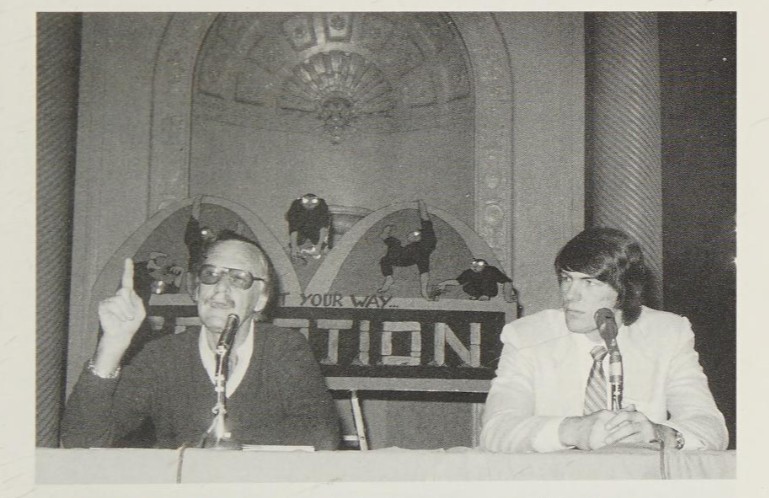
Pg. 218- “The most damaging episode in terms of Lee’s public reputation was also Kirby-related. In the 1980s, Kirby launched himself into a pitched battle with Marvel Comics for the return of his original art pages, the pieces of art from which the comic books were shot and published.”
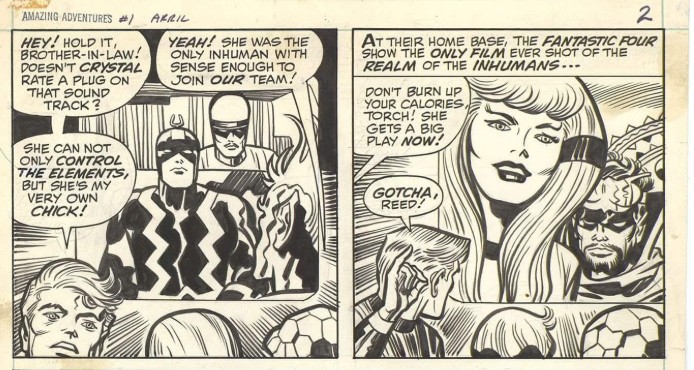
Pg. 221– “The wider comic-book industry of Kirby’s mistreatment through news coverage in the trade magazine The Comics Journal in July 1985. Letters flooded into the magazine overwhelmingly in support of the artist, including a letter from DC Comics chiding its longtime rival, as well as a missive from the man who had once been offered Stan Lee’s job, Will Eisner.”
Pg. 222– “The fallout was enormous. Kirby could claim a practical victory- a sizable amount of art for his wife, Roz, to sell if his health problems proved fatal. In the eyes of many artists and writers, Marvel had become the evil empire, and not only for their dominant market share.
Jim Shooter was ousted from Marvel in early 1987, making the Kirby art conflict one of his major and longest-lasting legacies. The biggest casualty, however, may have been Stan Lee’s reputation in the comic-book industry.”
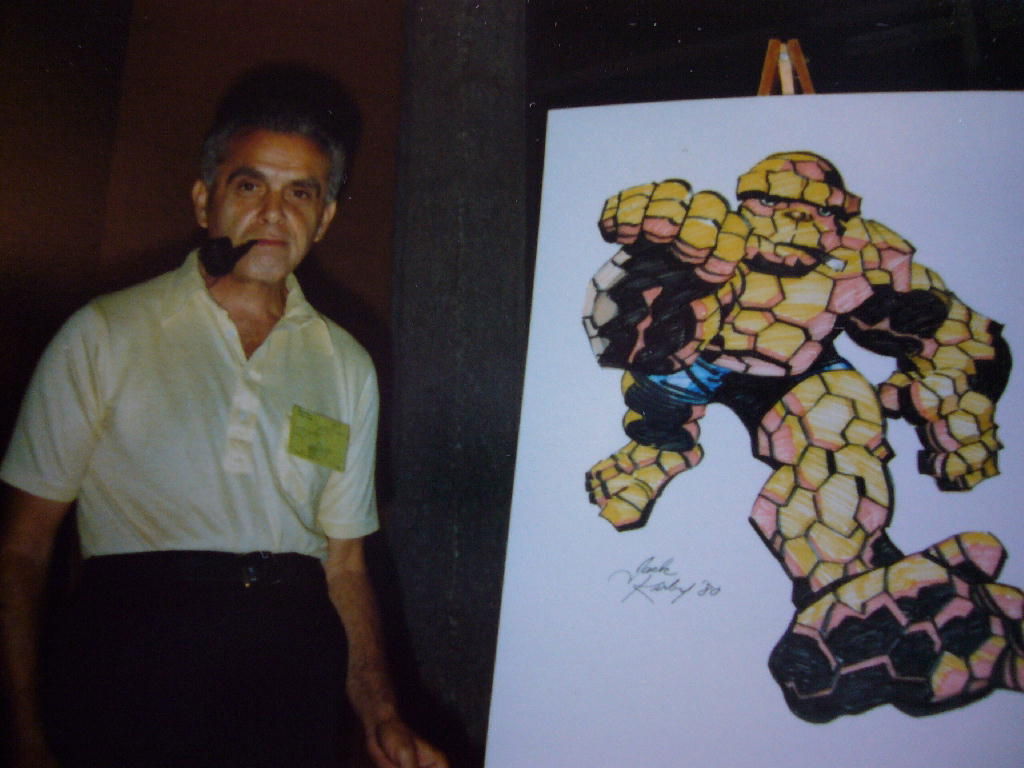
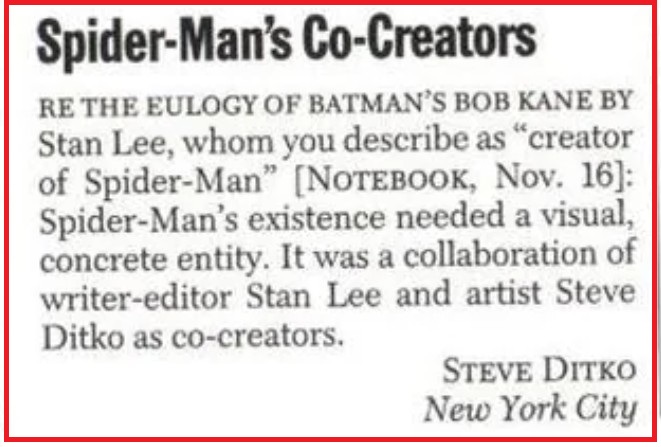
Pg. 223– “In the interview, Kirby described Lee as his conduit to the ear of Martin Goodman, claimed that he had created Spider-Man, and firmly declared, “Stan Lee was not writing. I was doing the writing,” stressing that his words on the pencilled art constituted the actual scripting of the book, but that Lee kept him from filling in the word balloons. “Stan Lee wrote the credits- I never wrote the credits.” The suggestion of improper credit was a jaw-dropping moment for many who had bought wholeheartedly the legend that had grown up around Stan Lee and Marvel.”
Pg. 228- “In some ways, Ditko has become Lee’s watchdog on the issue of creative ownership. He’s quick to point out when Lee reinforces his public stance in something as unassuming as a comment in an editorial note. He has also remained consistent in his views about Lee’s efforts to restore Ditko to cocreator status: that status is not Lee’s to confer.”
Pg. 255- “And yet, Stan Lee Media was planning an animated Web series for Wu-Tang Clan’s the RZA, who raps about shooting his rivals and kicking his “bitch to the curb.” Did that concern Lee? Not at all, he said. “If they’re popular with young people, I don’t mind being associated with them. Maybe in our own way, we can turn them away from gangsta rapping.”
- – Included purely because I adored this anecdote.
Pg. 262– “Because many of the artists whom he worked with are dead or very old, and because it was years before the question was raised, the precise creative contribution that Lee made to each individual Marvel character will probably never be known. Despite public opinion and press-release hype, the overwhelming balance of existing testimony and textual analysis indicates that most of the popular Marvel characters were group efforts.”
Pg. 265- “But once he ascended to the management ranks in 1972, Lee seemed to side more and more with the businessmen who ran comics. Lee neither publicly supported those creators who objected to Editor in Chief Jim Shooter nor fought for Shooter to stay near the end of his editorial run. Stan’s silence on the long and complicated struggle for Jack Kirby to see his art returned was massively disappointing to even Lee’s biggest supporters.”
Pg. 271– “Even Stan Lee doesn’t read comic books anymore. He doesn’t have the time.”

This book is at times a little kind to Lee by suggesting various other intentions, possibly out of genuine nostalgia and sentimental feelings but also makes valid points and keen observations that I’ve not found in other writings about Lee’s career and public life. While it may seem as if I excerpted quite a bit here, I assure you there’s so much more to read and encourage you to seek out the book itself.
There’s also an underlying feeling of unfinished business, as if there was understandably going to be an updated and revised version in the future which would have been fair to assume. After all, Lee was still twice as active as a man half his age when this was written, and a future edition could have covered the rise of the Marvel Cinematic Universe and Lee’s death at age 95.
Unfortunately, Tom Spurgeon himself passed away- again, practically a year to the day after Lee’s own death- which, besides being a huge loss for the comics community, ensured that no future edition would ever come out. As such, this book has a sort of time capsule feel, capturing a different era in comics and its coverage and culture; a time when Lee is still alive and seemingly omnipresent and there’s more eye rolling press announcements to come.
I for one am glad for what we’ve got. After all, the next book(s) about Lee awaiting me are surely going to lack the quality this one had. But you know me- I’m practically a glutton for punishment at this point.
With thanks to Tom Spurgeon, Jordan Raphael, Jack Kirby, Gary Groth, the RZA, Steve Ditko, and everybody reading along at home. Never forget, we’re in it together!

 Four Color Sinners
Great read, I should dig this out. Naturally, made me miss Tom… so glad they decided to archive The Comics Reporter. We need that guy.
LikeLiked by 2 people
I see that BleedingFool.com linked to one of your articles
LikeLike
I was unaware of that and have nothing to do with that; either of the Bleeding _ool sites can link to this site and I can’t stop them, but I’m surprised they’d want to shine any light on what I’m doing or drive traffic to another site. The ‘fool component is Right-Wing, correct?
LikeLike
Thanks for reading. I own this but always put it down in disgust when I get to one of the apocryphal tales presented as fact (the golf story?). I have used it since then to look up specific quotes. Tom Spurgeon was kind enough to note my Kirby Museum blog series (“welcome corrective”) that became my first book. Some highlights.
“A few days later, Goodman confronted Simon and Kirby…”
This is the way Simon told the story so it needs to be questioned if not dismissed. Kirby told a more succinct story and never mentioned being ratted out by Lee.
FCS: And Roy Thomas dared to criticize Kirby for being two weeks off in one of his accounts of his war service.
Would love to have seen the “WWII historian” calling out the combat vet in person.
FCS: I’m going to take exception with “already furious schedule”- didn’t this guy only come into the office three days a week?
Hilarious to see the time element involved here. Lee made sure his schedule was never “furious.” Applies to any time after the 1941 hiring of him and his ocarina.
“He had the leeway to decide what kind of title would be published within Goodman’s parameters or market demands.”
This is categorically untrue as James Robert Smith (https://tilthelasthemlockdies.blogspot.com/2021/09/liar-liar.html) will tell you. Lee’s every move was beholden to Goodman. Ditko makes it abundantly clear in “Martin Goodman/Stan Lee” in Avenging Mind: “I asked Lee why he was doing a war book (Sgt. Fury) and he said, ‘Goodman wanted it.'”
“Kirby was given incredibly wide latitude in his working relationship with Lee. On becoming the primary writer for the Goodman line in the late 1950s, Lee…”
Another dishonest twist on the Marvel Method. Kirby had wide latitude was to do the creating and writing without recompense, while Lee’s latitude was in helping himself to Kirby’s writing pay. Lee was never the primary writer.
“A Marvel staffer who asked not to be identified recalls that Lee heard about the DC outings and decided he needed to do the same thing.”
Did this Marvel staffer identify himself as Gerry Conway in a Comics Journal #69 interview?
“Even Stan Lee doesn’t read comic books anymore. He doesn’t have the time.”
Another amusing statement based on the ability to apply it to any time after 1930, when Lee used comic books to teach himself to read.
LikeLiked by 2 people
I was just struck by this quote from the 1971 Rolling Stone article: “I’m not a hippie, I’m not a conservative, I don’t know what the hell I am,” Lee told Rolling Stone.“ At first I was struck that Lee, then 48 years old and a long-time corporate cog/shill, might actually think he could be considered a hippy! How out of touch can you be? Then I looked up the article, and saw it was written by former Marvel staffer Robin Green, and was a very insider and almost stream-of-consciousness article that was pretty revealing about the Marvel staff.
And I realized that what I think Stan was really saying was “I’m not liberal or conservative, I’m not political all all, and I have no strong allegiances whatsoever — I can be whatever works, whatever you want me to be.” The way he scoured fan letters and cross-examined fans about what they liked and didn’t, the way he closely followed whatever trends other comics publishers were having success with (except for that brief period in the early 1960s), makes me realize that all Stan wanted was to be liked, to be admired, to be successful. No wonder he grated so much on the Kirbys and Ditkos of the world.
LikeLiked by 1 person