It’s been critiqued and discussed. It’s been brushed over, sanitized, rationalized and retconned.
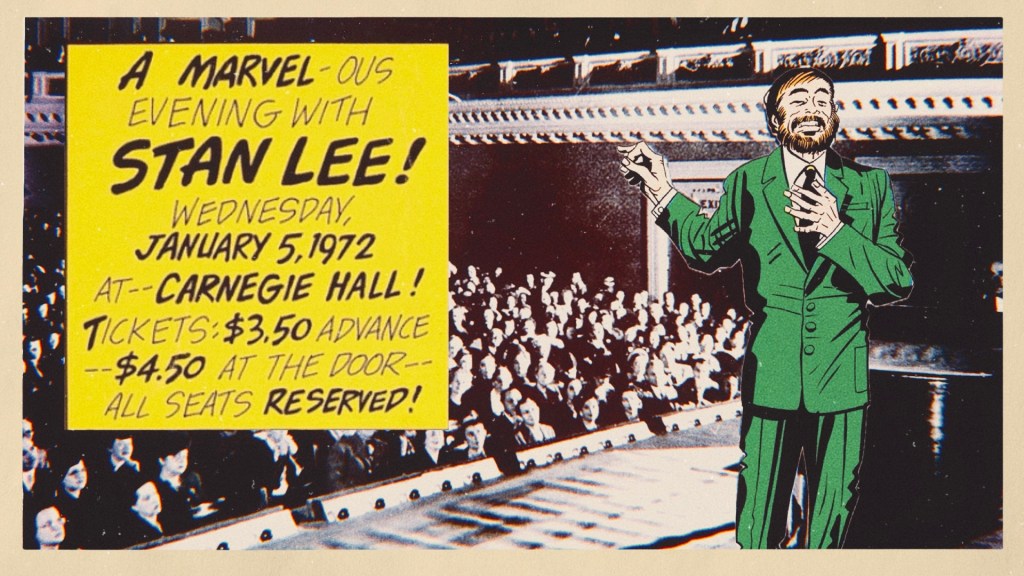
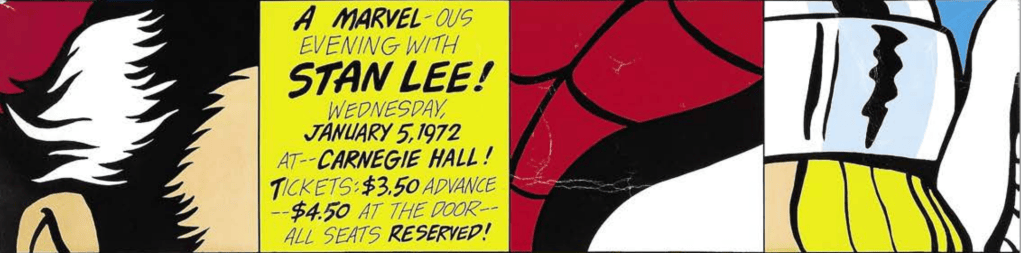
It is, of course, the infamous publicity event designed to make a mainstream celebrity out of Stan ‘The Man’ Lee– an event at the prestigious Carnegie Hall in early 1972 that was anything but dazzling and far from career-boosting. Not that Stan didn’t display his Teflon like ability to bounce back accordingly.
Generally, coverage of this PR disaster tends to use it as another device to showcase the vapidness of Stan Lee’s persona and criticize him- and Marvel- for their hubris. And that is deserved, believe me. But what Four Color Sinners would like to spotlight however is the reaction from the fans. (So, this is a bit of an oral history, of sorts.)
How frivolous are the devoted?! How quickly their faith and commitment falters!
The True Believers– the Marvel Zombies, if you prefer- the real frantic ones– were built upon the belief that the Marvel Comics reader was set apart– brighter than the average consumer of comic books, more discerning in the type of character they related to, and (perhaps most importantly), part of an exclusive club of sorts, one that validated their superior taste and intellect.
So, what does it say that the Marvel fans turned so quickly on Stan Lee? And in the same room, to boot?
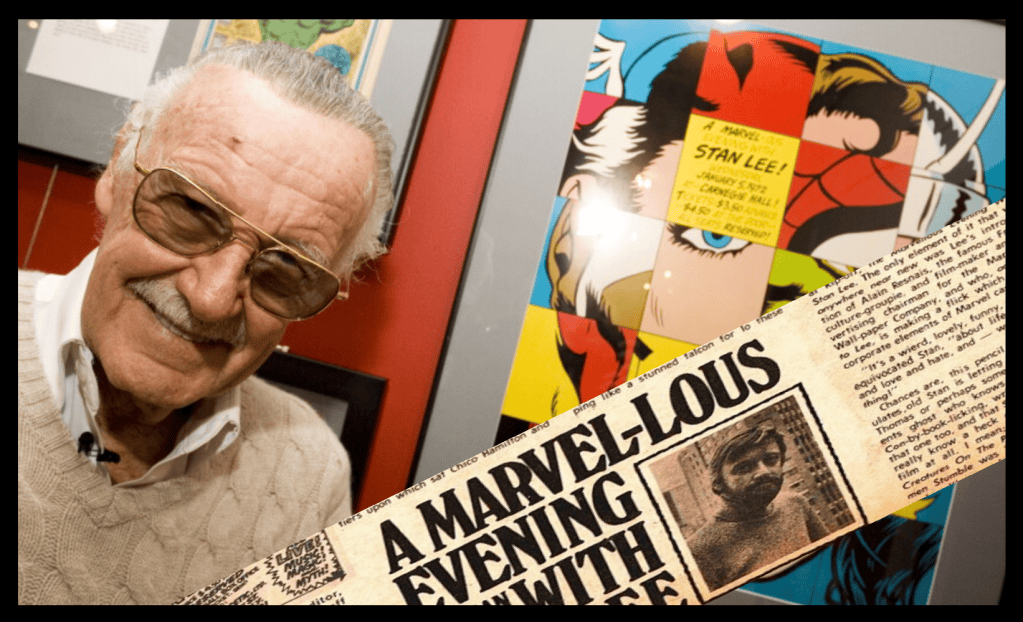
“The first part of [Steve] Lemberg’s promotion campaign was turning Stan Lee into an honest-to-God celebrity. He quickly organized a Carnegie Hall event around him. “An erudite evening of cataclysmic culture with your friendly neighborhood bullpen gang!”
“…according to reports, bored audience members ripped up the comic books and fashioned them into paper airplanes to direct at the stage. When it was all over, Gerry Conway went backstage to congratulate Lee and saw that his boss’s face was ashen. He looked, Conway said, “like a deer in headlights.”
- Sean Howe, ‘Marvel Comics: The Untold Story’, 2012
Stan Lee had hired an agent in some capacity as early as 1952 (albeit, to help promote his syndicated strips outside of Martin Goodman) and would fully take the plunge in trying to market himself as a prominent lecturer and public speaker the year after the Carnegie Hall debacle, signing with the American Program Bureau. Lee had been regularly invited to various universities since the mid-Sixties so it’s not surprising that the concept of Lee entertaining on a broader scale would be broached.
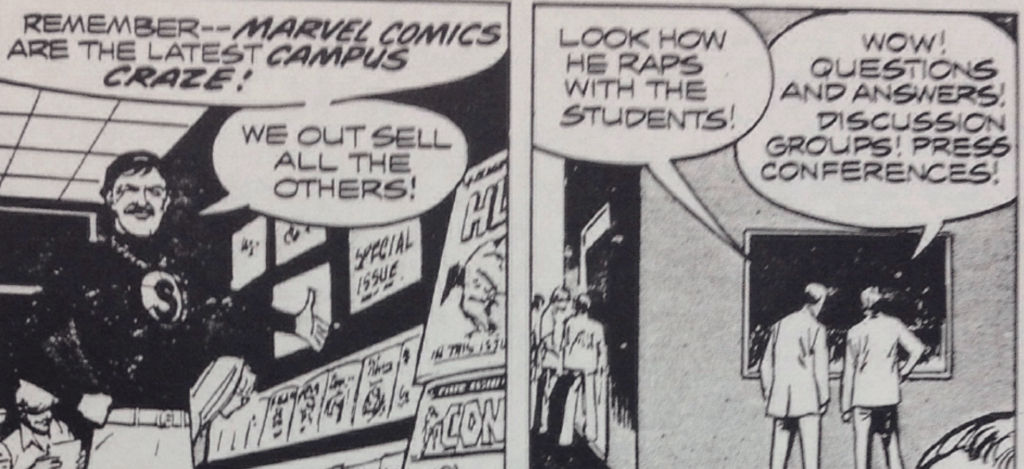
Early Marvel fandom was especially taken with Lee’s tone in Marvel’s editorial messages and letter page responses and the fervor and enthusiasm for ‘Make Mine Marvel’ grew by the year, so that by 1972, Marvel was the industry leader. So, the belief that an event spotlighting the perceived genius behind the phenomenon known as Marvel Comics would be successful wasn’t without logic. Counting on the Marvel fanbase to verify it however, would be a different story.
“Stan Lee might be the Homer of this generation. His Silver Surfer is the new Messiah sent by a far-reaching cosmic power with the potential to solve modern man’s dilemma: yet he is rejected by those whom he would save. Stan Lee is defining our culture. He is a Maker of Myths.”– Steve Lemberg, 1972
The basic timeline of how the event came together has been covered in other outlets, so we’ll skip that here. One assumes if you’re reading FCS to begin with, you have some general idea that this fiasco took place, and the response was resoundingly negative.
“And there was a big Marvel fan base, and the idea of some kind of live performance made perfect sense and doing it at Carnegie Hall was a natural to feed Stan’s ego. And it would have been great if there had actually been anyone involved who had any theatrical or producer experience, and if there had been any way to actually create a cohesive whole out of a bunch of random things that got thrown together. Like a lot of Stan’s work, he needed strong collaborators, for someone to give shape to the material to the ideas that Stan had. And there was no one, as far as I am aware, who had, even remotely, a part of that.” – Gerry Conway, 2023
“Most of the people they had mentioned hadn’t been signed. A lot of them hadn’t been approached. And a good many of those who hadn’t yet been approached hadn’t even bothered to respond to invitations….” – Abby Hirsch, Press Agent
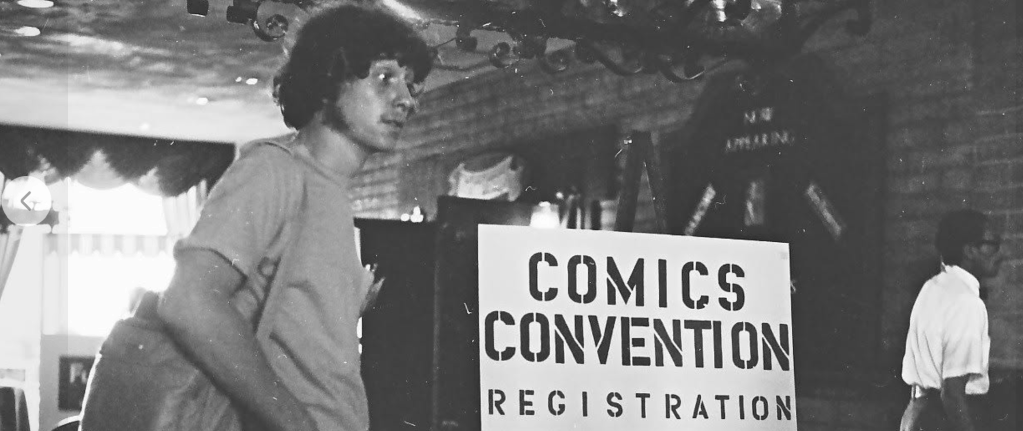
As with many, many things in the long and storied career of Stan Lee, there’s a remarkable lack of foresight, oversight, and planning. Lee had coasted his entire life, enabled by a wealthy relation who provided stability and a safety net through adulthood, and by his own genuine quick thinking, adaptability and good-natured persona that aided him in navigating the many highs and lows of a sometimes-unpredictable industry.
But one is amazed at just how unprepared Lee and his team are for this night. Something unprecedented for its time (though, to be fair, strip cartoonists had a sort of mainstream celebrity in the Thirties and Forties), that stood to be a huge boost toward the public finally having a sense of understanding that sequential storytelling was a serious artform- and, going over public statements from the decades since, you get the usual entitlement and lack of commitment from Lee and the Bullpen.
It’s as if Lee had been elevated by his collaborators for so long, and fawned over by the comics press, that he genuinely believed all he had to do was show up! (Again, to be fair, this is pretty much how his senior years would roll out.)
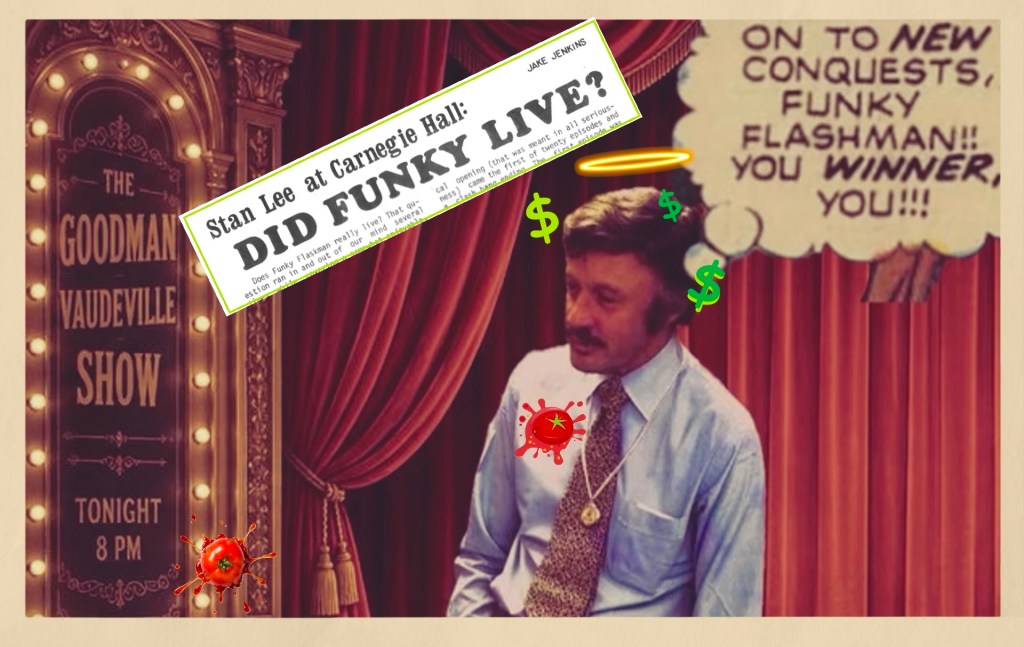
“We just sat back laughing. Laughing how closely Stan Lee resembled Kirby’s Funky Flashman.” – Jake Jenkins, February 1972
“Most adults, particularly those reviewing the shindig for metropolitan newspapers, found the evening anything but amazing, likening it to an “employer at his own Christmas party”. Fans really didn’t know what to make of the show and made paper airplanes to lob at the stage in mockery and frustration.”– Bob Batchelor, “Stan Lee: The Man Behind Marvel”
Lee came out to an expected warm reception but, very quickly, it was if Toto had unveiled the curtain to reveal the Wizard wasn’t really an off-putting and seemingly omnipotent (and floating) green head. Lee spoke about his turmoil at the cancellation of Silver Surfer while slides were presented featuring artwork by Jack Kirby and John Buscema.
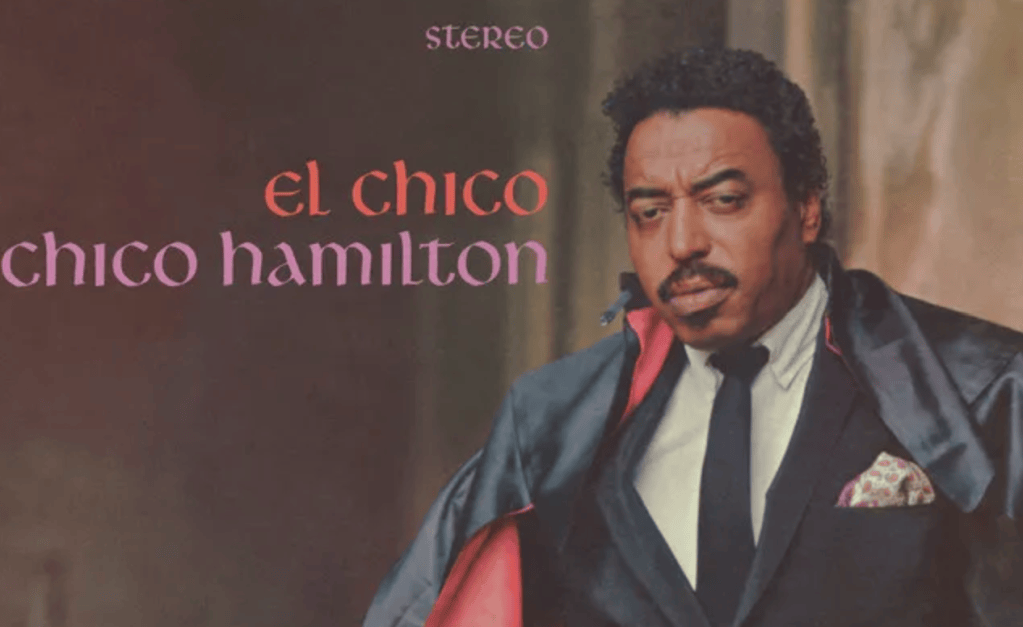
Much has been made to tilt the narrative that the audience became restless once legendary jazz musician and bandleader Chico Hamilton came on. Roy Thomas and others have said that the audience “didn’t come there” for music and, especially not jazz music.
“The truth is that our readers really are a cut above. A few years ago, I was lecturing at a college and one of the students referenced ‘The Galactus Trilogy‘, which I admit I hadn’t thought of. It was so literate and it just knocked me out, and now everybody and their grandmother calls those first three stories ‘The Galactus Trilogy!‘. I suppose what I’m really trying to say here is that it’s very gratifying to see just how well read and intellectually curious a Marvel fan is, because that’s what I wrote to: the college reader, the people with a college level vocabulary. And it’s reflected in our readerships, the letters they send in, the questions I get at my public speaking engagements…” – Stan Lee
Stan Lee often used the narrative of the Marvel Comics reader as somehow more sophisticated and elevated in taste than their non-Marvel reading counterparts to further the perception of him as a groundbreaking innovator. Lee’s entire persona falters without his “college-level” audience.
So, let’s assume that the audience at Carnegie Hall became disruptive over a simple ten-minute jazz set. What does that say about the perceived mental acumen and taste of the Marvel acolyte?
“The crowd became restless and eventually began to turn on the performers. The jazz player Chico Hamilton and his band performed a ten-minute set, during which bored fans ripped apart their comics and threw them at the musicians.”
“The kids got really antsy and angry after a while because things weren’t happening,” Gerry Conway recalls. “At one point, Dr. Doom appears and supposedly takes Stan away. Then Stan’s voice comes over the speakers: ‘OK everybody, if you want me to come back, you have to sing the Merry Marvel Marching song.’ And there was deafening silence.” – Gerry Conway, ‘Stan Lee and the rise and fall of the American Comic Book’ by Raphael Jordan and Tom Spurgeon
Again, read any article on Marvel. Read any interview with Stan Lee. Read the banal and regurgitating drivel from writers like Danny Fingeroth and Barry Pearl who tell you that Stan Lee elevated comic book scripting, that Marvel cultivated a college educated readership, that the Silver Surfer was akin to a course in philosophy. It’s a joke.
“Even the most devout Marvel fans quickly lost patience with the proceedings. Soon monkey, cheetah, parrot, and catcalls rose up from the orchestra and echoed from the galleries. The theater sounded like an African rain forest.” – Abby Hirsh, Press Agent
“Chico Hamilton and the Players were good, but I think the last thing the audience wanted to hear was solos. They just didn’t match up to the ‘Marvelness’ that had been generated thus far.” – Adrienne Roy, 1972
“This audience was meant to represent that great unseen foundation of Stan and Marvel’s entire base: the true believers themselves. I can’t help but feel surprise that the devoted, having had their faith tested, devolved into jeers, boos, and- the final respite of the heckler- projecting litter toward the stage. What Stan Lee must have been thinking in those moments.” – Bhob Stewart
Comic book fandom is especially entitled. Look at the rung of fans-turned-pros like Roy Thomas and Marv Wolfman who routinely treated themselves to the artwork of veteran artists, who routinely wrote to the fan press when they felt slighted, who juxtaposed the careers of working professionals based on who their friends preferred inking Captain America.
It is no surprise that Marvel fucks would act like morons in a theatre. One could argue Marvel fucks are continuing to do this, over five decades later…
“I remember being most embarrassed when Stan’s wife and daughter (‘Little Joanie’) came out and read Stan’s poetry. So cringey!”– Linda Fite, Marvel staffer
“…by this point, there was pandemonium, with people throwing things at the stage, kids crying, raucous laughter from jerks… just no interest in this whatsoever — and I remember seeing John Verpoorten, this really big guy… The Marvel creative team had to go march up on stage… It all just ended and ended horribly… it was just humiliating. I went backstage afterward, with many of the other writers and artists, and everybody there had a shellshocked look.” – Gerry Conway
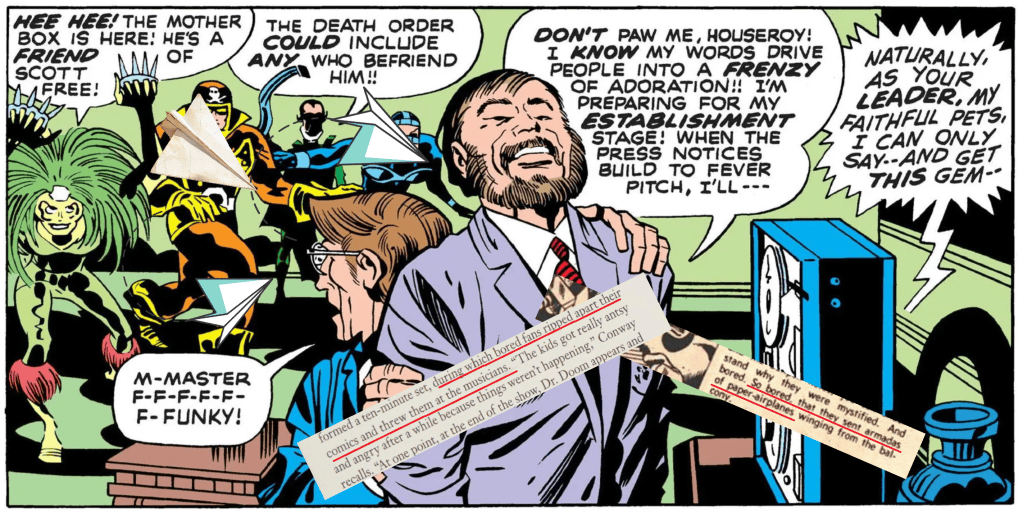
What could have salvaged the prestigious An Evening with Stan Lee event? Well, planning and coordination. Not entitled slackers who worked at Marvel just showing up and assuming things would magically work out. But what would have really salvaged it…? Were the Marvel Assembled to have not been absolute dicks.
“It was a year after I’d graduated my senior year and I remember, there weren’t kids, like- they weren’t kids, as in small children. They were all my age and up. I felt like it was easy to project that and try to twist it a little, like saying the fans weren’t digging the jazz band or what-have-you but no, it was twenty, twenty-five minutes into it. When Stan’s wife and kid read his poem, there were guffaws. And Stan’s daughter kept going in and out of a British accent, I always remembered. But no, they never had the audience once the audience got settled in.” – Alan Kupperberg, 2005
“It was a disappointment and a disaster.” – Peter Sanderson, Historian
“Stan Lee’s wife and daughter did small excerpts from the poem after the Surfer episode. The poem didn’t have anything to do with comics or Marvel at all. It was from the same mediocre mold, however.” – Jake Jenkins
“The audience left in stunned silence, after often yawning louder than the fabulously fraught festivities.” – Dean Latimer, 1972
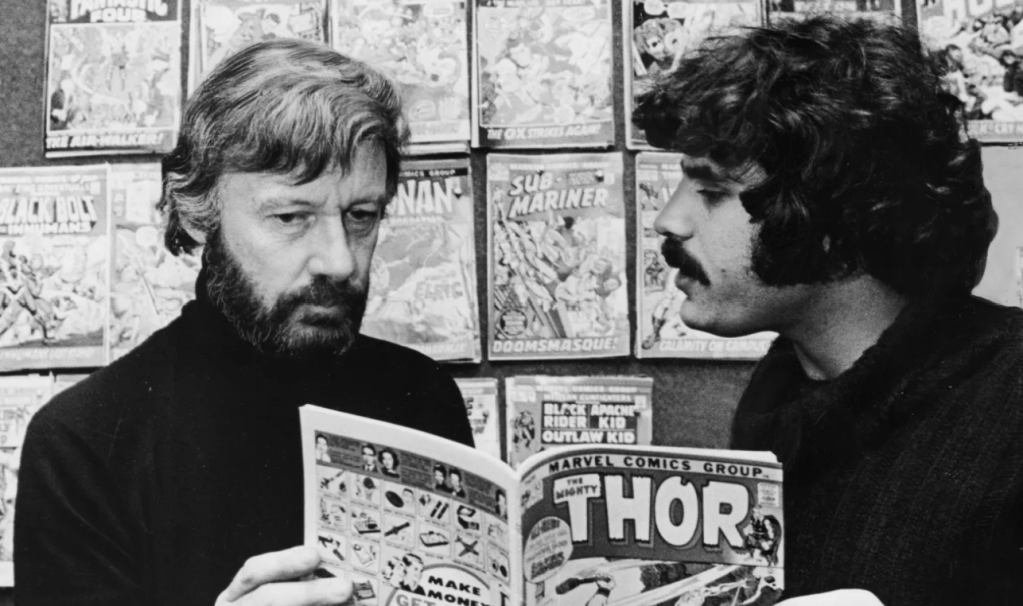
“So it was a drag, and a gyp and a Royal Rip-off, the Marvelous Evening With Stan Lee.” – Dean Latimer
This was a mockery of an event that was held for imbeciles. It’s a shame Carnegie Hall had to inherit it, but at least that venue escaped unscathed.
Again, Stan Lee was the biggest proponent for the notion that Marvel had elevated comic storytelling and cultivated a more academic audience. But what had this audience done that was elevated? They would argue about continuity errors and complain about who should be on the Avengers. The concept of the Marvel Comics audience being sophisticated and wise was a total invention, polished in retrospect.
“I’d like to think that I had some part in it. At Marvel, we have tried to upgrade the medium by upgrading the vocabulary in our books. We use college-level language now and concentrate on incorporating relevant psychology, sociology, philosophy, satire—things that nobody paid much attention to before.” – Stan Lee, 1977
“[Roy] Thomas then started going at rock and roll like it was his business, doing a song called I’m Down. It wasn’t his business. The music was bad and Roy had best stick to writing.” – Jake Jenkins
Because of course he did, Roy Thomas- who famously told Gerry Conway he “didn’t have time to edit” the Marvel books- did have time to write another of his lengthy responses to constructive criticism when he responded to the Comic Fandom Monthly review with a defensive tone, especially the commentary on Roy’s prowess as a rock musician. But what I found especially telling was this:
“In case you see glimmers of discontent on my personal part with the Carnegie-Show, it was merely that Stan and the rest of us had less to do with the actual putting of the show than fandom might think. It’s really too bad that somebody didn’t actually sit down and WRITE the show…” – excerpt of Roy Thomas letter, April 1972
A clusterfuck of collective ineptitude. Again, this is not shocking when you consider the lack of work ethic in the entitled.
In closing, this travesty served a helpful purpose: again, illustrating the banality and entitlement of the proud “geek” consumer, an adult (usually) who’s entire identity is predicated upon their fandom and validated by their purchases. Gatekeepers all, they are the sort of people who will publicly express outrage over the death of fictional characters but never once take a moment to think about very real people murdered in their communities.
If the audience for Marvel Comics, Marvel storytelling, and the myth of Stan Lee as their fearless leader were indeed enlightened, they’d have embraced the patchwork staging of a misguided show, celebrated the exposure to new performers unknown to them, and retained an open mind even in the presence of lackluster planning. But they weren’t. They were uncouth cretins, spoiled sociopaths, brazen fools without a strong identity of their own.
Never forget what Niccolò Machiavelli once said: “He who builds on the people builds on the mud.” What Machiavelli is saying here is that any leader who relies entirely on the loyalty of a collective group of common people will be abandoned at the first sign of adversity.
Never was this more blatantly displayed and proven than on the night of January 5th, 1972. The True Believers collectively showed their true faces and their low-brow hive mind juvenilia. Not that Stan Lee held a grudge, mind you. After all, he’d depend upon the absent-minded for the rest of his life- the willing self-deceivers, the proud to be ignorant embracers of corporate myth. In many ways, they always deserved each other.
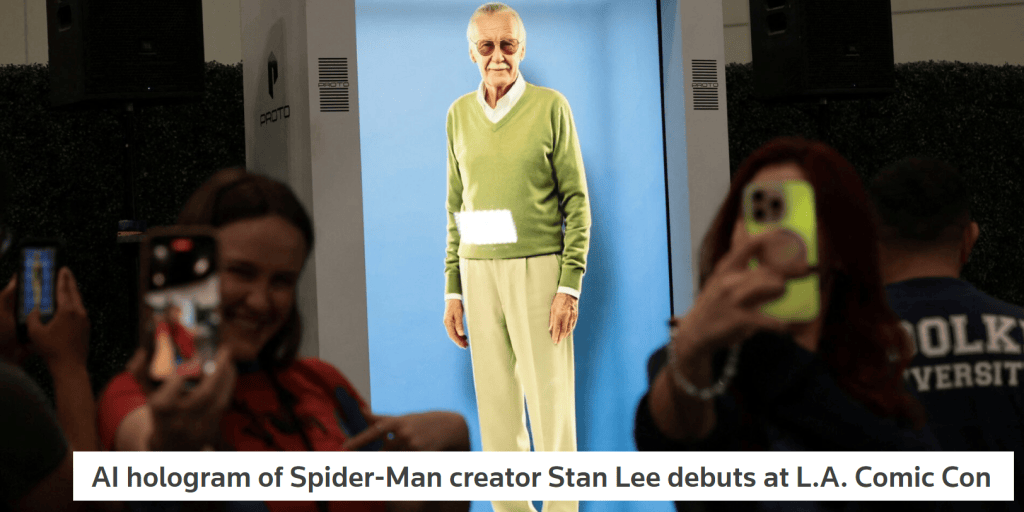
Dedicated to Mark Evanier, Danny Fingeroth, Roy Thomas, Barry Pearl, and every other average putz with marginal creative ability that Stan Lee inspired into a career of “writing”.


A notification on my phone of a Four Color Sinners post is always a welcome sight. I write this soon to-be-long reply immediately after finishing .
I’m not convinced that the audience comprised a majority of Marvel Zombies. During the 50s and especially in the 1960s, those in the know…they knew the truth. I’ve related my experience at the 1970 NY Comic Con before on Facebook and I think it bears repeating.
In 1970, Neal Adams and others had announced the Academy of Comic Book Arts and he was all excited about the awards presentation. We all were!
Most fans in that ballroom that day were twenty-something adults and older, who, while hugely appreciative of John Stanley and Carl Barks and recognized them as producing adult stories within children’s fables, were not receptive to CHILDISHNESS.
As an organizer read the list of Editor nominees, Archie Goodwin’s name was yelled out as the clear audience favorite. The guy announced Stan as winner, and after the loud collective gasp, the booing ensued. And continued, raging louder.
Neal strode up, and said over the loud grumbling and now-ugly atmosphere, “I’m accepting this award on Stan’s behalf. I think in his last year as editor, he’d be pleased to know he won. I’ll tell him that–“
Someone in the audience shouted, “—he sucks!”
Neal’s face fell into a blank stare as the audience roared, and he walked away, clearly upset. (Also, “Sucks” was a MUCH bigger swear word then.)
I think two factors of eventual belief in lies were putting “Stan Lee Presents” in every book in the 70s, so that those 10 years- old and younger coming up in the 70s fell under the ether that Lee was responsible for everything. Then, the propaganda tool of his “Origins” book, which was an attempt to lock down copyrights, sealed it in the minds of that younger crowd. The effects of this misinformation are being felt to this day thanks to a mega-corporation.
So the audience were probably those very young Marvel zombies who had missed the truth memo, and by 1972 they had swallowed the nonsense Lee lies. But I bet the larger segment was disinterested, bored people hoping for something to riff on and make fun of, and wow, did Lee and the Marvel crew oblige.
As always, I think Lee and his history and the re-writing of same enunciates the issues with cults, propaganda, and the lies of corporations weighing down and obliterating the truth today; aided by people’s willingness to believe in a cheat sheets version of history rather than do a deep dive and discover the truth. And these deeper forays into the truth are another reason I like this blog.
Thanks!
LikeLiked by 1 person
“the propaganda tool of his “Origins” book, which was an attempt to lock down copyrights”
This is speculative, and quite dubious. There was no need to “lock down” copyrights, whatever that would be in practice. Marvel registered copyrights for the material at the time of the original comics’ publication. Regardless of which person was most responsible for originating a feature, all of it fell under the heading of commissioned work, which, with pre-1978 material, is work-for-hire by default unless there is a clear agreement between the parties that it isn’t. When Kirby’s family challenged this, the district and appellate court judges told them Kirby’s work for Marvel was unambiguously work-for-hire. The district court judge went out of her way in her decision to make clear the issue of who created what and to what extent had no relevance to her determination. The appellate court decision, regardless of the later settlement with the Kirbys, is standing legal precedent, and can be used to defend Marvel’s copyright ownership in any similar case going forward.
LikeLike